
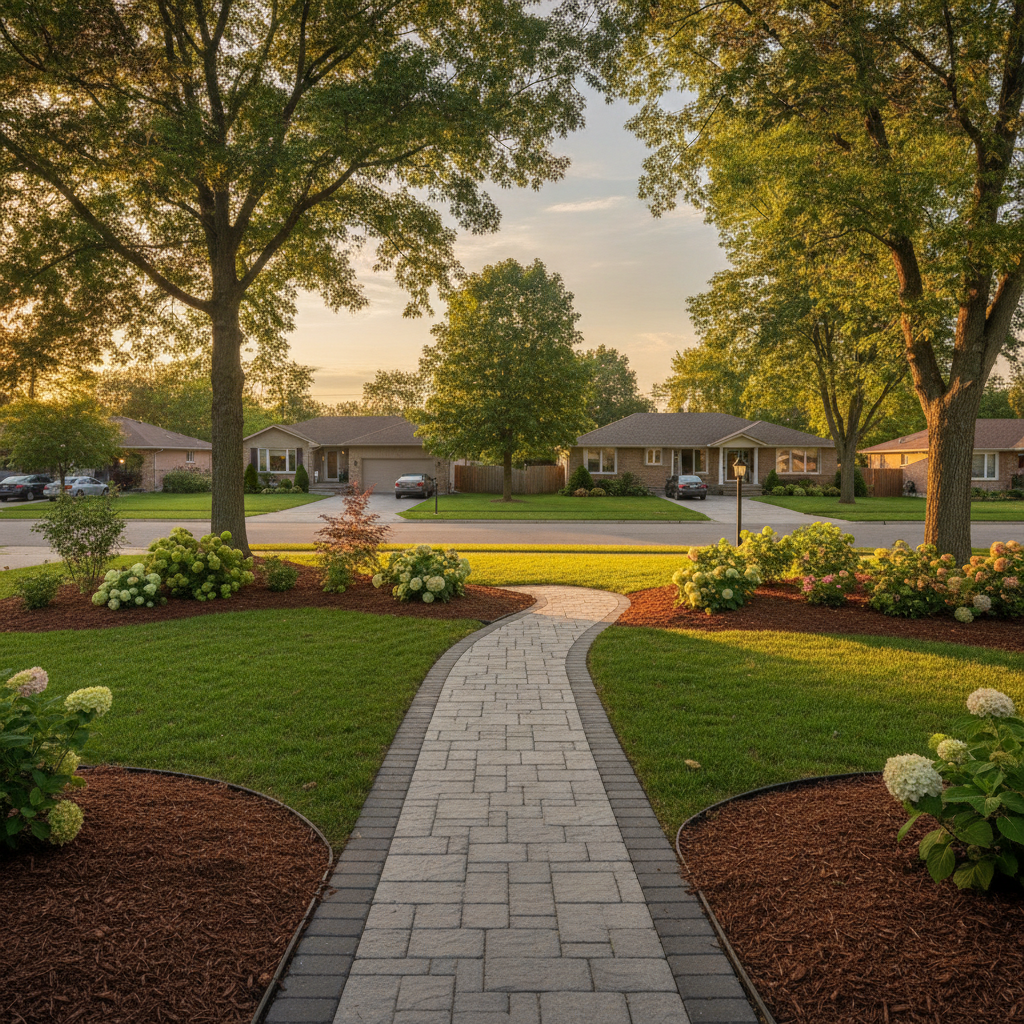
Mulching for curb appeal is the strategic use of organic or inorganic groundcover to frame plants, hide bare soil, and reduce weeds for a cleaner, high-contrast look. In Mississauga landscapes, a 2–3 inch layer around beds and trees instantly sharpens edges, lowers watering needs, and signals a well-maintained property.
By HR Greenroots Landscaping • Last updated: 2026-06-29
Overview and Table of Contents
Mulch refreshes curb appeal fast by creating crisp edges, consistent color, and visual depth while cutting weeds and moderating soil moisture. This guide explains what mulch is, why it matters, how it works, best practices, and how HR Greenroots Landscaping executes clean, durable results across Mississauga properties.
Here’s what you’ll get in this complete, practical guide tailored to Mississauga properties and Ontario seasons:
- Plain-English definition of mulch and why it boosts first impressions
- How mulching supports plant health, reduces watering, and simplifies upkeep
- Types of mulch with pros, cons, and where each makes sense
- Step-by-step bed prep, edge control, and installation tips that last
- Tools we rely on in the field and checklists you can use today
- Real-world Mississauga examples from HR Greenroots projects
- Actionable FAQ answers and a quick-reference takeaway list
Want help right away? Explore our mulching and garden beds service for coordinated design-build and maintenance planning.
What Is Mulching for Curb Appeal?
Mulching for curb appeal is the intentional placement of a 2–3 inch surface layer (like shredded bark or stone) to cover exposed soil, highlight plants, and define clean bed edges. Done right, it produces immediate visual contrast, curbs weeds, and reduces evaporation without competing with your plantings.
At its core, mulch is a protective, decorative blanket for your soil. Organic options (shredded bark, wood chips, composted leaves) slowly break down and enrich beds. Inorganic options (stone, rubber, landscape glass) keep a tidy look and need less frequent refreshes.
- Visual structure: A uniform layer ties shrubs, perennials, and trees into one coherent scene.
- Edge definition: A spade-cut or paver edge with mulch behind it clarifies lawn-to-bed boundaries within inches.
- Plant-forward focus: Consistent background color makes foliage and blooms pop from the street.
In our Mississauga projects, we often combine mulch with thoughtful landscape design so beds, walkways, and hardscapes read as one plan—not disconnected parts.
Why Mulching Matters for First Impressions
Mulch amplifies first impressions by hiding bare soil, sharpening lines, and providing color continuity across seasons. A fresh 2–3 inch layer quickly reduces visual clutter, cuts weeding, and keeps soil moisture steadier—small inputs that drive big curb-appeal gains in days, not months.
First impressions form in seconds. Clean edges, unified tones, and healthy plants convey care and organization. Mulch supports that story.
- Instant contrast: Deep brown or black mulch frames lawns and hardscapes so properties look cleaner within a day of install.
- Weed suppression: A consistent layer combined with fabric or paper underlayment blocks many light-dependent weeds.
- Moisture moderation: Covered soil evaporates slower; irrigation frequency often drops by one or two days per week in summer.
- Temperature buffering: A 2–3 inch layer can help moderate soil swings by several degrees Fahrenheit, easing stress on shallow roots.
- Seasonal continuity: When blooms fade, mulch maintains visual order until the next color wave arrives.
We pair mulch with durable seasonal maintenance planning so beds stay sharp beyond week one—edges hold, and refresh cycles are predictable.
How Mulching Works in Your Landscape
Mulch works by covering soil to reduce light, heat, and wind exposure at the surface. This slows evaporation, obstructs weed germination, and prevents crusting and erosion. Organic mulches also decompose, adding organic matter that improves soil structure over time.
Think of mulch as a functional layer with four jobs: control moisture, block weeds, insulate roots, and present a neat finish.
- Moisture control: Even a 2–3 inch layer reduces evaporation, so soil stays damp between rains. For shallow-rooted shrubs, that can mean steadier hydration.
- Weed reduction: Limiting light at the soil line disrupts many weed seeds. Paired with a biodegradable barrier, weeds are further reduced.
- Soil protection: Mulch cushions rainfall impact, helping prevent splash and surface compaction near stems and trunks.
- Decomposition benefits: Organic mulches slowly add carbon and nutrients, improving tilth and microbial activity year over year.
On installs that include new lawn replacement or fresh front-yard transformations, we finish with mulch to stabilize disturbed soil and protect roots after planting.
Types of Mulch and Where Each Shines
Choose mulch based on bed location, plant type, and desired refresh cycle. Shredded bark delivers a classic, plant-friendly look and enriches soil. Stone suits high-traffic or windy spots and pairs well with modern hardscapes. Color choice should contrast the house and lawn for maximum pop.
Below is a quick comparison you can use when selecting materials for Mississauga properties that face sun, wind, and freeze–thaw cycles.
Mulch Type Best Use Maintenance Notes Shredded bark (natural brown/black) Garden beds, around shrubs and perennials Refresh color yearly; top up 1–2 inches Improves soil as it breaks down; versatile, classic look Wood chips Tree rings, informal beds, play areas Top up annually Chunkier texture; good for casual or naturalized areas Compost/leaf mold Vegetable beds, soil building zones Reapply 1–2 times/yr High nutrient return; darker color, fast breakdown Decorative stone (river rock, granite) Windy areas, drip lines, modern designs Rake/clean seasonally Long-lasting color; works with pavers and steel edging Rubber mulch Play zones, paths needing bounce Occasional cleaning Doesn’t decompose; avoid near edible bedsColor matters: deep brown or black usually contrasts green lawns and lighter siding. Light tan can warm cool-toned exteriors. For modern hardscapes, stone paired with interlocking and pavers reads clean and architectural.
Best Practices for a Clean, Lasting Finish
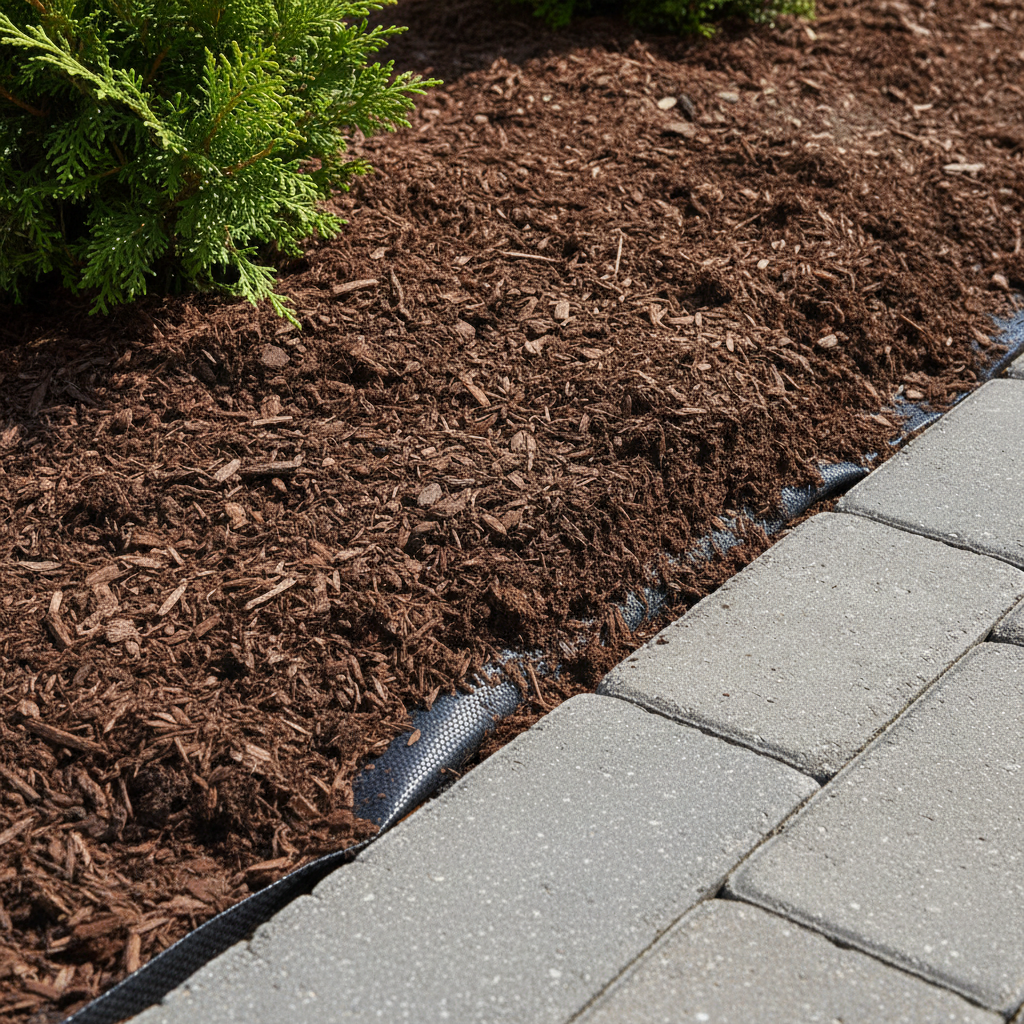
Aim for a 2–3 inch mulch layer, pulled 2–3 inches back from stems and trunks. Establish a spade-cut edge 3–4 inches deep or install a paver/steel edge. Smooth, even coverage and clean boundaries are the fastest way to elevate curb appeal and keep beds low-maintenance.
We approach mulch like a finish carpenter treats trim—the edges make the look. Here’s our field-tested checklist.
- Prep the bed: Remove weeds and debris; grade soil to shed water away from foundations at 2–3% slope.
- Define the boundary: Create a 3–4 inch deep spade-cut or add a physical edge (paver, steel, or composite) for long-term hold.
- Set your layer: Spread 2–3 inches; go thinner (1–2 inches) in shady, low-weed zones.
- Protect plants: Keep mulch 2–3 inches off trunks and stems to prevent rot and pests.
- Water-in lightly: A brief soak helps settle fibers and locks in the finish.
- Schedule refresh: Plan an annual color top-up for organics; rake stone seasonally to lift dust and leaves.
Finish quality improves when mulch backs onto stable edges. On many installs, we integrate bed lines with design-build layouts and, where appropriate, anchor them with curved pavers or small sod transitions.
Local considerations for Mississauga
- Near academic hubs like Lambton College, winds can funnel along open lots—stone mulch or heavier shredded bark holds better in breezy corridors.
- Spring installs (April–May) set beds up before summer heat; fall refresh (September) stabilizes soil before freeze–thaw.
- For high-traffic parkside frontages by Saigon Park, choose darker mulch and steel edging to resist scuffing and keep lines neat.
How HR Greenroots Executes Mulch Installs That Last
Our team combines proper grading, edge control, and right-sized material selection to keep mulch in place and beds tidy. We integrate mulch with plant layering and hardscapes so the whole front yard reads cohesive on day one—and stays that way through Ontario seasons.
Because we design, build, and plan maintenance under one roof, we sequence work for durability:
- Base and grading: We set final grades first, targeting stable runoff and no low spots that collect water near foundations.
- Edge systems: We choose spade-cut, paver, steel, or composite edging based on bed shape, wind exposure, and mowing patterns.
- Planting depth: We set root flares at grade, then pull mulch back 2–3 inches to breathe.
- Hardscape tie-ins: Where lawns meet interlocking walkways or driveway extensions, we calibrate bed curves for easy mowing and clear sightlines.
- Maintenance planning: We recommend an annual refresh and include it in a mulch refresh schedule.
Tools and Resources We Trust
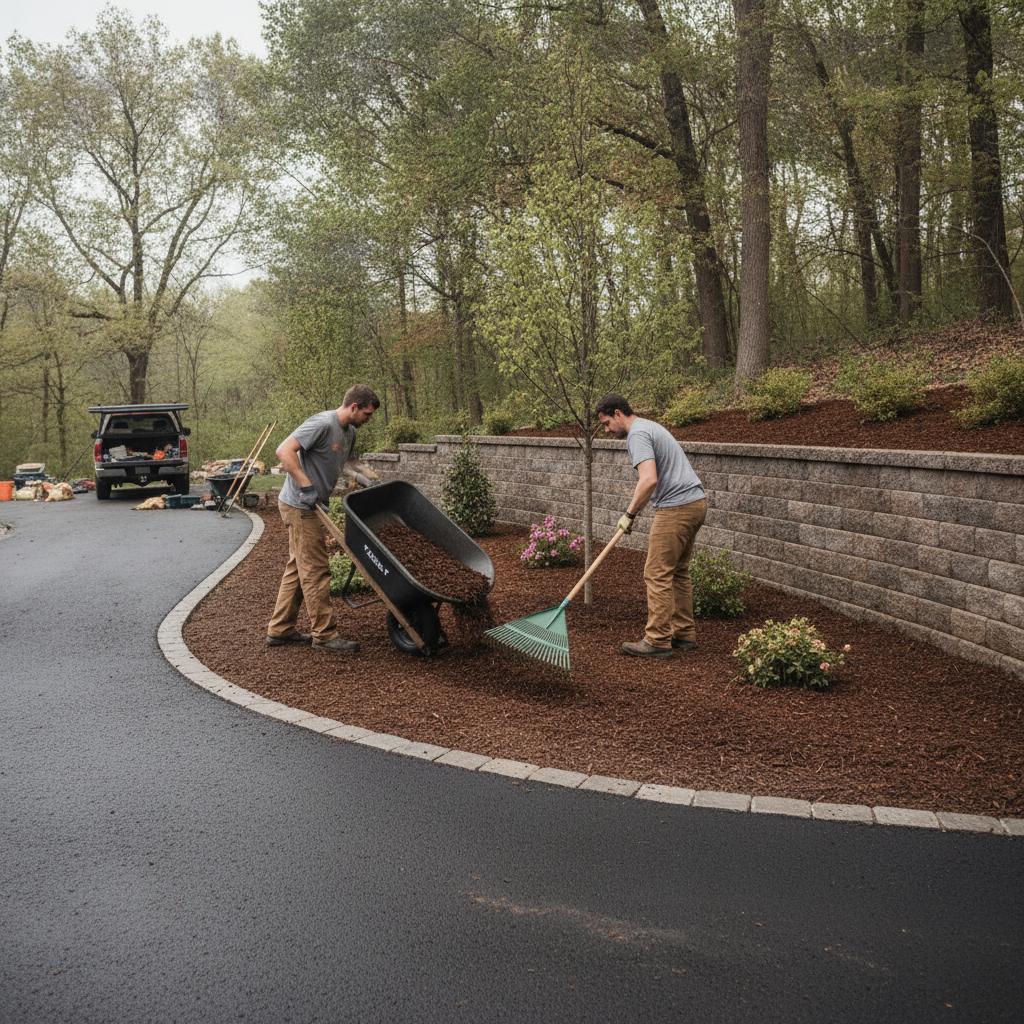
You’ll get cleaner lines and faster installs with a sharp spade, square shovel, leaf rake, mulch fork, and a 6–8 cubic foot wheelbarrow. Add breathable underlayment for tough weed zones, and use steel or paver edging where wind or foot traffic challenges bed integrity.
Field-proven kit for sharper, safer installs:
- Edging tools: Flat spade for crisp cuts; hand edger for curves; steel edging for long runs.
- Spreading tools: Mulch fork for fluffed distribution; leaf rake for finish smoothing.
- Transport: Wheelbarrow sized 6–8 cu ft; tarp for staging and tidy cleanup.
- Underlayment: Biodegradable paper or woven fabric in weed-heavy beds.
- Safety: Eye protection, gloves, and sturdy footwear; mulch particles can splinter.
For design inspiration that pairs mulch with modern hardscapes, browse these regional idea galleries and guides that showcase bed lines, stone, and plant layering: thoughtful landscape design examples, practical hardscaping advice, and curated backyard transformations.
Download-ready checklist (copy/paste): Mulch Day Setup- Confirm line-marking paint and bed shapes on site plan
- Edge depth 3–4 inches; slope 2–3% away from structures
- Lay underlayment only where weed pressure is high
- Spread 2–3 inches; keep 2–3 inches off trunks/stems
- Lightly water to settle; rake for uniform texture
- Schedule refresh: annual color top-up
Case Studies and Examples in Mississauga
Across Mississauga front yards, we see the fastest curb-appeal lift when mulch, edges, and plant layers arrive together. A one-day refresh—edging at 3–4 inches deep and a 2–3 inch mulch layer—typically transforms drive-up views immediately and stabilizes beds for the season.
Example 1: Corner-lot clarity
A corner-lot homeowner wanted sightline order and simpler mowing. We redirected curves, cut 3–4 inch edges, installed 2–3 inches of shredded bark, and tied beds to a new paver path. The result: cleaner turns for mowing and sharply framed foundation shrubs the same day.
Example 2: Windy frontage near Saigon Park
This frontage faced crosswinds. We chose heavier shredded bark and steel edging along the sidewalk, plus a 2–3 inch layer pulled 3 inches back from trunks. Lines stayed intact through spring gusts, and the dark tone contrasted the new sod for a crisp, modern look.
Example 3: Design-build refresh near Lambton College
For a homeowner near the campus, we coordinated mulch with a small bed expansion, added compact shrubs, and aligned curves with an existing walkway. A deep brown layer unified the facade. The bed now needs only a light rake and one color top-up each year.
For broader planning ideas, our design and build guide shows how we integrate mulch with plants, sod, and hardscapes so circulation and sightlines feel natural.
Frequently Asked Questions
Homeowners ask about depth, timing, and material choice. Aim for 2–3 inches, refresh annually, and pick a color that contrasts your lawn and siding. Keep mulch 2–3 inches off trunks and stems, and consider stone in windy or high-traffic spots for longer-lasting edges.
How much mulch should I use in front beds?
Use 2–3 inches across most beds. Go 1–2 inches in shaded, low-weed areas and avoid piling against trunks or stems. Edges at 3–4 inches deep help hold material in place and create the crisp line that elevates curb appeal.
When is the best time to mulch in Mississauga?
Spring (April–May) sets beds up before summer heat. Fall (September) stabilizes soil heading into freeze–thaw. Install after bed cleanup and edging so your 2–3 inch layer lays even and lasts longer.
Should I choose bark or stone for curb appeal?
Bark gives a classic garden look and enriches soil over time. Stone offers a modern aesthetic, resists wind, and pairs well with pavers. Many Mississauga homes use bark in planting beds and decorative stone along drives or walkways for durability and contrast.
Do I need weed barrier fabric under mulch?
Use breathable fabric or paper only in weed-heavy beds or under stone. In planting beds with shrubs and perennials, we often skip full coverage and rely on 2–3 inches of organic mulch plus spot barriers, which keeps soil life active and plants happier.
Key Takeaways
For fast curb-appeal gains: edge at 3–4 inches deep, lay 2–3 inches of mulch, and keep it off trunks. Match material to exposure—bark for beds, stone for windy or high-traffic zones. Plan a light annual refresh to keep color rich and lines crisp all year.
- Mulch is a fast, high-impact visual upgrade—especially at 2–3 inches.
- Edges make the look; 3–4 inch depth holds lines and reduces cleanup.
- Pick colors that contrast lawn and siding for maximum pop.
- Integrate with design: curves, pavers, and sod transitions read cohesive.
- Schedule annual top-ups for organics; rake stone seasonally.
Conclusion and Next Steps
Mulching benefits for curb appeal compound quickly: sharper lines, reduced weeds, steadier moisture, and a unified look that lasts. Pair 2–3 inch coverage with strong edging and a simple refresh plan to sustain results through Ontario seasons—without making maintenance a second job.
Ready to tighten lines and brighten first impressions? Our team can refresh beds in a single coordinated visit—edging, cleanup, and right-sized materials—so your home looks cared for the moment someone pulls up.
Explore our coordinated mulching and garden beds service, or start with our seasonal maintenance checklist. Book a friendly site walk in Mississauga and we’ll map the simplest path to a cleaner facade.


