
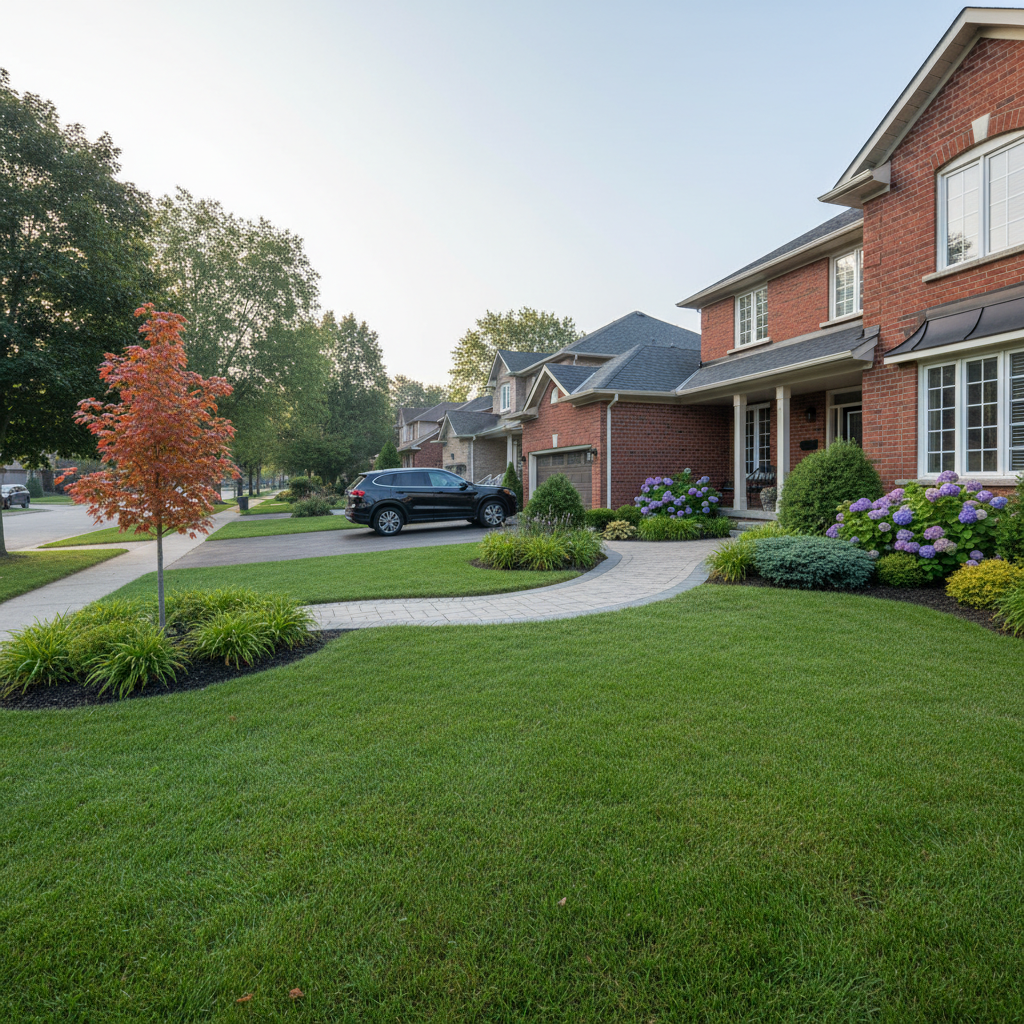
Interlocking walkways vs poured concrete: Interlocking pavers create a flexible, repairable surface that handles Ontario’s freeze–thaw cycles better than a single concrete slab, while poured concrete offers a seamless, uniform look that’s easy to clear in winter. From our Mississauga base at 100 Matheson Blvd E, HR Greenroots Landscaping designs and installs both—recommending pavers when drainage and long-term maintenance matter most.
By HR Greenroots Landscaping • Last updated: June 7, 2026
Introduction
Choosing between interlocking pavers and poured concrete comes down to climate, maintenance, style, and how you’ll use the path. Pavers excel in freeze–thaw resilience and spot repairs; concrete delivers a clean, monolithic look and fast snow clearing. This guide compares both, with practical tips from our Mississauga design–build installations.
Walkways do more than connect doors to driveways. They manage water, frame planting beds, and set your property’s first impression.
- What you’ll learn: durability, maintenance, snow handling, drainage, style options, and repairability.
- Who this helps: homeowners, small businesses, and property managers across Mississauga and the GTA.
- Why trust us: We design–build interlock and concrete hardscapes with strong base prep, edge control, and maintenance planning.
If you want a deeper dive on unit paving, see our in-depth interlocking pavers guide for Mississauga properties.
Quick Summary
Pick interlocking when you want modular flexibility, easy spot fixes, and rich design patterns. Choose poured concrete for a simple, continuous surface with straightforward winter care. In freeze–thaw Ontario, a well-prepared base and drainage plan often make pavers the longer-term, lower-stress choice for walkways.
- Freeze–thaw: Pavers move with the seasons; slabs can crack if drainage or joints are lacking.
- Maintenance: Pavers need joint sand and sealing; concrete needs sealing and crack control.
- Repairs: Swap individual pavers; concrete repairs are more visible and disruptive.
- Drainage: Pavers can be permeable; concrete relies on slope and drains.
- Look: Pavers offer colors, textures, and borders; concrete offers crisp uniformity.
Quick Comparison Table
This side-by-side table summarizes how interlocking and concrete differ on the factors that matter: durability, seasonal movement, repair options, snow removal, drainage, and style flexibility. Use it to align the surface with your property goals before you choose a contractor or materials.
Factor Interlocking Walkway Poured Concrete Walkway Durability High with proper base and edge restraint; modules distribute loads High when reinforced and jointed; vulnerable at cracks if water enters Freeze–Thaw Joints absorb movement; individual units adjust seasonally Monolithic slab can crack or heave without drainage and control joints Repairs Replace individual pavers with color-matched units Grinding/patching leaves visible scars; larger sections may need replacement Snow & Ice Textured surface adds grip; use polymeric sand and proper slope Seamless surface is easy to shovel and plow; good with de-icers Drainage Standard or permeable build-up can move water effectively Relies on slope, drains, and control joints to steer runoff Style Hundreds of colors, textures, laying patterns, borders Uniform, minimalist; can add broom, exposed, or stamped finishes Maintenance Reapply joint sand; seal periodically; inspect edges Seal periodically; monitor and caulk cracks; protect edgesFor walkway layouts that guide movement and frame beds, our landscape design overview explains how we plan circulation, planting depth, and edge control.
Our Top Pick
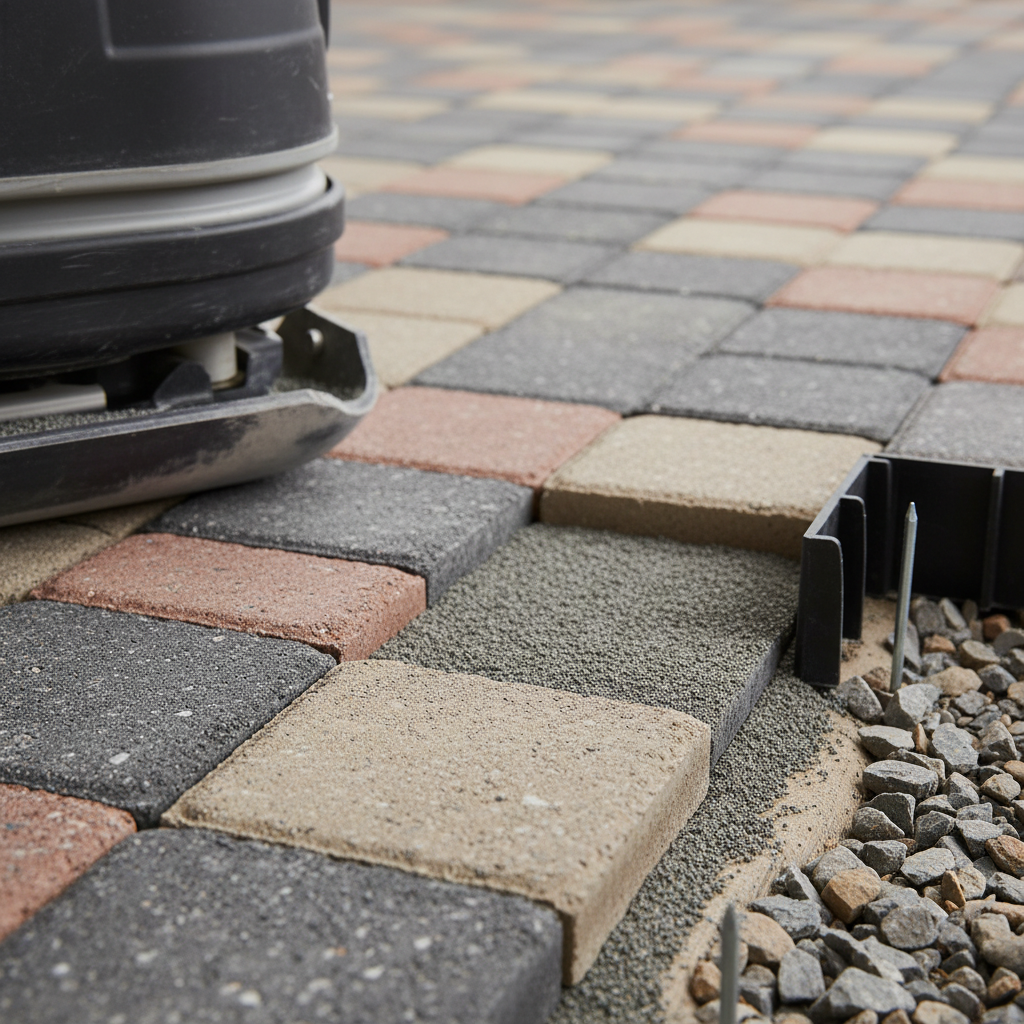
For most Mississauga walkways, interlocking pavers are our top pick. They manage freeze–thaw movement, allow reversible spot repairs, and offer design flexibility. With the right base, edge restraint, and polymeric sand, pavers deliver a long-lived surface that stays level and looks intentional beside lawns and beds.
When is concrete the smarter call? If you want a uniform, minimalist look and prefer one continuous slab for snow removal, poured concrete can be right—especially for short, straight runs with ample slope for runoff and properly spaced control joints.
- Why pavers win here: Movement-friendly joints, color-matching repairs, patterns and borders to echo front steps or driveway details.
- What makes them last: Proper excavation, compacted granular base, and clean edge control—our site prep discipline across all hardscapes.
- Where concrete shines: Simple, linear paths; broom or exposed finishes to match modern architecture; clear snow in a single pass.
If drainage or slope is a question, we often pair walkways with small retaining elements; see our notes on planning in retaining wall considerations.
Top 10 Walkway Options Compared (Ontario-Friendly)
Beyond a binary choice, there are at least ten practical walkway builds for Ontario properties. Each balances durability, winter care, and style differently. Use these entries to match material and assembly with how you live, your soil and drainage, and the architecture you want to complement.
1) Modular interlocking pavers (Our Pick)
- Best for: Freeze–thaw zones, curves, and spaces that may need future utility access.
- Build highlights: Excavation to stable subsoil; compacted granular base; screeded bedding layer; tight joints with polymeric sand; edge restraint.
- Why it works: Units move microscopically with seasons, reducing slab-style cracking while enabling clean, color-matched spot repairs.
Want patterns, borders, or inlays? We align walkway motifs with driveways and steps—see our paver pattern basics.
2) Permeable interlocking pavers
- Best for: Managing runoff, soggy soil, or downspout areas; helps reduce surface water.
- Build highlights: Open-graded stone base and joints that let water pass vertically.
- Trade-offs: Needs periodic vacuuming of joints; not ideal where heavy silt washes over the surface.
3) Natural stone, dry-laid (flagstone on aggregate)
- Best for: Organic garden paths and cottage-style entries.
- Build highlights: Similar to pavers but with irregular slab units; polymeric or stone dust joints.
- Trade-offs: Irregular sizes take more layout time; joint plants or moss can be added for character.
4) Natural stone, mortar-set (on concrete base)
- Best for: Formal entries and ultra-crisp stone joints.
- Build highlights: Reinforced concrete sub-slab; stone bonded with mortar; grouted joints.
- Trade-offs: Less forgiving to frost movement; expansion joints and drainage become critical.
5) Broom-finish poured concrete
- Best for: Clean, modern look and easy winter maintenance.
- Build highlights: Proper subgrade compaction; reinforcement; control joints; broom texture for grip.
- Trade-offs: Visible cracking if joints, slope, or drainage are off; repairs are more noticeable.
For reinforcement primers, see this reinforced concrete overview to understand how wire mesh or rebar supports slabs.
6) Exposed aggregate concrete
- Best for: Traction and decorative texture without patterns.
- Build highlights: Surface paste is removed to reveal pebbles; requires sealing to keep the finish crisp.
- Trade-offs: Slightly tougher on shovels; sealing prevents staining and wear.
7) Stamped or colored concrete
- Best for: Simulating stone textures in one continuous pour.
- Build highlights: Integral color or hardener; texture mats; careful joint planning to manage cracking.
- Trade-offs: Repairs and color matching can be more visible than with pavers.
8) Porcelain pavers (on patio pads or mortar)
- Best for: Sleek, low-porosity surfaces near pools or modern architecture.
- Build highlights: Requires precise base and drainage; can be dry-laid on specialty pads or mortar-set.
- Trade-offs: Edge protection is crucial; tiles can chip without proper support.
9) Gravel path with steel edging
- Best for: Budget-friendly garden links and secondary routes.
- Build highlights: Compacted base and top layer (e.g., limestone screenings); edging to keep stone in place.
- Trade-offs: Some tracking and raking; not ideal for frequent wheelchair or stroller use.
10) Boardwalk-style composite planks
- Best for: Woodland transitions or grade changes you want to bridge cleanly.
- Build highlights: Framed over helical posts or footings; textured, low-maintenance surfaces.
- Trade-offs: Feels like a mini-deck; detailing railings and edges takes planning.
How to Choose the Right Surface
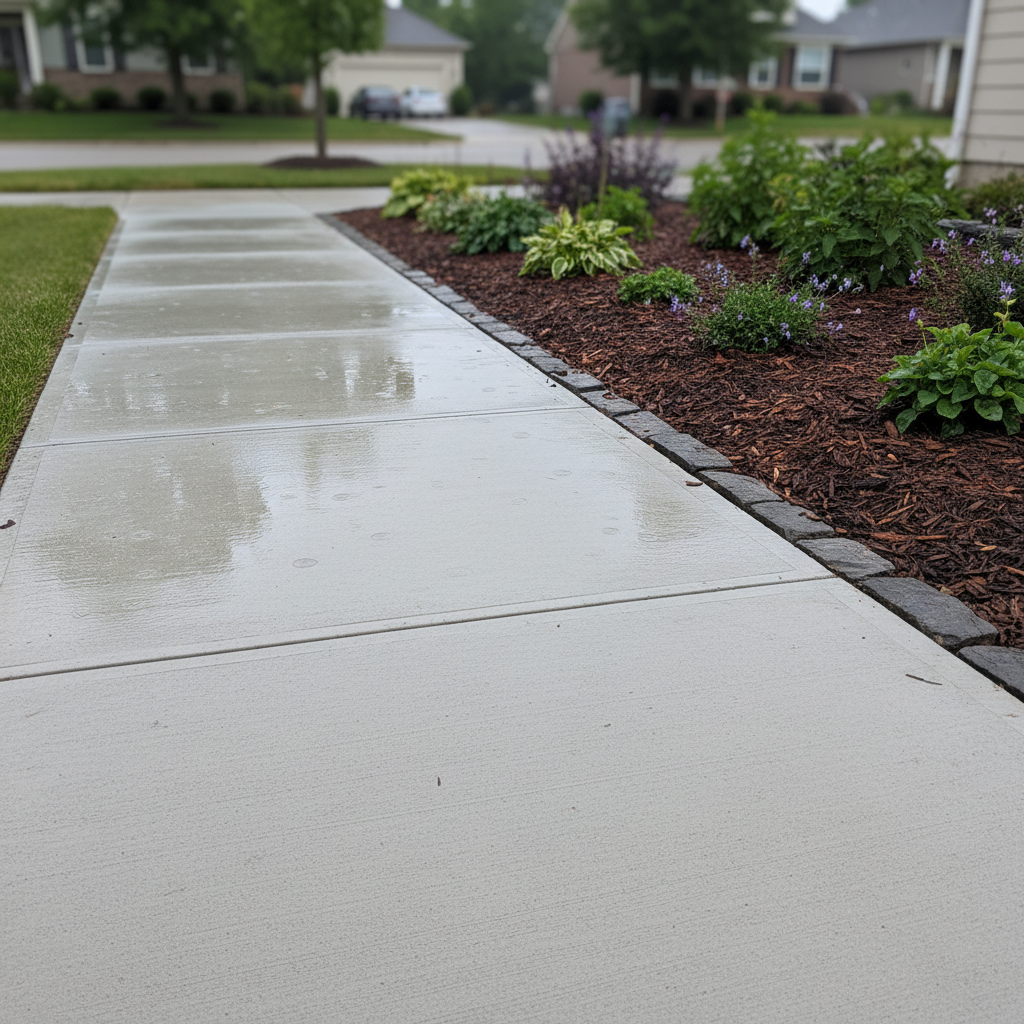
Start with water, movement, and maintenance. If your soil stays wet or heaves in winter, choose pavers with a robust base. If you prefer a minimal look and direct snow clearing, a reinforced, jointed slab works. Align the choice with planting beds, lighting, entry steps, and driveway design.
Evaluate site conditions
- Drainage first: Map downspouts and low spots; consider permeable pavers where water lingers.
- Subsoil: Clay holds water; we plan thicker bases and geotextiles when needed.
- Circulation: Widths of 36–48 inches improve two-way passing near entries.
Weigh maintenance style
- Pavers: Re-sand joints periodically; spot reset if you ever open the surface for utilities.
- Concrete: Seal the slab; monitor control joints; keep edges protected from vehicles and snow blades.
Match architecture and planting
- Patterns and borders: Pavers echo step treads, driveway bands, and garden edges.
- Minimalist lines: Concrete suits modern facades; exposed or broom finishes add traction.
- Planting depth: Leave 4–6 inches for mulch and perennials along the path.
Need help translating goals into a buildable plan? Our landscape design guide outlines scoping, phasing, and coordination across hardscape and planting.
Buying Guide: Specs That Really Matter
Lasting walkways are 80% preparation, 20% surface. Focus on subgrade stability, base depth and compaction, edge restraint, joints, and sealing. Whether you choose pavers or concrete, these specs keep surfaces flat, drain well, and hold up to winter and daily foot traffic.
Paver assembly essentials
- Excavation and base: Remove organics; compact lifts of granular base (often 6–10 inches for typical walks).
- Edge restraint: Secure aluminum or concrete curbs prevent creep and spreading.
- Joints: Polymeric sand locks units and sheds weeds when maintained.
- Permeable option: Open-graded stone layers and clean chip in joints to drain vertically.
Concrete assembly essentials
- Subgrade and reinforcement: Compact subbase; consider mesh or rebar to limit cracking.
- Control joints: Proper spacing and depth channel minor cracks predictably.
- Finishes: Broom for grip; exposed aggregate for texture; stamping for pattern.
- Sealing: Protects from de-icers and staining; reapply per manufacturer guidance.
For background reading on interlock basics in our province, see this overview of interlocking in Ontario basics. For slab reinforcement concepts, review a reinforced concrete primer.
Local Pros and Cons in Mississauga and Peel
In Mississauga within the Regional Municipality of Peel, freeze–thaw cycles and lake-effect moisture favor flexible, well-drained assemblies. Interlocking walkways typically outperform poured concrete on long-term crack control here, while concrete still excels for simple snow clearing on straight, short runs with correct jointing and slope.
We adapt every build to local climate and usage patterns:
- Winter serviceability: We plan slopes, textures, and de-icer compatibility for quick snow removal.
- Drainage: Pavers can go permeable near downspouts; concrete relies on slope and trench drains.
- Transitions: Step risers, driveway edges, and lawn interfaces get clean detailing and edge control.
Local considerations for Mississauga
- Schedule installs shoulder-season to reduce weather delays; campuses near Lambton College often prefer clear, uniform paths for daily foot traffic.
- After freeze–thaw periods, we inspect joint sand or concrete joints so your path is ready for spring and summer events near Saigon Park.
- Clay pockets in Peel benefit from thicker bases or permeable assemblies to keep paths level year-round.
Coordinating fences, beds, or lawns with your walkway improves the outcome. Explore our privacy fence options and Mississauga lawn replacement options to align edges, heights, and flows.
Free site walk-through: If you’re weighing interlocking walkways vs poured concrete, we’ll review drainage, base prep, and detailing on-site and map the right path. Book a quick consult from our Mississauga office.
Pricing Factors (No Numbers, Just What Drives Them)
Total investment depends on site access, excavation depth, base materials, edges, finishes, and add-ons like lighting or drainage. Interlocking pavers and concrete each scale up or down with complexity—so comparing like-for-like specifications is the only fair way to choose.
- Access and demo: Distance for material handling; removing old paths changes scope.
- Base and subgrade: Weak soils mean thicker base and geotextiles; permeable builds add layers.
- Finishes: Borders, inlays, stamps, or exposed finishes add labor and material steps.
- Drainage features: Channel drains, catch basins, or re-routing downspouts add components.
- Adjacent work: Steps, retaining edges, or bed rebuilds affect scheduling and efficiency.
Planning to refresh sod after hardscape work? Check our seasonal advice in best time for sod installation to stage projects smoothly.
FAQ: Interlocking Walkways vs Poured Concrete
These quick answers address the most common walkway decisions we see across Mississauga. If you don’t see your scenario, book a site visit—we’ll tailor specs to your soil, slope, and style.
Which lasts longer in Ontario—interlocking or poured concrete?
Both can last for decades with proper preparation. Pavers handle freeze–thaw movement better and allow clean spot repairs. Concrete needs correct joint spacing, slope, and sealing to minimize cracking. The right choice depends on soil, drainage, and how you plan to use and maintain the space.
Are paver walkways harder to shovel in winter?
Textured pavers offer traction and can be plowed or shoveled. Keep joints filled with polymeric sand and ensure the path is pitched to drain. Concrete is simpler for a single sweep, but pavers with good base prep and slope perform well in typical Mississauga winters.
Will weeds take over an interlocking walkway?
With proper base, edge restraint, and polymeric sand, paver joints resist weed growth. Re-sanding during routine maintenance helps lock joints and shed seeds. If you have heavy leaf drop nearby, occasional sweeping or blowing prevents organic buildup in joints.
Can a concrete walkway be repaired without looking patched?
Minor cracks can be routed and sealed, and sections can be replaced, but color and texture rarely match perfectly. That’s why joint layout, slope, and curing are so important. With pavers, you usually replace individual units to keep repairs almost invisible.
Methodology
Our recommendations come from Mississauga and GTA projects where we design–build interlock and concrete surfaces. We evaluate subsoil, drainage, snow operations, and long-term maintenance. We also review regional best practices from trade resources to validate base depths, jointing, and reinforcement approaches for local conditions.
- Hands-on data: Field performance across lawns, entries, and high-traffic walkways.
- Spec discipline: Excavation, base compaction, edge restraint, and joint treatments documented in our builds.
- External reading: See regional perspectives on paver pros and cons and a reinforcement guide for slab behavior.
Conclusion
In Ontario’s climate, interlocking walkways are usually the safer bet for movement, drainage, and easy spot repairs, while poured concrete suits short, straight runs with strong subgrade, clean joints, and simple winter care. Align the surface with your site’s water, soil, and style—and plan the base like it matters most.
- Key Takeaways:
- Interlocking is flexible, repairable, and design-rich—great for freeze–thaw and planting integration.
- Concrete is uniform and simple to clear—great for minimal, straight paths with solid drainage.
- 80% of longevity is prep: excavation, base, edge restraint, joints, and sealing.
- Coordinate with steps, driveways, fences, and beds for a cohesive curb appeal boost.
Ready to review your site? Our Mississauga team can scope interlocking walkways vs poured concrete, align drainage and planting, and schedule a clean, on-time build.


