
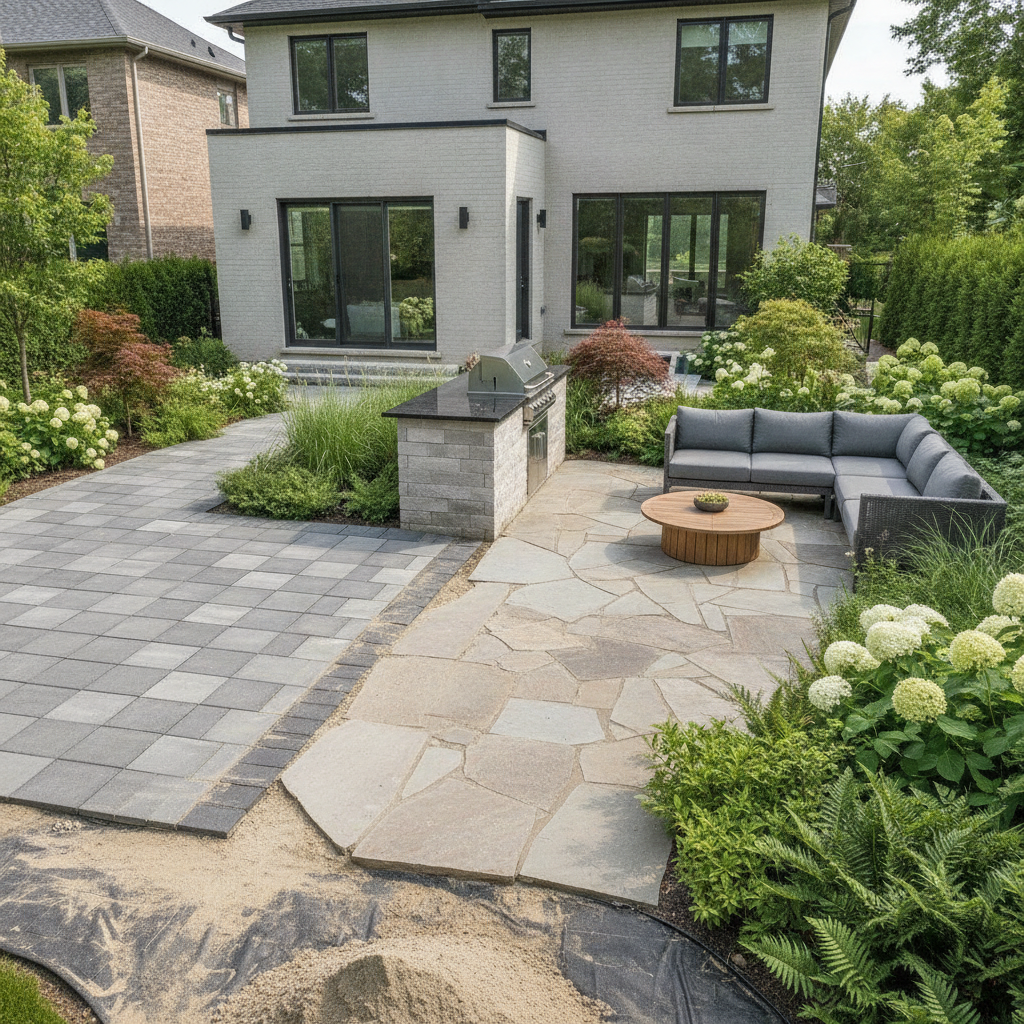
Interlocking pavers vs stone work for a patio is a material choice between manufactured, modular pavers and natural stone slabs. For Mississauga properties near 100 Matheson Blvd E unit 202, pavers excel at uniformity and easy repairs, while natural stone offers one-of-a-kind character. HR Greenroots Landscaping designs and builds both with robust base preparation for Ontario winters.
By HR Greenroots Landscaping • Last updated: 2026-06-19
Summary
Interlocking pavers suit homeowners who want precision lines, predictable maintenance, and fast repairs. Natural stone suits those prioritizing timeless character, irregular patterns, and unique color. In Mississauga and the Regional Municipality of Peel, both thrive when installed on a well-compacted base with proper drainage, edge restraint, and winter-ready jointing.
Choosing patio materials is more than looks. It affects snow clearing, drainage, repairs, and long-term stability. Below, we compare performance, give scenario-based picks, share a quick buying guide, and outline our build standards so your patio stays level and attractive through freeze–thaw seasons.
- Clear definitions and pros/cons
- Quick comparison table for scanning
- Best pick plus 10 scenario-specific recommendations
- How to choose using a step-by-step checklist
- Buying guide specs our crews actually build to
- Local considerations for Mississauga sites
Quick Comparison Table
Interlocking pavers provide predictable joints, edge restraint, and easy unit replacement; natural stone provides unique veining, variable thickness, and organic layouts. For snow, pavers’ consistent joints simplify clearing, while stone excels in high-end aesthetics. Both demand proper base depth, drainage slope, and joint stabilization to perform well.
Factor Interlocking Pavers Natural Stone (Flagstone/Slabs) Look & Style Clean lines, modular patterns, many colors and textures One-of-a-kind veining, irregular or cut patterns, timeless feel Durability High compressive strength; uniform thickness aids stability Extremely durable stones; thickness variation needs skilled bedding Winter Performance Uniform joints ease shoveling; maintenance is straightforward Textured surfaces offer grip; irregular joints may catch shovels Drainage Perimeter edge restraint and consistent slope help shed water Permeable joints possible; slope and sub-base are critical Repairs Individual unit swap is fast; patterns re-lock reliably Stone replacement requires matching piece/finish; more artisan Installation Speed Faster due to uniform units and repeatable patterns Slower when setting irregular stone and leveling thickness Surface Temperature Lighter colors stay cooler; darker tones warm up in full sun Natural thermal mass; darker stones can run warmer Maintenance Re-sand joints periodically; spot leveling if needed Monitor joints/grout or polymeric sand; re-level settled pieces Best For Family patios, driveways, pool decks needing easy upkeep High-end lounge areas, heritage looks, curated garden rooms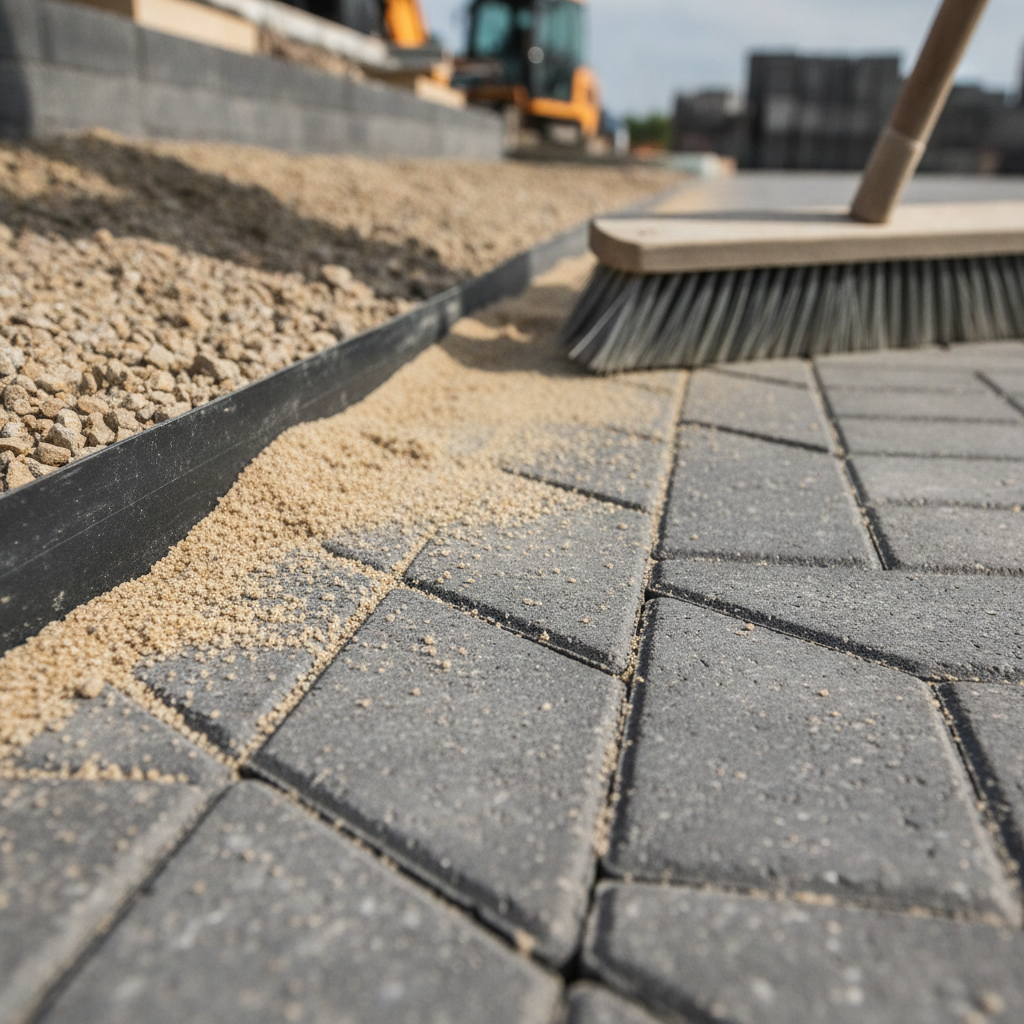
Our Top Pick (Most Homeowners)
For most Mississauga backyards, interlocking pavers are the best all-around patio surface. They balance clean design options with straightforward winter upkeep and easy unit replacement. With a 4–6 inch compacted base and proper edging, pavers resist heaving and make future touch-ups fast and predictable.
Why this matters: many families prioritize low-maintenance outdoor living. Pavers’ replaceable units and predictable joints simplify resealing and re-sanding. When a heavy planter leaves a mark or a corner settles slightly, we can lift, re-bed, and re-lock without disturbing the full surface.
- Clean, modern or classic patterns that match almost any home
- Consistent thickness for fast, accurate leveling
- Edge restraint options (spiked aluminum, concrete toe) lock borders
- Reliable results in freeze–thaw climates with a compacted open-graded base
Real-world example: a Mississauga family near Saigon Park needed a grilling zone plus play space. We installed a paver patio with soldier-course edging and polymeric sand. After a harsh winter, one edge lifted slightly; our crew relaid that course in under half a day and the pattern looked new.
Best by Scenario: 10 Alternatives You Should Consider
Your best patio surface depends on use, microclimate, and maintenance goals. Below, we map typical GTA scenarios to the material that performs best. Use these as guardrails; our design-build process confirms sub-base, drainage, and edging so the surface performs regardless of the material you choose.
- Fast timeline installs: Interlocking pavers. Uniform units speed layout and compaction, ideal when you want the space ready before a family event.
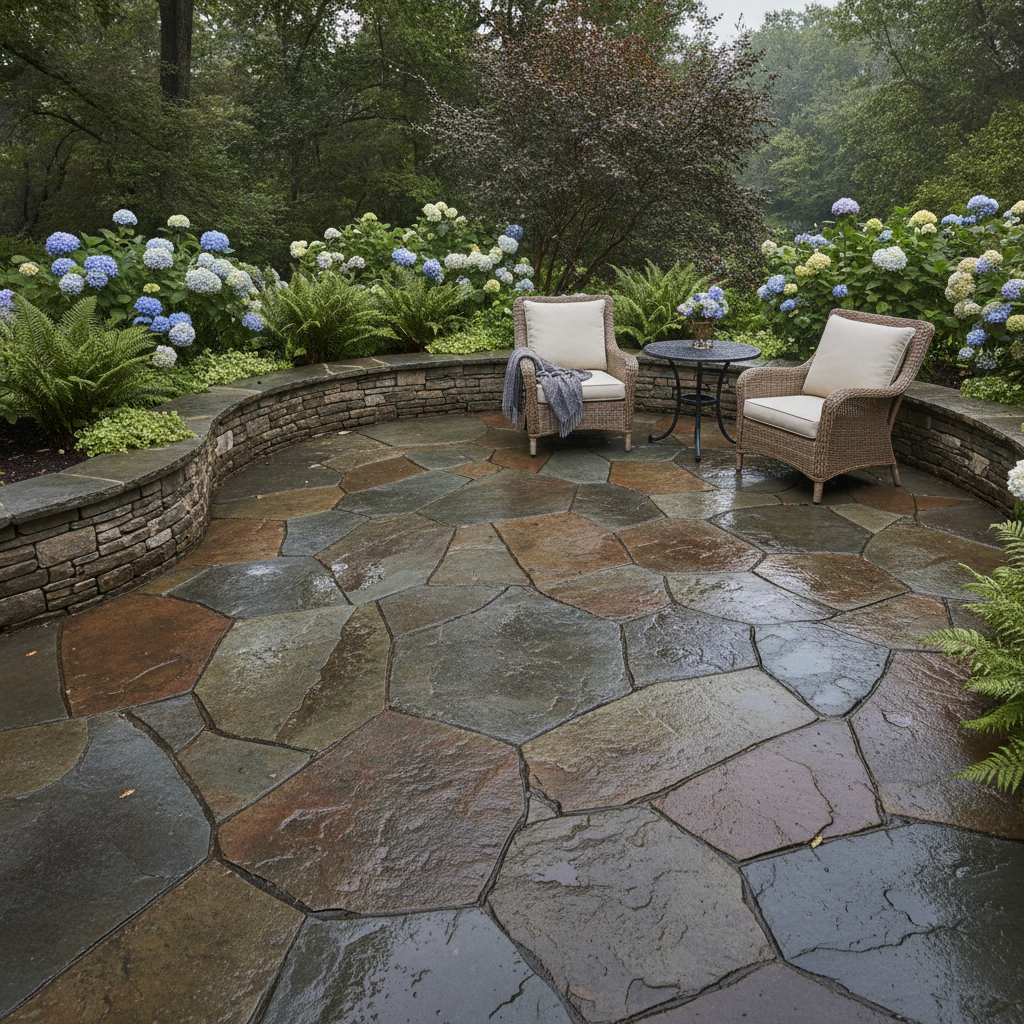
- Heritage or cottage vibe: Natural flagstone. Irregular shapes, rich veining, and hand-set joints deliver an old-world, timeless look.
- Heavy outdoor furniture: Thick pavers or large-format slabs. Even bearing minimizes point loads under table legs and sofas.
- Shady, damp corners: Textured natural stone. Slightly rough surfaces add traction where morning dew lingers.
- DIY-friendly spot repairs: Interlocking pavers. Lift, adjust bedding, and re-lock the field without replacing surrounding areas.
- Pool surrounds: Slip-resistant pavers or thermal-finished stone. Cooler-tone pavers reduce surface temperature in direct sun.
- Eco-forward goals: Permeable pavers. Aggregates in open joints help infiltrate water and reduce runoff into lawns and beds.
- Steep or complex grades: Pavers with retaining/step integration. Modular steps and edge restraint handle transitions cleanly.
- Tiny courtyards or tight access: Interlocking pavers. Small units move through narrow side yards and assemble easily in place.
- Signature garden lounge: Natural stone. A curated palette of stone species and bond patterns creates a standout feature.
- Driveway-adjacent extensions: Pavers designed for vehicular loads. They distribute loads evenly and are proven on driveways.
Tip: you don’t have to choose only one. We often blend pavers for main circulation with a stone lounge inset, giving you crisp movement paths plus an artisan focal point.
Interlocking Pavers vs Stone Work for a Patio: Which Is Better?
Neither surface is universally “best.” Interlocking pavers win for predictable maintenance, speedy repairs, and clean geometry. Natural stone wins for one-of-a-kind aesthetics and texture. The right answer is the surface that matches how you live, your winter plan, and how much upkeep you want.
What most homeowners prioritize
- Low upkeep: Pavers with polymeric joints typically need periodic re-sanding and rinsing.
- Snow plan: Uniform joints and edges make shoveling and snow blowing smoother.
- Design match: Stone delivers unique color variation; pavers offer consistent tone control.
Performance signals to check on quotes
- Base depth: For pedestrian patios, we commonly specify 4–6 inches of compacted aggregate on stable soils.
- Edge restraint: Aluminum or concrete toe keeps borders from creeping under lateral loads.
- Drainage: A 1–2% slope directs water away from foundations and into beds or drains.
In our experience across Mississauga and the GTA, the installations that last share disciplined base prep and clean edge control. Materials matter—but the foundation is what carries you through freeze–thaw cycles.
How to Choose the Right Surface (Step-by-Step)
Decide by mapping use patterns, site conditions, and maintenance tolerance. Identify furniture loads, snow-clearing habits, and drainage paths. Then match material properties to those needs. If you want quick repairs and uniform joints, choose pavers; if you want artisanal character, choose stone.
- Map movement: Sketch doors, grills, and seating; mark high-traffic lines.
- Check the soil: Clay and saturated areas need careful sub-base selection and geotextile separation.
- Mark drainage: Where does roof and patio runoff go? Plan to protect foundations and lawn.
- List loads: Dining tables, heaters, planters, and rolling carts all add point loads.
- Choose your winter plan: Shovel? Snow blower? De-icer type? Match to surface texture and jointing.
- Set the style: Modern grids, herringbone, random rectangles, or irregular flagstone.
- Confirm specs: Base depth, bedding thickness, joint media, and edge restraint in writing.
Need help scoping? See our Mississauga design–build guide for how we right-size projects and sequence work so your yard isn’t a jobsite for weeks.
Buying Guide: Specs That Actually Matter
Great patios start with sub-base and edges, not just pretty stones. Prioritize base depth, compaction, slope, and joint stabilization. Confirm geotextile where recommended, perimeter restraint, and polymeric or permeable joints. These details determine winter performance, drainage, and long-term leveling.
Core specifications we build to
- Excavation: Remove organics; achieve uniform depth.
- Sub-base: 4–6 inches compacted aggregate for pedestrian patios; more at transitions/edges.
- Geotextile: Separation fabric over clay or mixed soils to prevent fines migration.
- Bedding layer: Even 1 inch of bedding sand or chips for consistent leveling.
- Edge restraint: Spiked aluminum or a concrete toe for lateral stability.
- Jointing: Polymeric sand, jointing compounds, or open-graded for permeable designs.
- Slope: Target 1–2% fall away from structures and toward drainage.
Local considerations for Mississauga
- Schedule excavation and compaction during drier windows; saturated clay underperforms. Sites near Saigon Park can hold moisture after storms.
- Expect multiple freeze–thaw swings each shoulder season; uniform compaction and edge restraint reduce movement.
- Properties close to Lambton College often have tight side-yard access; modular pavers minimize disruption versus large stone pallets.
Want deeper hardscape detail? Our interlocking pavers guide covers patterns, bases, and joint options, while our landscaping services overview shows how patios blend with fencing, decks, and sod upgrades.
Project Planning: Timelines and Sequencing
Avoid rushed installs. Successful patios follow a predictable sequence: excavation, base build, edge restraint, bedding, laying, joint stabilization, and cleanup. Weather windows and curing times matter. We stage materials to keep access clear and coordinate any fencing, sod, or deck tie-ins.
- Typical build windows vary with rainfall and soil conditions.
- We stage pallets and aggregates to protect lawns and neighbor access.
- Where decks or sheds are planned, we confirm elevations first so transitions stay flush.
Curious how a patio integrates with other upgrades? See our notes on patio vs. deck planning and lawn replacement options for front and back yards.
Free On-Site Patio Assessment (Soft CTA)
Thinking about a patio this season? Book a free on-site assessment with HR Greenroots Landscaping. We’ll evaluate drainage, sub-base, and access, then outline a clear plan—whether you choose interlocking pavers or natural stone.
We meet you on-site in Mississauga or across the GTA, review goals, and suggest a right-sized scope. Our team handles design, build, and long-term maintenance planning so the space looks intentional on day one and stays practical through the seasons.
Methodology: How We Evaluated Surfaces
We combined hands-on install data from Mississauga and GTA projects with established best practices. We evaluated base prep, jointing, edge restraint, and winter performance, then pressure-tested each surface against typical homeowner scenarios to create clear recommendations.
- Field experience across patios, walkways, pool surrounds, and driveway aprons
- Observation during shoulder seasons when freeze–thaw cycles cause movement
- Repairability and maintenance time captured after one and two seasons
For broader context on interlock practices, see field notes from practitioners in Whitby and a concise pros-and-cons review. For blending patios with beds and planting, compare regional design guidance that mirrors GTA site realities.
Frequently Asked Questions
Homeowners ask about winter care, sealing, and mixing materials. Below are clear, direct answers you can act on today. If your site has unique grading or access constraints, book an on-site assessment so we can tailor details to your yard.
Will a shovel or snow blower damage my patio surface?
Use plastic-blade shovels or a snow blower with skids set slightly high to protect edges. On pavers, uniform joints reduce catching. On stone, avoid prying at irregular edges. De-icers should be used sparingly and rinsed when temperatures rise.
Do I need to seal interlocking pavers or natural stone?
Sealing is optional and look-driven. It can deepen color and resist staining but adds upkeep. Many homeowners prefer the natural matte finish. If sealing, clean thoroughly, ensure dry weather, and expect re-application on a multi‑year cadence.
Can I mix pavers and stone in one patio?
Yes. We often pair paver circulation zones with a stone lounge inset. The key is a continuous sub-base, consistent elevation transitions, and thoughtful edge details so snow tools glide and furniture sits level.
How long does a patio installation take?
Timelines depend on size, access, and weather. A straightforward backyard patio often builds in a short window when materials, excavation, base compaction, and curing can proceed without heavy rain. We’ll confirm staging and sequencing during your site visit.
Key Takeaways
Choose pavers for clean geometry, quick repairs, and predictable upkeep. Choose natural stone for unique, high-character spaces. Either way, prioritize base prep, drainage, and edge restraint. That’s what drives winter performance, longevity, and easy ownership in Mississauga.
- Performance is won or lost in excavation, compaction, and edges
- Pavers = predictable maintenance; stone = singular look and texture
- Plan snow clearing, furniture loads, and drainage before picking materials
- Blend both for function plus a signature lounge or fire zone
Conclusion and Next Steps
There’s no one “best” surface—there’s a best fit for how you live. If you want clarity fast, we’ll assess your Mississauga site, confirm drainage and base specs, and present a design that pairs the right material with the right build details.
Book a site assessment with HR Greenroots Landscaping. We serve Mississauga and the GTA with coordinated design–build delivery across patios, walkways, retaining walls, decks, fencing, and sod upgrades. Start here, then explore our landscaping services to plan the rest of your yard.


