
How to Choose the Best Mulch for Landscaping Beds in Mississauga and the GTA
Why mulch matters for garden beds in Ontario
Mulch does more than tidy a bed: it helps retain moisture after rain or irrigation, suppresses weeds, moderates soil temperatures (keeping roots cooler in summer and more insulated in winter), and gradually improves soil as organic materials break down. These core functions are especially useful in Mississauga and the Greater Toronto Area where both hot summer days and cold winters stress plants; using the right mulch reduces irrigation needs and protects roots across seasons (This Old House).
Compare common mulch types and when to use each
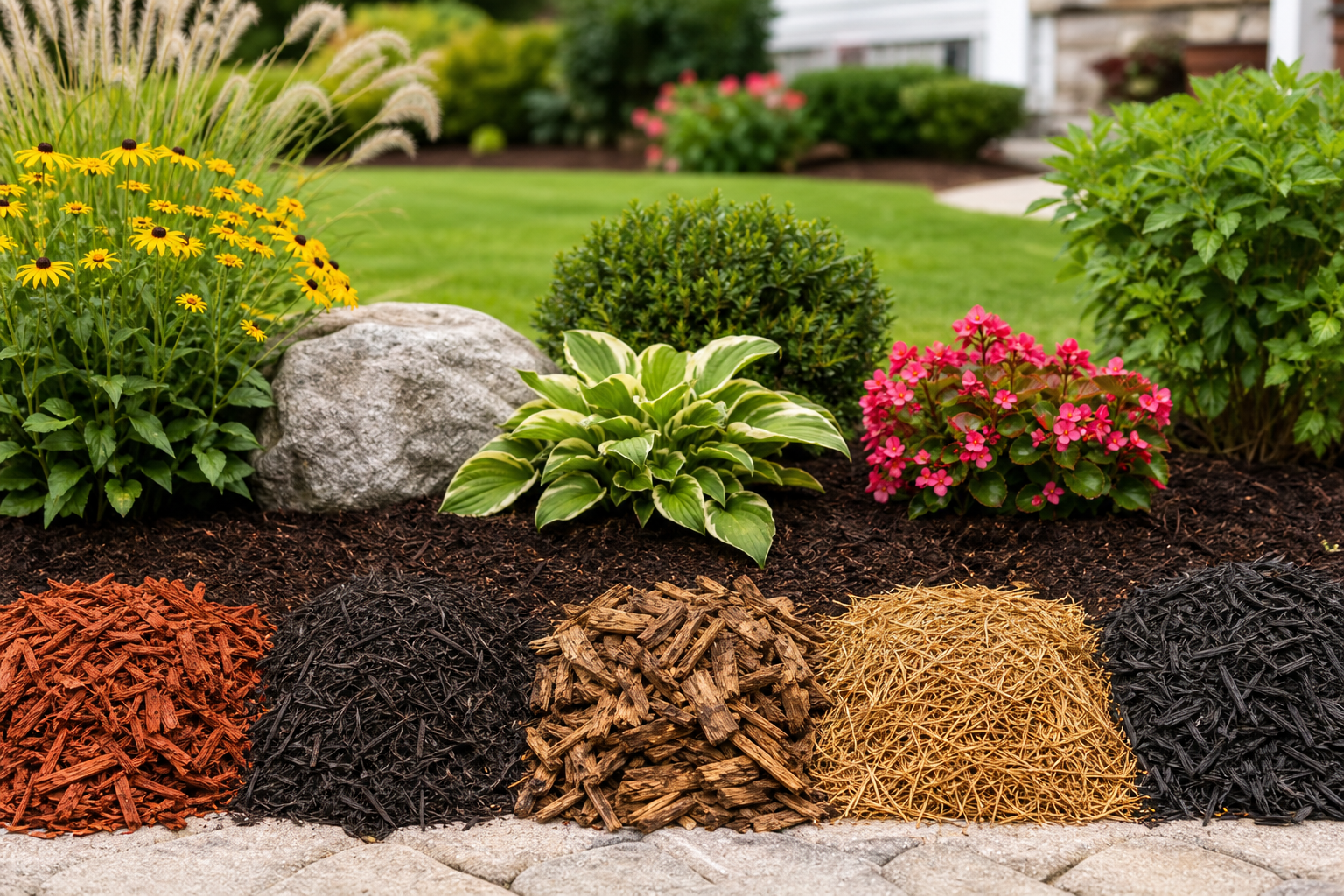
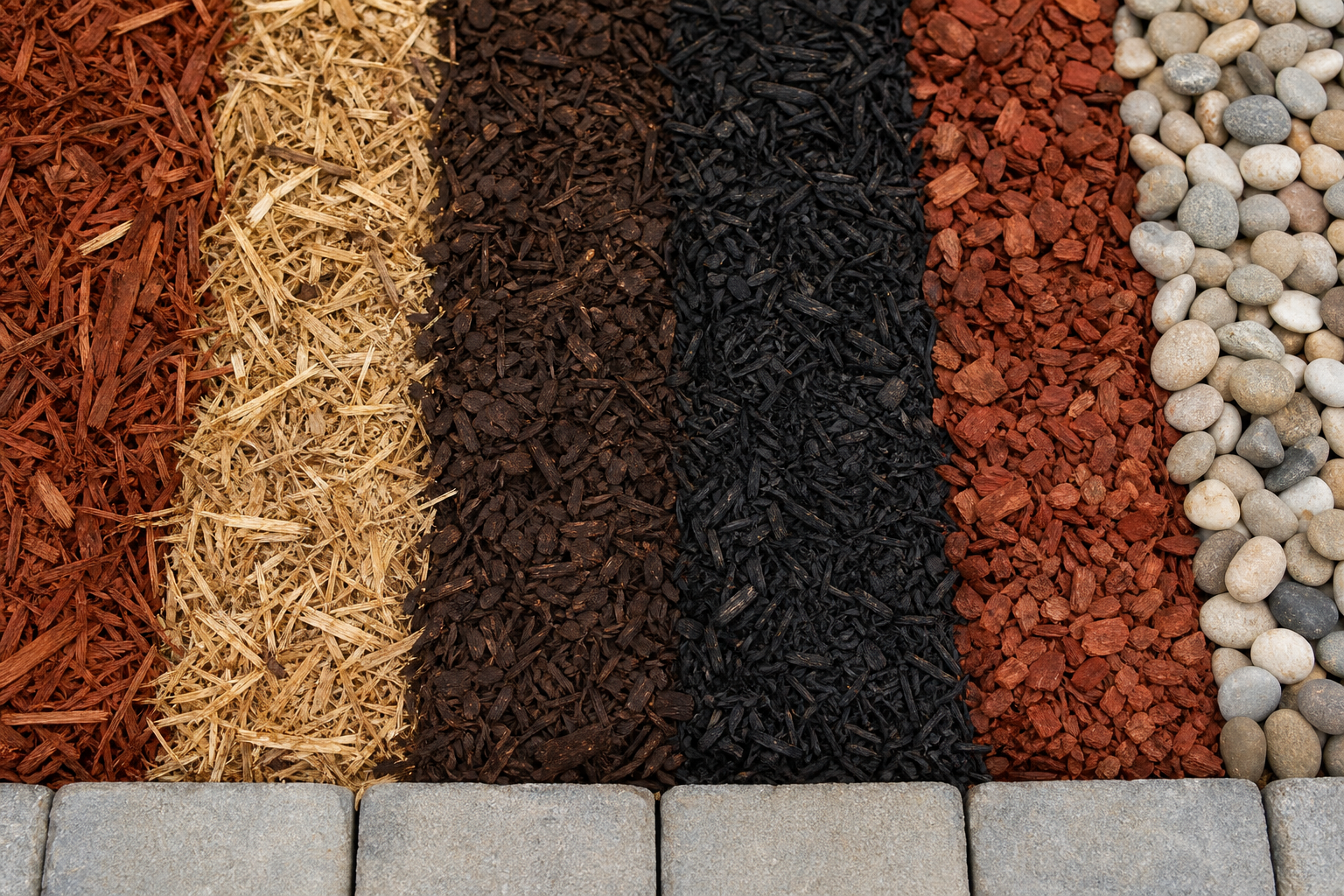
Mulch choices fall into organic and inorganic groups. Match material properties to the bed’s goals—weed control, visual finish, low maintenance, or soil improvement. Practical notes for common choices:
- Shredded bark / wood chips — Natural look, good weed suppression, and relatively slow to break down. Works well for shrub and ornamental beds and pathways. As it decomposes, it contributes organic matter, but it can settle or compact over time (The Spruce).
- Shredded hardwood — Neat appearance and resists wind; it can mat when wet, so keep it loose over beds with shallow-rooted plants.
- Compost or composted bark (topdressing) — Improves soil structure and returns nutrients as it breaks down; a good choice for vegetable beds, new planting areas, or where soil health is a priority (This Old House).
- Stone or gravel — Permanent and low maintenance, suitable for rock gardens and beds where drainage is important. It doesn’t add organic matter and can increase heat at the soil surface in summer (Bob Vila).
- Rubber mulch — Very long-lasting and good at suppressing weeds, but it does not contribute nutrients and can look artificial in plant-focused beds (Bob Vila).
- Dyed mulches — Provide consistent colour for curb appeal; they behave like the underlying organic material and will decompose over time, so expect periodic replenishment (The Spruce).
Decision tip: choose organic mulch (bark, wood, compost) where building soil and plant health matter; choose inorganic (stone, rubber) where permanence, drainage, or a low-replacement approach is the priority.
Site prep and step‑by‑step application checklist
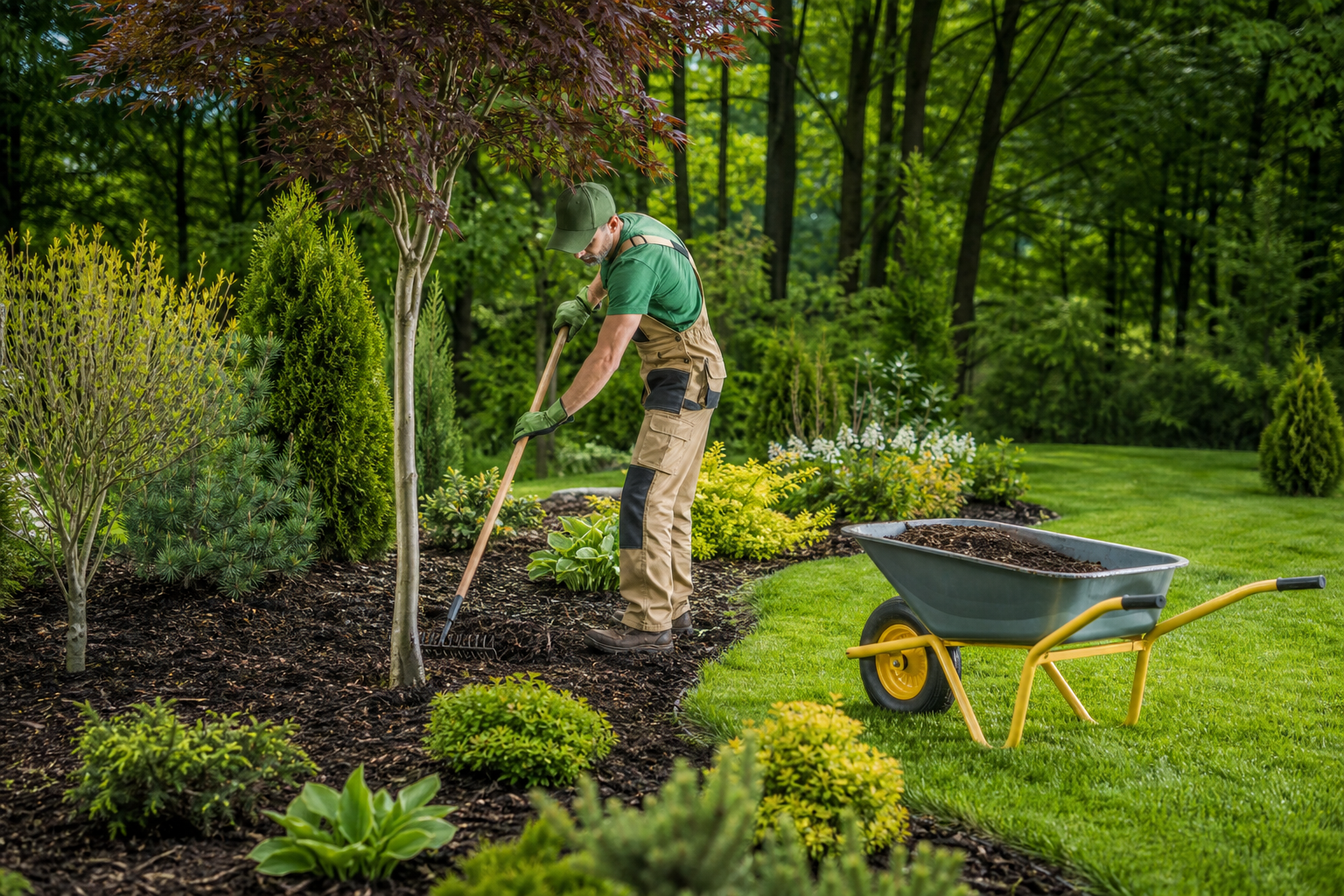
Follow a clean workflow before laying new material. This Old House demonstrates a reliable technique you can use: rake out dead leaves and old mulch, remove debris, cut back or edge the grass along the bed, and remove grass cuttings. Dump new mulch into the bed, spread with a rake, push mulch under shrubs while keeping it away from branches and trunks, and compact the mulch along the edge for a tidy finish (This Old House step-by-step).
Practical cautions and extra steps:
- Remove persistent weeds and invasive roots first. For aggressive runners (for example, goutweed or mint), mechanical removal and repeated follow-up may be needed before applying mulch (Angi).
- Keep mulch pulled back from trunks and main stems by several centimetres to reduce moisture‑related rot and allow air circulation; avoid piling mulch up against stems or creating a "volcano" shape around trees (This Old House).
- If bed edges are ragged, cut a clean profile with a half-round edger or square-edge shovel to improve curb appeal and help prevent grass encroachment.
- When spreading, follow the manufacturer and product guidance. Note that This Old House’s step sequence includes spreading new mulch to 1 inch in that particular process—use the product label and local best practice to decide the final layer depth for your material (This Old House).
How much mulch do I need and a simple coverage calculator
Use a basic volume formula to estimate how much mulch you need. Work in metric for cubic metres (m³):
Volume (m³) = Area (m²) × Depth (m)
Worked example (metric): if a bed measures 10 m² and you plan an added layer of 0.05 m (0.05 m = 5 cm) of mulch, the calculation is 10 × 0.05 = 0.5 m³. If your supplier sells by the cubic metre, order a small extra allowance (for compaction and settling) — commonly 5–10% more than the calculated volume.
Quick conversions: 1 cubic metre ≈ 35.3 cubic feet. If your supplier lists bag volume (for example, 0.0566 m³ per bag for a 2 cu ft bag), divide the total cubic metres by the bag volume to estimate bag count.
Note on depth: product type and planting goals affect target depth. Use product label recommendations and local guidance to set the depth for a given mulch and bed type; This Old House documents a 1-inch step in their mulching sequence as part of a practical workflow, but individual projects will vary (This Old House).
Maintenance schedule and troubleshooting common problems
A seasonal maintenance plan helps keep beds performing well in the GTA climate:
- Spring (April–May): remove winter debris, lift compacted or matted areas, spot‑weed, and top up areas where the mulch has settled or broken down.
- Mid-summer: inspect for matting and wet spots; rake or fluff the mulch to restore airflow and check for weed return.
- Late fall: a light top-up is optional; leave a protective layer for winter but avoid piling material against lower stems and trunks.
- Replace vs top up: consider full replacement when the layer is heavily compacted, matted, or has broken down to the point that weed growth is persistent. When the decomposed material is still productive for soil, you can leave it in place and add a fresh layer on top; when appearance and suppression are priorities, remove old layers before relaying (This Old House).
Visual cues for replacement include pronounced settling that exposes soil or roots, matting that prevents water infiltration, or persistent weeds despite regular spot‑weeding. Address compaction by raking and incorporating aeration where necessary before adding fresh mulch.
Frequently asked questions about mulching landscaping beds
Which mulch is best for shady versus sunny beds in the GTA?
For shady beds, organic mulches like shredded bark or composted material help retain moisture and improve soil structure under tree canopies. In sunny, hot areas, choose mulches and depths that slow evaporation—heavier organic layers or inorganic options like stone can help, depending on plant needs and heat tolerance (The Spruce).
How often should I top up or fully replace mulch in my planting beds?
Top up annually in spring to replace settled material and refresh appearance. Plan a full replacement when the mulch is compacted, matted, or heavily decomposed, or when persistent weeds indicate the existing layer is no longer suppressing growth (This Old House).
Will mulch placed against plant trunks cause rot or pest problems?
Mulch flush against trunks can trap moisture and increase the risk of rot or pest harborage. Keep mulch pulled back several centimetres from trunks and main stems and avoid piling material into volcano shapes—this simple precaution reduces risk and is recommended in mulching best practices (This Old House).
How do I calculate how many bags or cubic metres of mulch I need for a bed?
Measure bed area (length × width), choose a target depth in metres, multiply area by depth to get volume in cubic metres, and convert to the units your supplier uses. Add a small allowance (commonly 5–10%) for settling. See the worked metric example above for a 10 m² bed at 0.05 m depth: 10 × 0.05 = 0.5 m³ (Family Handyman).
When to hire a professional and how HR Greenroots can help
When to call a contractor: bring in a professional for large-volume installs, beds with extensive invasive roots, slope or grade correction where erosion control matters, integrated edge and hardscape coordination, or when you want a planting plan paired with mulching and long-term maintenance strategy. A crew with equipment and a site plan reduces rework and delivers consistent edge control for complex projects.
HR Greenroots Landscaping lists mulching and garden bed refresh among its core services, emphasizes maintenance‑minded planting plans tailored to Ontario properties, and serves Mississauga and the Greater Toronto Area. Request a quote or consultation on their mulching garden beds page to schedule a site visit and get a tailored mulch plan.


