
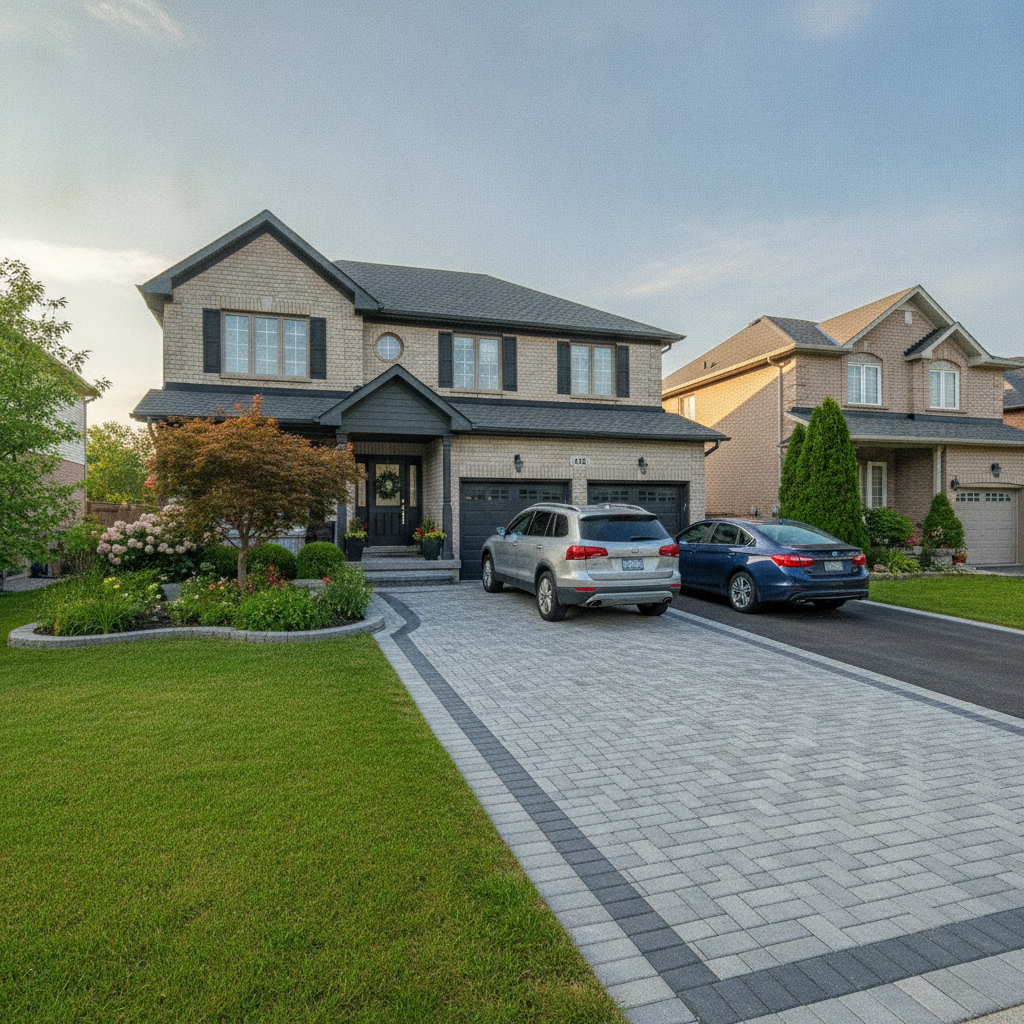
Extending a driveway in Mississauga refers to widening or lengthening your existing parking area to fit more vehicles while meeting local rules and sound construction standards. From our base at 100 Matheson Blvd E unit 202, HR Greenroots Landscaping designs, permits, and builds driveway extensions that add safe parking and strong curb appeal without drainage or grading issues.
By HR Greenroots Landscaping — Visit our website
Last updated: June 16, 2026
Hero Section: Add Parking Without Headaches
The fastest, cleanest way to add parking is a code-compliant driveway extension engineered for Ontario freeze–thaw cycles. We verify setbacks and utilities, then build on a compacted granular base with about a 2% slope so the surface drains, resists heaving, and ties into your existing driveway without visible settlement lines.
Need two vehicles side by side, space for guests, or a wider turn radius? A purpose-built extension solves daily parking friction and cleans up your frontage. Our Mississauga team manages layout, elevation control, and finish selection so the new section looks intentional on day one and stays tight through winter.
Introduction
This service guide explains how to extend your driveway for more parking in Mississauga. You’ll learn the rules that shape width and curb transitions, the base specs that prevent sinking, finish options that perform in winter, and how our team executes each step—from utility locates to final sweep.
Done right, driveway widening is a technical mini-project: subgrade proof-rolling, base thickness (often 6–10 inches of aggregate), 0.5–1 inch bedding, and a finished surface with consistent elevations and 2% fall. Skipping any step invites rutting, puddling, and cracks—especially after 30–60 freeze–thaw days per season.
Our design–build approach keeps decisions coordinated. We confirm bylaw limits, map shallow services, set grades to move water away from foundations, and choose finishes that handle road salt and tire shear. You’ll see how each step connects to the next for a stable, long-lasting result.
Quick Summary
To extend your driveway in Mississauga: verify width rules, complete a utility locate, choose a durable finish (pavers, concrete, or asphalt), and build on a compacted base with a 2% slope. Lock edges, stabilize joints, and tie flush to existing surfaces to prevent settlement and keep water moving.
- Confirm allowable driveway width and any right-of-way requirements before design.
- Book a utility locate and mark gas, hydro, telecom, and water lines along the frontage.
- Select finish: interlocking pavers (modular), concrete (rigid), or asphalt (flexible).
- Engineer the base: typically 6–10 inches of aggregate compacted in 2–3 lifts.
- Maintain positive drainage at about 2% away from structures and toward the street.
- Use rigid edging and polymeric sand for pavers; ensure clean, flush tie-ins.
- Plan snow storage, walkway clearances, and planting edges during layout.
Local considerations for Mississauga
- Setbacks and width rules vary by lot; verify early if you live near Saigon Park or campuses such as Lambton College, where frontage standards can be tight.
- Target spring or fall for base work; moderate moisture helps compaction and reduces dust.
- Sidewalk and curb transitions within the road allowance may require approvals and inspections—build to spec to avoid remediation orders.
Services Offered: Driveway Extensions and Seamless Tie-Ins
We design and build driveway extensions that widen or lengthen parking pads, integrate with existing asphalt or concrete, and add interlocking paver borders for strength and style. Our crews handle base prep, grading, edge control, and finishing details so the upgrade performs year-round and looks cohesive.
HR Greenroots Landscaping is a full-service landscape design–build contractor serving Mississauga and the GTA. Driveway extensions touch adjacent spaces—walkways, steps, lawns, and beds—so we integrate grading, landscape design, and driveway extension services into one coordinated plan. That keeps elevations consistent, transitions smooth, and snow routes practical.
What we build and integrate
- Driveway widening and extensions with clean tie-ins to existing surfaces and sidewalks.
- Interlocking paver borders that lock edges, add contrast, and improve load distribution.
- Walkway realignment so doors, steps, and accessibility routes match new grades.
- Minor retaining solutions (retaining walls or armor stone) for small elevation changes.
- Lawn and bed refresh with premium sod, mulch, and crisp edging after construction.
- Maintenance planning covering snow removal, joint stabilization, and spring cleanup.
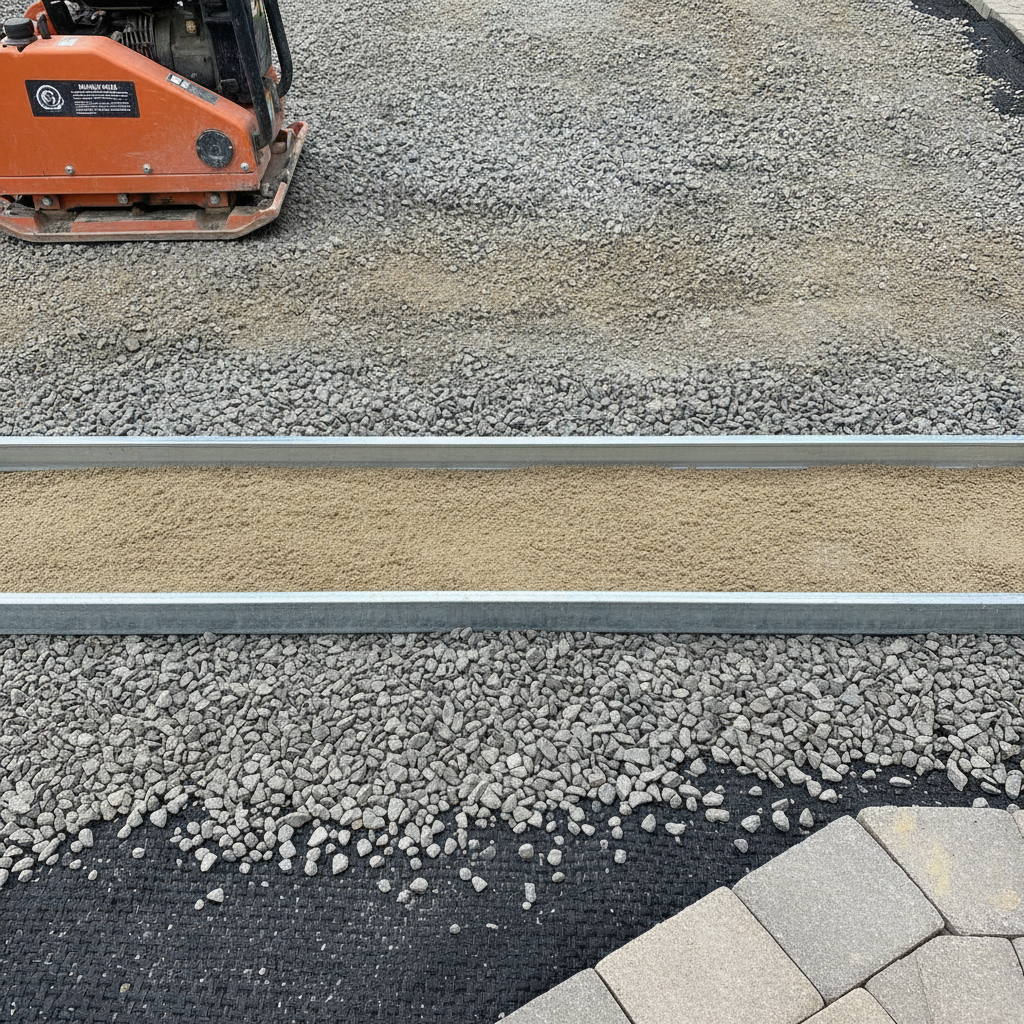
For everyday durability, we recommend dense-graded aggregate (3/4 inch minus) compacted to high density in 2–3 lifts. On clay-heavy sites, we add geotextile to separate fines from the base and reduce pumping. These specs prevent the telltale settlement seam where new and old surfaces meet—a common failure point when base prep is rushed.
Curious how a border can elevate function and style? See ideas in our driveway extension ideas guide and our tips for widening narrow lots. We also cover post-build care in our seasonal maintenance planning article.
The Process: How to Extend Your Driveway in Mississauga
Our workflow spans rules checks, utility locates, layout and grading, base construction, finish installation, and final handoff. Each step uses measurable specs—base depth, compaction targets, and 2% slope—so your extra parking stays stable, drains well, and survives winter freeze–thaw cycles.
Step-by-step you can trust
- Site assessment: measure frontage, note slopes, check downspouts, and document utilities.
- Rules and right-of-way: verify driveway width limits, curb-cut needs, and sidewalk tie-in standards.
- Utility locate: schedule a full locate; mark gas, hydro, telecom, and water safely.
- Layout and elevations: set string lines and grades for a 2% fall away from structures.
- Excavation: remove organics; typical depth equals base + bedding + surface (often 8–12 inches).
- Subgrade proof-roll: identify soft zones; stabilize with more aggregate or geotextile.
- Base install: place 6–10 inches of aggregate in 2–3 lifts; compact thoroughly between lifts.
- Bedding layer: add 0.5–1 inch leveling sand or high-performance bedding for pavers.
- Surface install: lay pavers, pour concrete, or place asphalt with flush tie-ins.
- Edge control: add concrete edge restraints or paver edging at 8–12 inch fastener spacing.
- Joint stabilization: sweep polymeric sand into paver joints and activate properly.
- Final sweep and walkthrough: validate drainage, transitions, and snow-storage plan.
Finish options compared
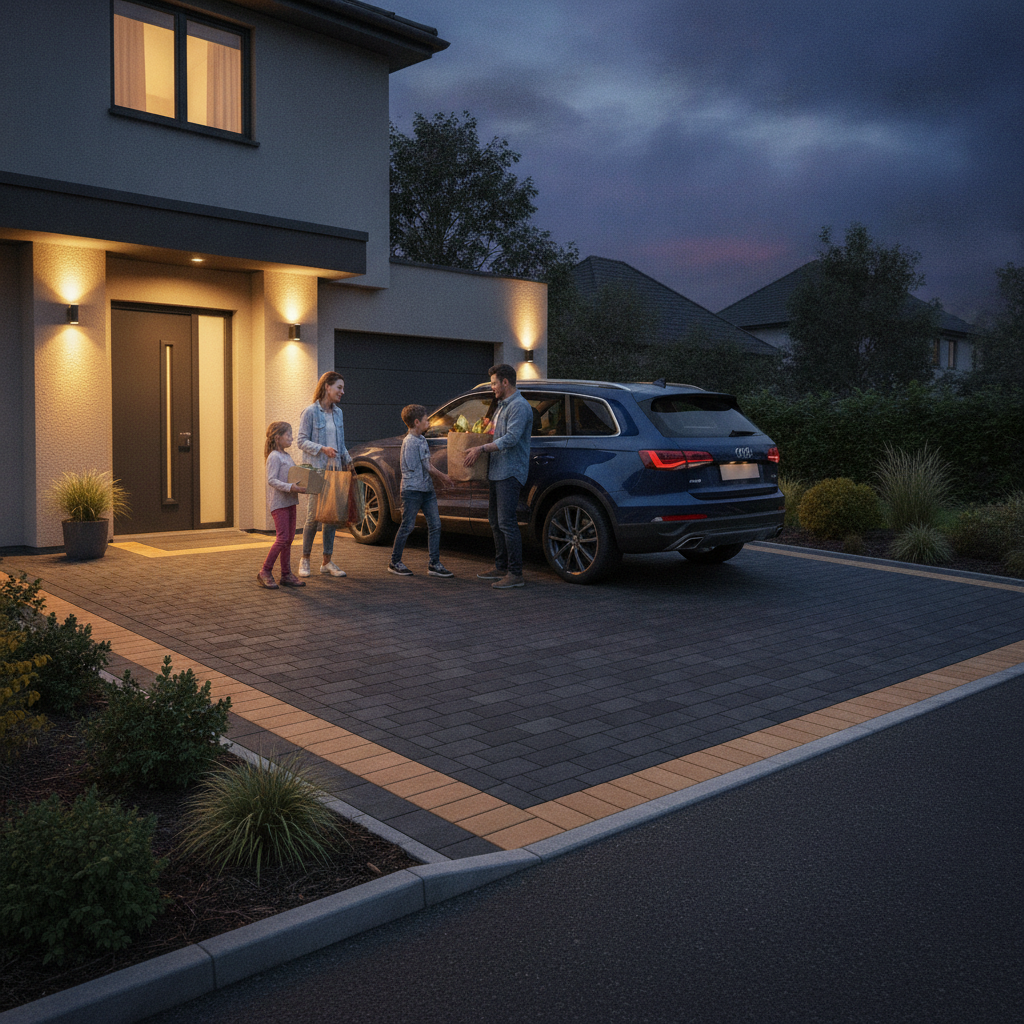
Finish Durability Repairability Drainage Curb Appeal Typical Timeline Interlocking pavers High (modular, flexible) Excellent (lift & reset) Strong (permeable options) Premium look, color options 2–4 days (size dependent) Poured concrete High (rigid slab) Moderate (saw-cut/patch) Good with control joints Clean, monolithic 2–3 days + cure time Asphalt Moderate (flexible) Good (overlays possible) Good with base slope Uniform, utilitarian 1–2 days + set timeWe often combine a 6–8 inch wide paver soldier course with a concrete or asphalt field. That hybrid detail strengthens edges, reduces cracking at transitions, and elevates the look. It also creates a tactile boundary that guides snow blowers and protects garden edges during winter clearing.
Want deeper reading on interlock performance? This regional overview of interlock driveway pros and cons highlights how modular systems handle movement and winter. For context on walkway tie-ins, see this hardscaping advice piece discussing base prep and edge control for adjacent paths.
Pricing & Project Factors (No Surprises)
We don’t publish prices because every site is different. Your investment depends on frontage width, excavation depth, soil stability, finish selection, permit scope, and tie-ins to walks or steps. After an on-site assessment, we provide a fixed-scope proposal with clear specs and warranty terms.
What shapes your project scope
- Frontage and geometry: Wider or curved layouts require additional excavation and edging.
- Base depth: Clay-heavy soils often need 8–10 inches of base; sandy soils may need less.
- Finish type: Pavers, concrete, and asphalt differ in performance, repairability, and texture.
- Access: Tight side yards or mature trees can force handwork and protection mats.
- Right-of-way elements: Curb cuts, sidewalk transitions, or catch-basin proximity add steps.
- Adjacent upgrades: Walkway realignment, step rebuilds, or lawn refreshes can be bundled.
We’ll specify measurable details—aggregate gradation, lift thickness, compaction method, edge type, and joint medium—so you know how the extension is built. That transparency helps you compare options beyond surface look and ensures long-term performance matches expectations.
Why Choose HR Greenroots Landscaping
We integrate design, construction, and maintenance planning under one roof. For driveway extensions, that means stronger bases, cleaner tie-ins, and front yards that still look sharp after heavy snow seasons. Verified client reviews highlight reliability, tidy sites, and on-time delivery.
Our practical advantages
- End-to-end delivery: one team for design, approvals, build, and maintenance planning.
- Base and grading expertise: compacted lifts, geotextile where needed, precise slope control.
- Seamless hardscape integration: interlock, concrete, steps, and walks built as one system.
- Ontario-specific planting: structured front beds and sod that frame parking with seasonal color.
- Maintenance-first mindset: snow routes, salt tolerance, and edge durability are planned in.
- Straightforward communication: clear schedules and documented specs to avoid surprises.
Explore how cohesive design elevates function in our front-yard transformation ideas. For a broader view of outdoor planning beyond parking, this regional design overview shows why circulation and planting layers matter around driveways and walks.
Free on-site assessment
Need an extra parking spot this season? Book a fast, on-site assessment. We’ll verify rules, mark locates, and provide a build-ready plan.
Service Area: Mississauga and the Regional Municipality of Peel
We extend driveways across Mississauga and the Regional Municipality of Peel, including neighborhoods near major corridors and campuses. Our crews mobilize throughout the GTA, coordinating site visits, utility locates, and staged deliveries so projects stay on schedule.
Based in Mississauga, we frequently serve homes along Matheson and Eglinton where a second parking spot eases daily logistics. We also work across Toronto, Richmond Hill, North York, and other Southern Ontario cities when families need added parking without losing front-yard character or drainage performance.
Testimonials
Homeowners choose us for organized crews, tidy sites, and results that look intentional from day one. Many note that our base work and edge control keep surfaces tight through winter, and that coordinated lawn and garden refreshes make the new parking feel built-in.
- “The paver border makes shoveling easy and looks sharp. The extension blends perfectly with our walkway.”
- “They flagged a downspout issue and re-graded so water moves to the street. No puddles since.”
- “Crew was on time, careful with our lawn, and cleaned up like they were never here.”
Key Takeaways
Driveway extensions deliver everyday convenience when they follow sound specs: verify rules, protect utilities, compact the base in lifts, set a 2% slope, and lock edges. Pair structure with cohesive landscaping so added parking looks like it’s always been part of your frontage.
- Confirm width rules and road-allowance transitions early.
- Build on 6–10 inches of compacted aggregate in 2–3 lifts.
- Keep surface fall near 2% for reliable drainage.
- Use edge restraints and polymeric sand for pavers.
- Align walks, steps, and beds to the new grades.
Frequently Asked Questions
These quick answers cover rules, materials, timelines, and maintenance for driveway extensions in Mississauga. Each response is concise and action-focused so you can plan with confidence.
Do I need permission to extend my driveway in Mississauga?
Most properties must follow driveway width, setback, and right-of-way standards. Plans that alter the curb or sidewalk often require approval and inspections. We verify the latest rules during assessment before any excavation begins.
What surface is best for a driveway extension?
Interlocking pavers, concrete, and asphalt all work. Pavers are modular and easy to repair, concrete is rigid and clean, and asphalt is flexible and uniform. The right choice depends on base conditions and how you want the frontage to look year-round.
How long does a typical widening take?
Many residential extensions finish in a few days after approvals and locates. Timelines vary with frontage width, access, weather windows, and finish selection. We schedule around compaction and curing requirements for durability.
Will my lawn and garden be damaged?
We protect adjacent turf and beds with ground mats and careful access routes. After construction, we re-edge beds and re-sod disturbed zones so the frontage looks finished, not patched.
Ready to Add Parking?
If you need more parking, we’ll make the extension straightforward: confirm rules, secure locates, build a stable base, and finish with a surface that matches your goals. Book an on-site assessment today and get a build-ready plan.
- On-site assessment and layout recommendations
- Verified rules and utility locates
- Engineered base, clean tie-ins, and strong edges
- Maintenance plan for winter and spring
Contact HR Greenroots Landscaping, 100 Matheson Blvd E unit 202, Mississauga. Your driveway extension will look purposeful and perform in every season.


