
The best material for retaining walls in Ontario is the one that resists freeze–thaw cycles, drains cleanly, and can be built to spec on your site. For most Mississauga yards, segmental concrete retaining wall blocks and armor stone perform best when engineered and drained properly. From 100 Matheson Blvd E unit 202, we build walls that stay true and look sharp.
By hrgreenroot landscaping • Last updated: 2026-06-18
Introduction
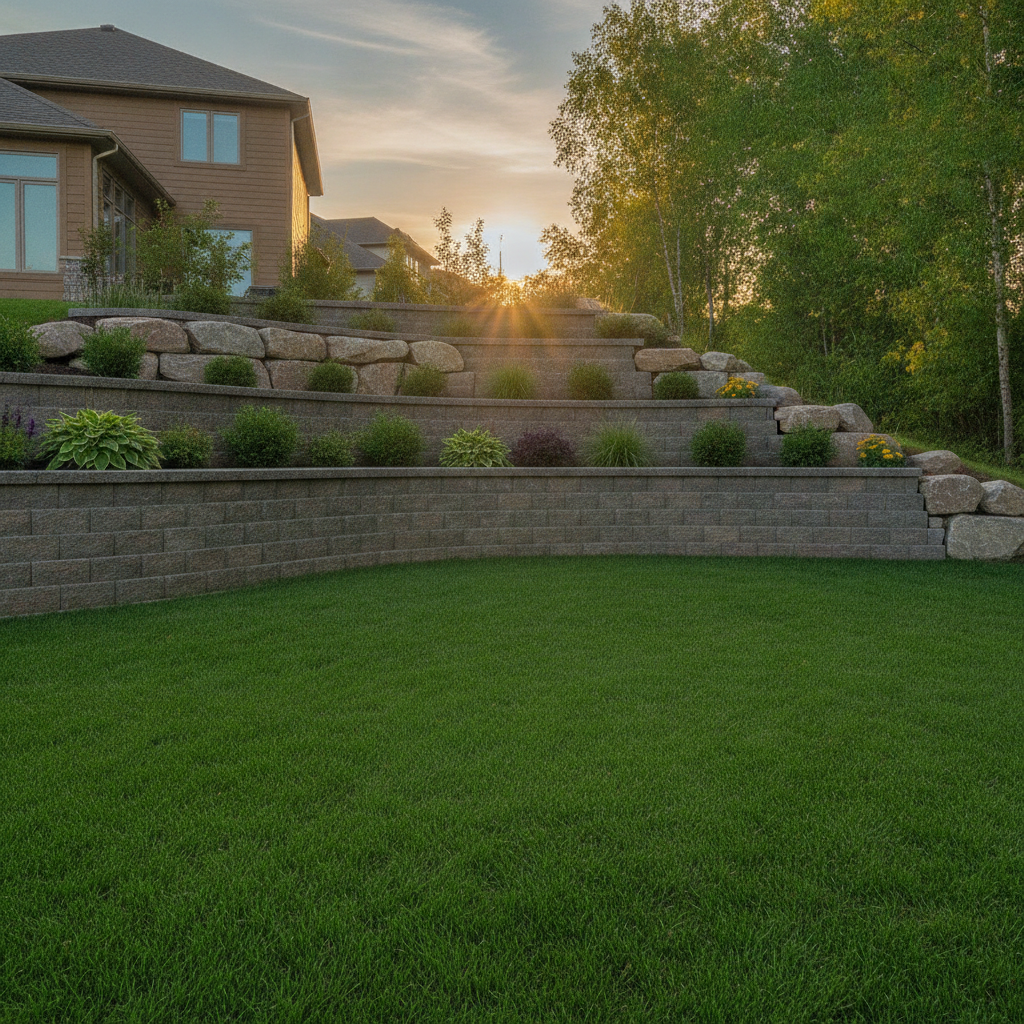
Retaining walls in Ontario must handle saturated spring soils, frequent freeze–thaw cycling, and tight urban lots. The right material pairs strength with drainage. In our experience across Mississauga and the GTA, segmental concrete blocks (SRWs) and armor stone give the most consistent performance when installed over a compacted, free-draining base with geogrid where required.
HR Greenroots Landscaping is a Mississauga-based design–build team focused on durable hardscapes and maintenance-minded planning. You’ll learn how 12 common wall materials compare, where each shines, and how to select the right system for your slope, soil, and style.
- Direct, practical comparisons based on Ontario conditions
- Actionable specs: base depth, drainage, and geogrid basics
- Real examples from Mississauga and surrounding GTA projects
- Clear next steps to design and build with confidence
Quick Summary
For most residential projects, choose segmental concrete retaining wall blocks for engineered strength, modular speed, and proven freeze–thaw durability. Armor stone ranks second for natural aesthetics and mass. Both require 3/4-inch clear stone backfill, a 4-inch perforated drain at the heel, and geogrid reinforcement on taller or loaded walls.
Here’s what this guide delivers at a glance:
- Top pick material and 11 alternatives with pros/cons
- Quick comparison table by durability, drainage, and buildability
- When to specify geogrid and how much embedment is typical
- Local considerations for Mississauga sites and Peel Region soils
Quick Comparison Table
Use this table to scan 12 retaining wall materials against Ontario-specific factors. We rated freeze–thaw durability, drainage complexity, build speed, maintenance, and best use-case so you can shortlist quickly and then dive deeper into the top contenders for your property.
Material Freeze–Thaw Durability Drainage Complexity Build Speed Maintenance Ideal Use Segmental Concrete Block (SRW) Excellent with proper base/geogrid Moderate (clear stone + 4" drain) Fast (modular courses) Low Most residential walls, curves, steps Armor Stone (Limestone/Granite) Excellent mass and stability Moderate (drainage stone still needed) Moderate (machine set) Low Natural look, accent terraces Poured-in-Place Concrete High if detailed with control joints Higher (weep holes/joints) Moderate Low Straight, modern lines, higher loads Gabion Baskets High; flexible and permeable Low–Moderate (permeable mass) Moderate Low Water-adjacent, rustic aesthetics Timber (Pressure-Treated) Lower in wet/freeze conditions Moderate Fast Moderate Shorter walls, temporary solutions Boulder Wall High when well keyed Moderate Moderate (machine set) Low Rural sites, large setbacks Brick (Structural) Moderate; needs robust footing Higher (weep/drainage plane) Slow Moderate Heritage aesthetics, low heights Stone Veneer over Concrete High (concrete core) Higher (weep/veneer details) Slow–Moderate Low–Moderate Premium finishes on straight lines Modular Precast Panel High (engineered system) Moderate Fast with equipment Low Commercial/roadside, taller walls Steel Sheet Pile High (corrosion managed) Low–Moderate Fast with equipment Low–Moderate Tight spaces, waterfronts Living Wall/Geocell Moderate; depends on fill Moderate Moderate Moderate Green terraces, light loads Dry-Stack Fieldstone Moderate; skill dependent Moderate Slow Low Historic/rustic, lower heightsInstallation success matters as much as material. A typical Ontario build uses 6–8 inches of compacted 3/4-inch clear stone for the base, a 4-inch perforated drainpipe at the heel, and free-draining backfill up to within about 12 inches of the surface—then a soil cap for planting.
Our Top Pick: Segmental Concrete Retaining Wall (SRW) Blocks
Choose SRW blocks when you want engineered strength, curved layouts, and reliable freeze–thaw performance. These modular units interlock with a built-in batter, accept geogrid layers for taller walls, and install quickly over a compacted, free-draining base—ideal for most Mississauga residential sites.
Why we recommend SRW blocks first:
- Engineered stability: Units interlock; geogrid adds tensile strength. Typical grid embedment equals 0.6–0.8× the design wall height.
- Cold-climate proven: Air-entrained concrete, proper base, and drainage resist Ontario’s freeze–thaw cycles.
- Design flexibility: Tight radii, steps, seat walls, and caps create finished outdoor rooms.
- Efficient builds: Modular courses speed installation on busy urban lots.
Build notes from our projects:
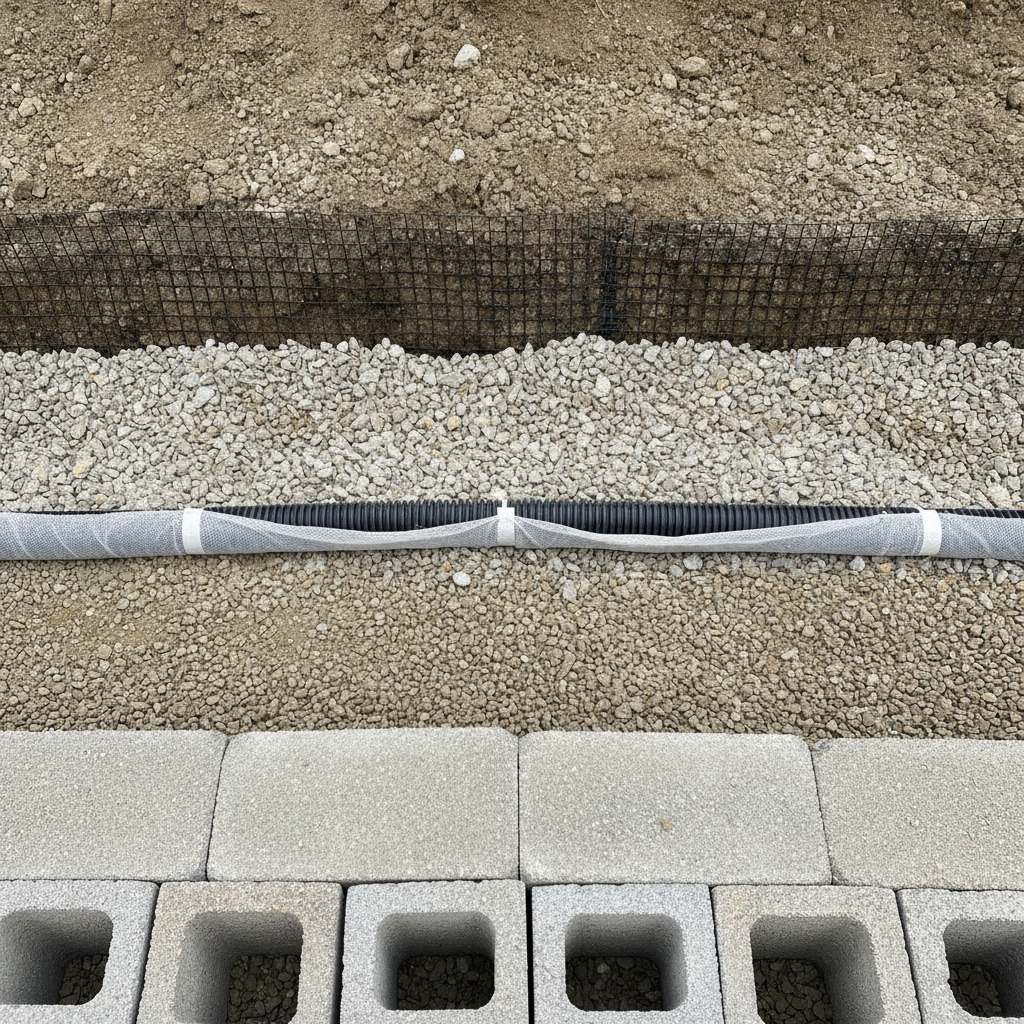
- Base layer: 6–8 inches of compacted 3/4-inch clear stone over geotextile to separate fines.
- Drainage: 4-inch perforated pipe at the heel; daylight where grade allows; otherwise connect to approved discharge.
- Setback: Many systems step back about 3/4 inch per course with a final cap for a finished edge.
- Reinforcement: Grid every 2–3 courses on reinforced walls; always per manufacturer engineering.
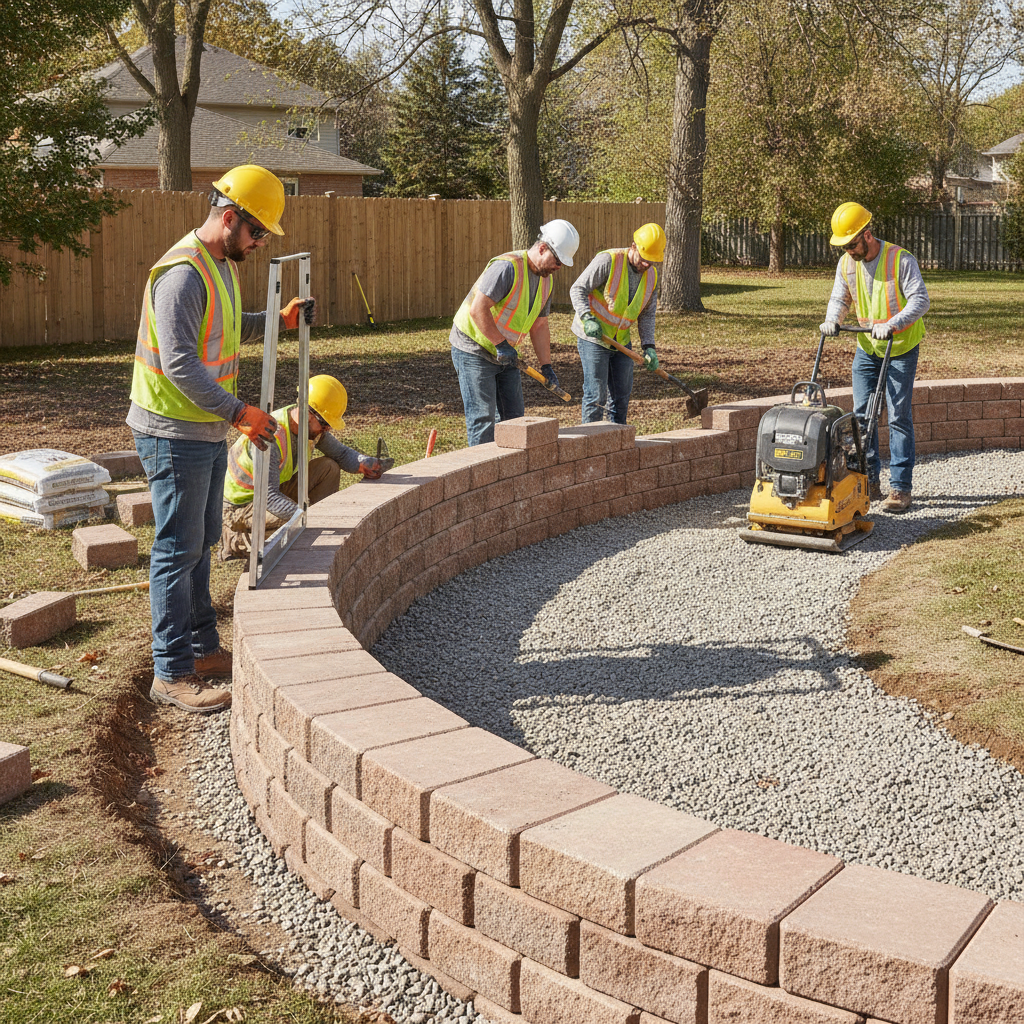
Want to see how we build them? Explore our retaining wall service and our in-depth retaining wall drainage guide for diagrams and step sequences tailored to Ontario homes.
Other Top Materials Compared (Entries #2–#12)
Armor stone ranks second for natural style and mass. Gabions excel near water. Poured concrete offers crisp modern lines. The right choice depends on height, loads, style, and access. Use these material snapshots to match wall performance to your property constraints and maintenance goals.
2) Armor Stone (Limestone or Granite)
Armor stone walls use large, machine-set blocks—often 12–24 inches tall and 2–4 feet long—that key into a compacted stone base. Their weight and friction provide excellent stability on Ontario slopes, and the natural texture pairs well with gardens and interlocking patios.
- Pros: Exceptional mass, timeless look, low maintenance.
- Consider: Equipment access for placement; drainage stone still required.
- Best for: Terraced fronts, pool-grade transitions, and focal features.
We often blend armor stone risers with SRW terraces for a balanced look—stone steps leading to a modular seating wall near a patio. That mix delivers structure where needed and character where it counts.
3) Gabion Baskets
Gabions are wire cages filled with stone. They’re permeable, flexible, and handle minor settlement without cracking. On sites with seasonal water or soft subgrades, this “rock in a box” concept can be a strategic solution with a modern-industrial edge.
- Pros: Naturally drained mass, forgiving to movement, rustic charm.
- Consider: Visible mesh; needs clean stone fill and secure lacing.
- Best for: Water-adjacent zones and informal landscapes.
For engineering context on metal reinforcement in concrete structures, see this reinforcing steel guide—helpful when comparing rigid wall systems where rebar details matter.
4) Poured-in-Place Concrete
Cast walls deliver straight, crisp geometry. Proper design introduces control joints and weep holes to manage movement and moisture. This system pairs nicely with modern architecture and can carry surcharge loads when engineered.
- Pros: Clean lines, high load capacity when detailed.
- Consider: Requires formwork, cured strength, and precise drainage.
- Best for: Straight runs with contemporary styling and higher loads.
Where driveways meet grade changes, poured returns can integrate with retaining wall design details and interlocking aprons for durable transitions.
5) Timber (Pressure-Treated)
Timber walls are quick to assemble and suit rustic looks. In wet, freezing climates, service life is typically shorter than masonry options. Hardware, proper anchoring, and back drainage are critical to prevent bowing and rot.
- Pros: Fast install, warm aesthetic, easy to modify.
- Consider: Shorter lifespan in saturated soils and freeze–thaw.
- Best for: Low garden edges or temporary grade holds.
6) Boulder Walls
Natural boulders create organic, flowing lines. With adequate keying and setback, they form sturdy terraces. Irregular shapes demand skilled placement and enough footprint, making boulders better suited to larger properties with equipment access.
- Pros: Massive units, minimal maintenance, sculptural feel.
- Consider: Space needs; less precise alignment near structures.
- Best for: Wide setbacks, informal gardens, and woodland edges.
7) Brick (Structural)
True structural brick walls require a reinforced footing below frost depth and dedicated drainage. The look suits heritage homes, but the craft and detailing make brick better for low heights in our climate or as a veneer over a concrete core.
- Pros: Classic appearance; compatible with heritage facades.
- Consider: Slow build, intensive detailing, robust footing.
- Best for: Short landscape edges where matching brickwork matters.
8) Stone Veneer over Concrete
This hybrid uses a cast-in-place or block core with a natural or manufactured stone veneer. You get the strength of concrete with premium face textures. Success relies on weeps, proper adhesives, and cap details to shed water.
- Pros: Premium finish options over a strong core.
- Consider: Added installation steps and curing time.
- Best for: Straight runs near architecture where finish is primary.
9) Modular Precast Panel Systems
Pre-engineered panels connect to anchors or piles. They’re fast for taller, straight runs along roads or commercial sites. For homes, they can be overbuilt unless a unique constraint favors them.
- Pros: High capacity, rapid install with the right equipment.
- Consider: Access for machinery and anchors; straight-line aesthetics.
- Best for: Commercial edges and long property boundaries.
10) Steel Sheet Pile
Sheet piles interlock and drive into the subgrade, forming a slim, strong barrier. They’re common at waterfronts and tight urban spaces. Corrosion management and cap details are key considerations.
- Pros: Small footprint, high strength, quick once mobilized.
- Consider: Noise/vibration during install; corrosion protection.
- Best for: Shorelines and tight setbacks.
11) Living Walls / Geocell Reinforcement
Geocells and vegetated facings create green terraces. They rely on reinforced soil and proper drainage. This is a good fit for gentle slopes where a soft aesthetic matters more than a rigid face.
- Pros: Vegetated look, adaptable shapes, good infiltration.
- Consider: Ongoing plant care; not ideal for high surcharges.
- Best for: Low, layered terraces in garden settings.
12) Dry-Stack Fieldstone
Built without mortar, these rely on careful stone selection, tight fits, and gravity. A free-draining base and backfill are still mandatory. Craftsmanship drives success and speed.
- Pros: Historic charm, permeable by nature.
- Consider: Labor-intensive; material sorting takes time.
- Best for: Cottage-style gardens and heritage cues.
How to Choose the Right Wall for Your Property
Match material to height, soil, water, and style. In Mississauga and the Regional Municipality of Peel, prioritize freeze–thaw resistance, drainage paths, and access for equipment. For walls above about one meter or supporting loads, plan for engineering, geogrid reinforcement, and careful base preparation.
Use this step-by-step framework we apply on site:
- Define the job: Height, length, curves, and any surcharges (driveways, fences, slopes).
- Assess soils: Clay needs more drainage relief than sandy loam. Note water paths and spring melt.
- Confirm setbacks/utilities: Call for utility locates. Measure space for equipment and material staging.
- Select a system: Shortlist SRW or armor stone for most homes; consider poured/gabion for specific constraints.
- Engineer as needed: Use geogrid spacing and embedment per manufacturer guidance when heights or loads dictate.
- Detail drainage: 4-inch perforated pipe, 3/4-inch clear backfill, and daylight or approved discharge.
- Plan finishes: Caps, steps, lighting conduits, and tie-ins to adjacent materials like interlocking patios.
For corner cases—tight side yards, deep frost pockets, or tall terraces—our retaining wall or grading first explainer helps sequence base rework and drainage to avoid re-digging.
Local considerations for Mississauga
- Schedule excavation to avoid saturated spring soils near Saigon Park low spots; drier windows reduce compaction passes.
- Expect busy fall installs around academic calendars near EPIC College of Technology, which can impact parking/access.
- Clay lenses common in Peel require extra 3/4-inch clear stone and geotextile separation to keep fines out of the drainage zone.
Buying Guide: Specs That Matter in Ontario
Prioritize base prep, drainage, and reinforcement over face style. A stable wall in Ontario starts with compacted, free-draining aggregate, a 4-inch perforated drain, and geogrid on taller sections. Face textures and cap styles come after structure and water management are dialed in.
- Base and leveling course: 6–8 inches of compacted 3/4-inch clear stone; first course set dead level.
- Separation: Non-woven geotextile under base and behind wall to keep fines out of drainage stone.
- Backfill: 3/4-inch clear stone to within ~12 inches of grade, then soil cap for plants/sod.
- Drainage outlet: Daylight the drain or connect to an approved discharge; avoid trapping water.
- Reinforcement: On reinforced SRW designs, grid typically every 2–3 courses with embedment equal to 0.6–0.8× wall height.
- Caps and adhesives: Use exterior-grade adhesives on caps after the wall is compacted and aligned.
For a homeowner-friendly overview of interlocking systems and Ontario climate considerations, see this interlock pros-and-cons piece—useful context when your wall ties into a driveway or patio.
Ontario Requirements, Permits, and Site Factors
Many Ontario municipalities require permits or engineering for taller retaining walls or when supporting loads. Always confirm local rules, complete utility locates, and plan erosion control. A safe build aligns drainage, base prep, and reinforcement with the final height and adjacent structures.
- Permits and approvals: Taller walls or wall–fence combos often need municipal review; verify setbacks and height limits.
- Locates: Request utility locates before excavation; mark gas, hydro, telecom, and water services.
- Erosion and sediment control: Use silt controls and maintain clean roadways during excavations.
- Inspections: Some sites require base or geogrid inspections prior to backfilling—schedule to avoid delays.
If your wall abuts a driveway or patio, our retaining wall design resource shows clean tie-ins so paving and walls move together without edge failure.
Frequently Asked Questions
Homeowners ask about the best retaining wall material, when geogrid is required, and how drainage should work in Ontario’s climate. These short answers cover the essentials so you can plan with confidence and discuss options clearly during a site consultation.
What is the best material for retaining walls in Ontario?
For most residential sites, segmental concrete retaining wall (SRW) blocks are the best all-around choice due to engineered interlock, modular speed, and freeze–thaw durability. Armor stone is a strong runner-up for natural aesthetics and mass. Both need free-draining base, backfill, and a perforated drain.
When do I need geogrid reinforcement?
Use geogrid when wall height, loads (like driveways or slopes), or soil conditions exceed gravity wall limits. Grid layers typically sit every 2–3 courses with embedment of about 0.6–0.8× the design wall height, but always follow the wall system’s engineering and site-specific design.
How should a retaining wall drain?
Install a 4-inch perforated pipe at the wall’s heel, surrounded by 3/4-inch clear stone that extends up the back of the wall. Daylight the pipe where possible or connect to an approved discharge. Add non-woven geotextile to keep fines out of the drainage zone and maintain flow.
Are wood retaining walls a good idea in Ontario?
Pressure-treated timber can work for low heights and rustic aesthetics, but it tends to have a shorter service life in wet, freezing conditions compared to masonry systems. If longevity is the goal, consider SRW blocks, armor stone, or poured concrete with proper drainage and base preparation.
Methodology: How We Ranked Materials
We combined on-site experience across Mississauga and the GTA with cold-climate best practices. Rankings weight freeze–thaw resilience, drainage integration, buildability on urban lots, maintenance, and aesthetics. Practical specs—base thickness, drain layout, and typical geogrid embedment—inform each pick.
- Climate fit: Materials that tolerate saturated soils and freeze–thaw earned higher marks.
- Drainage integration: Simpler, more reliable drainage paths ranked better.
- Constructability: Faster, modular systems score higher for urban access and timelines.
- Maintenance: Low-maintenance faces and finishes are preferred long-term.
- Aesthetics: We balanced natural and architectural looks for curb appeal.
Need tailored guidance? Our team can evaluate slopes, soils, and access at your property and map a material choice to your goals. Start with our how to choose retaining wall materials primer, then book an on-site consultation.
Key Takeaways
SRW blocks are the safe, flexible default; armor stone is the natural statement piece. Both demand free-draining bases, a perforated heel drain, and geogrid on taller walls. Focus on structure and water first—then dial in finishes that fit your home and garden.
- Prioritize base prep, drainage, and reinforcement over face style.
- SRW and armor stone lead for Ontario homes; gabions and poured concrete fit niches.
- Detail outlets so water has a clear exit; avoid trapping runoff behind walls.
- Engineer taller or loaded walls; schedule inspections when required.
- Tie walls cleanly into patios, walks, and sod for a cohesive finish.
Conclusion: Ready to Make Your Yard Safer and Sharper?
The best retaining wall material in Ontario balances strength, drainage, and buildability on your lot. Choose SRW blocks for versatility or armor stone for natural mass—then execute the base, drain, and grid details flawlessly. That’s how walls stay plumb and beautiful for years.
Let’s design a wall that holds grade and elevates curb appeal. Our retaining wall service covers design, excavation, base prep, drainage, and finish work with reliable scheduling across Mississauga and the GTA.


