
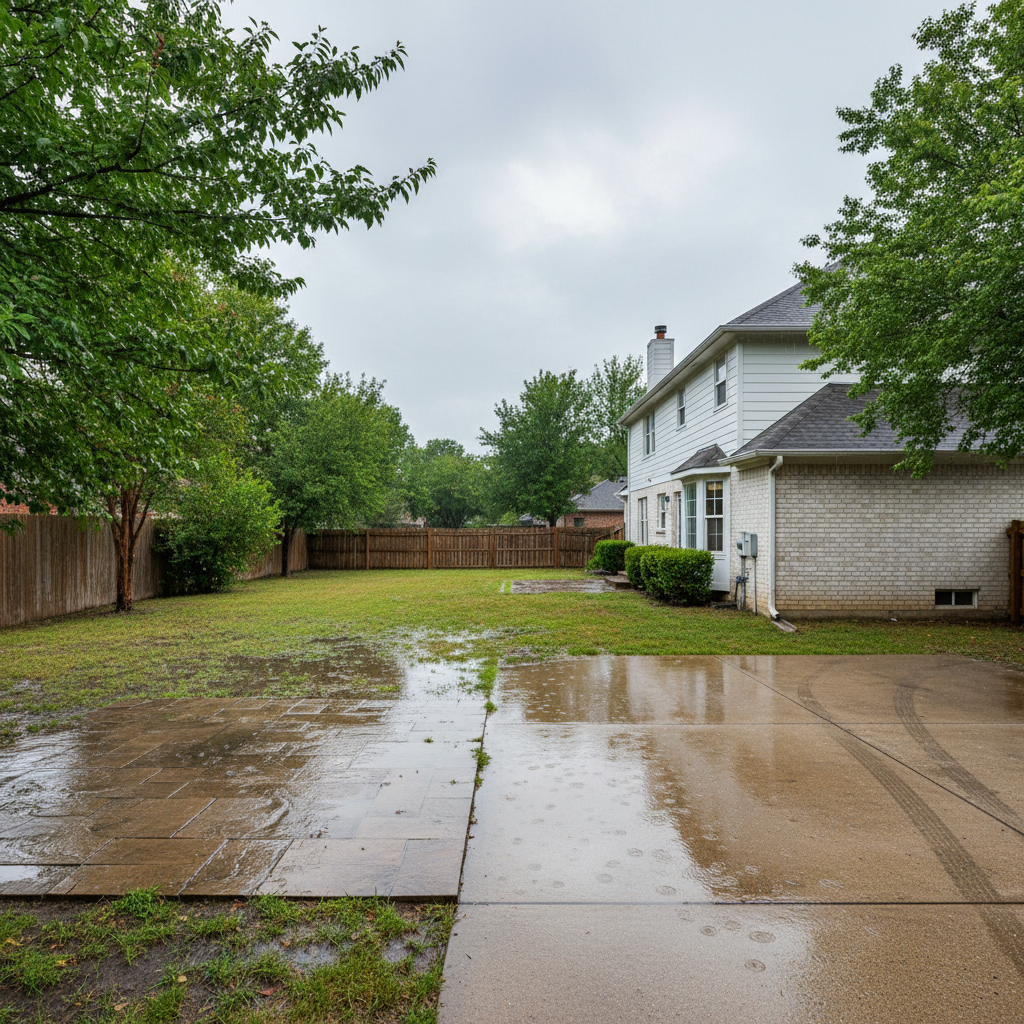
Grading issues that cause lawn problems are site slope and soil elevation errors that push water the wrong way, leading to puddles, thin turf, and foundation stress. At our Mississauga office (100 Matheson Blvd E, unit 202), HR Greenroots Landscaping fixes grading with proper base prep, regrading, and drainage so your lawn thrives through Ontario’s wet springs and summer storms.
By HR Greenroots Landscaping • Last updated: 2026-06-01
Quick Summary
Most lawn problems that linger after rain start with grading and drainage. Check where water flows, measure slope away from the house (2–3% is typical), and correct low spots. Proven fixes include regrading soil, installing French drains or swales, and using permeable hardscapes that relieve runoff without harming turf.
Here’s the fast version homeowners ask us for before a site visit.
- What’s going wrong? Water collects in low areas or runs back toward the house, starving grass roots of oxygen.
- How to confirm? Watch post-rain flow, string-line a 10–20 ft run, and probe soil for compaction and thatch.
- Fixes that last: Targeted regrading, French drains, swales, permeable interlocking, rain gardens, and premium sod on a sound base.
- Where we fit: We assess, design, regrade, and integrate sod, retaining walls, and hardscapes so water moves and lawns stay even.
What Is Lawn Grading?
Lawn grading is the intentional shaping of ground elevations to direct water away from structures and across turf evenly. Proper grading protects foundations, preserves healthy root zones, and prevents puddles. It’s the base layer decision that determines whether sod, beds, and hardscapes perform for years or fail fast.
Think of grading as the blueprint beneath your grass. The lawn’s pitch decides where water rests, how nutrients travel, and whether freeze–thaw cycles heave pavers or wash topsoil away.
- Target slope near the house: 2–3% fall for the first 6–10 feet typically prevents backflow to the foundation.
- Uniform transitions: Even micro-contours stop “birdbaths” that drown turf and foster moss or algae.
- Base matters: A compacted subgrade with loosened topsoil on top helps water infiltrate at the right rate.
- Edge control: Clean edging and set elevations ensure patios, walkways, and lawn meet without trip lips or water dams.
When we build lawns and hardscapes in Mississauga and across the GTA, grading is step one. Everything else—sod installation, interlocking & pavers, retaining walls—relies on getting the pitch and base right the first time.
Why Grading Matters in Mississauga
Grading matters in Mississauga and the Regional Municipality of Peel because spring snowmelt, clay-heavy soils, and sudden summer storms amplify runoff. Directing water away from foundations and across turf evenly protects basements, keeps sod rooted, and prevents heaving in walkways and patios throughout the season.
Local conditions make this practical, not theoretical.
- Seasonal swings: Freeze–thaw lifts pavers and weak slopes; early fixes reduce post-winter repairs.
- Clay pockets: Slower infiltration creates surface ponding; micro-regrading and drainage relieve stress on turf.
- Storm bursts: Intense downpours find the lowest path; graded swales and permeable hardscapes redistribute safely.
- Mature neighborhoods: Settled fill and additions alter original pitches; refresh grading before new sod or patios.
We’ve found that lawns with even 1–2 low spots often show thin turf bands and recurring weeds. Correcting the grade before lawn replacement yields durable gains and fewer call-backs after heavy rain.
How Grading Works (Plain English)
Grading works by shaping the subgrade first, then adding topsoil to smooth micro-contours and hit finished elevations. The lawn, beds, and hardscapes all reference that base. Done right, water flows off structures, across turf, and into safe collection points like swales, drains, or rain gardens.
Here’s the workflow we use on Ontario properties.
- Assess water paths: Track post-storm flow; note puddles, erosion, and damp foundation lines.
- Set control elevations: Pin finished heights at door thresholds, patios, and walkways; design 2–3% fall away from structures.
- Shape subgrade: Cut highs, fill lows, and compact the base to spec; avoid over-compaction under turf areas.
- Topsoil layer: Spread, blend, and lightly consolidate 4–6 inches of quality topsoil; preserve infiltration.
- Drainage details: Add French drains, swales, or permeable surfaces where runoff concentrates.
- Finish with sod: Install premium sod with tight seams, roll once, and water to root without flooding.
The result is a living system: turf stays oxygenated, edges stay flush, and water finds predictable routes that don’t threaten your basement or your lawn.
11 Clear Signs Your Lawn Has Grading Problems
You can spot grading issues by watching what happens after rain: standing water beyond 24 hours, soggy footsteps, mud streaks on the foundation, and thinning sod in “birdbaths.” Repeating frost heave, moss patches, migrating mulch, and paver lips also signal that elevations and drainage need correction.
- Puddles that linger a day or more on flat-looking areas.
- Footprint squish after light traffic—roots lack oxygen.
- Water stains or damp lines along the foundation.
- Moss or algae where grass won’t fill in.
- Mulch migration after storms—beds are shedding soil.
- Thinning sod bands that repeat seasonally.
- Exposed roots or small rills where water cut channels.
- Paver or step lips from frost heave and trapped water.
- Settled trenches over old utilities or tree removals.
- Mildew odors or mosquito blooms from stagnant water.
- Downspouts discharging into depressions without exit paths.
If you tick three or more of these, it’s time to diagnose slope and infiltration and plan a fix that won’t just move the problem elsewhere.
Step-by-Step: Diagnose Your Yard’s Slope and Drainage
Diagnose grading by mapping water flow after rain, measuring slope with a string line (aim 2–3% away from the house), and probing soil for compaction. Mark lows and highs, trace downspout paths, and choose targeted corrections like regrading, swales, or French drains based on what the measurements show.
- Watch a storm: Film runoff patterns. Note ponding spots and where water exits—or doesn’t.
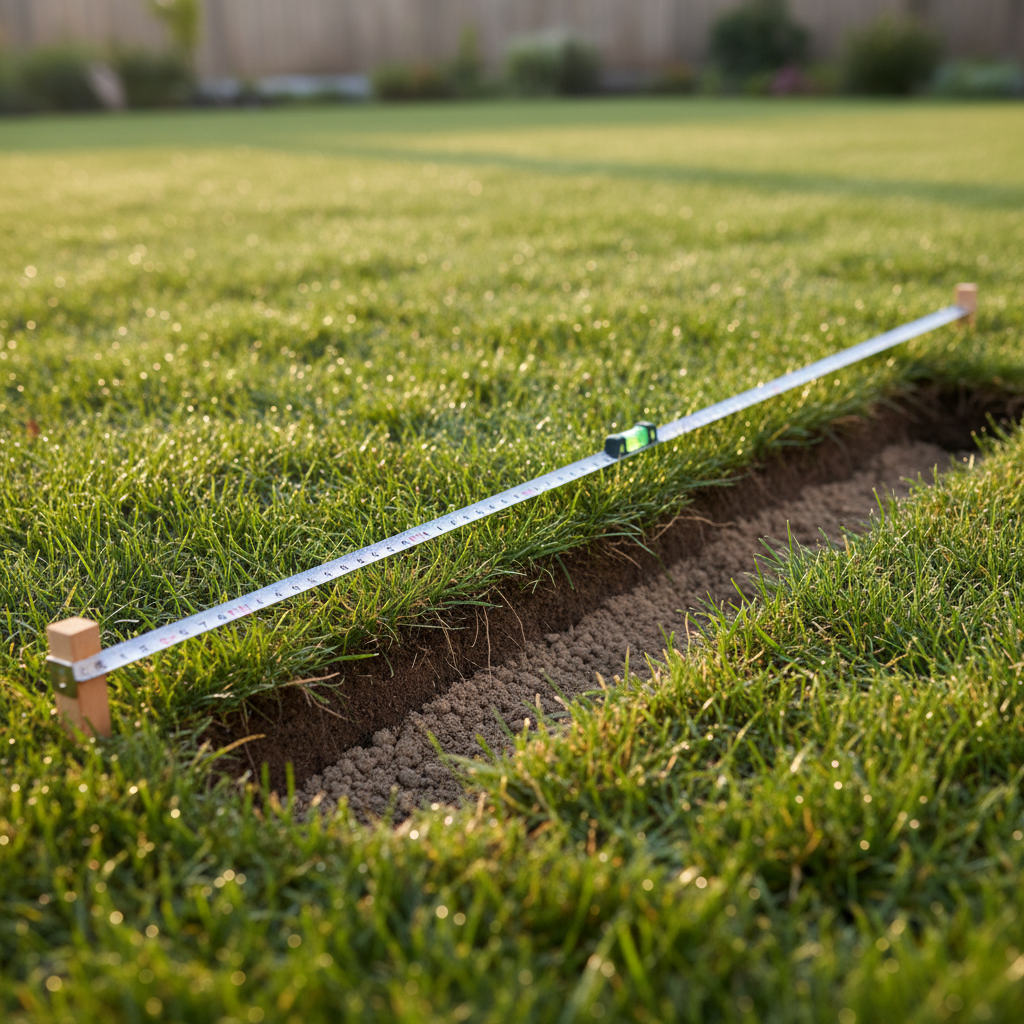
- Measure slope: String 20 ft; a 2–3% fall equals 4.8–7.2 inches drop. Re-run in multiple directions.
- Probe compaction: Screwdriver test—if it won’t penetrate, roots and water can’t either.
- Check thatch/layering: Peel a small sod flap—hydrophobic thatch or mixed fill can block infiltration.
- Trace downspouts: Ensure extensions move water to safe grades, not into lawn bowls.
- Document elevations: Stake highs/lows; plan to cut, fill, and feather transitions across 8–12 ft where needed.
Bring this map to your landscape pro, or if we’re on site, we’ll build from these exact checks. It’s the shortest route to a durable plan.
Fixes That Work (And Keep Working)
The most reliable grading fixes combine reshaping soil with targeted drainage. Regrade depressions, add swales to carry water, and install French drains where flow concentrates. Pair with permeable interlocking near hard edges, stabilize slopes with retaining walls, and finish with premium sod over a sound base.
Earthwork and drainage
- Targeted regrading: Cut high mounds and feather fill bowls 8–12 ft beyond low spots; compact base, not topsoil.
- Swales: Shallow grassed channels that steer runoff along property lines or to gardens.
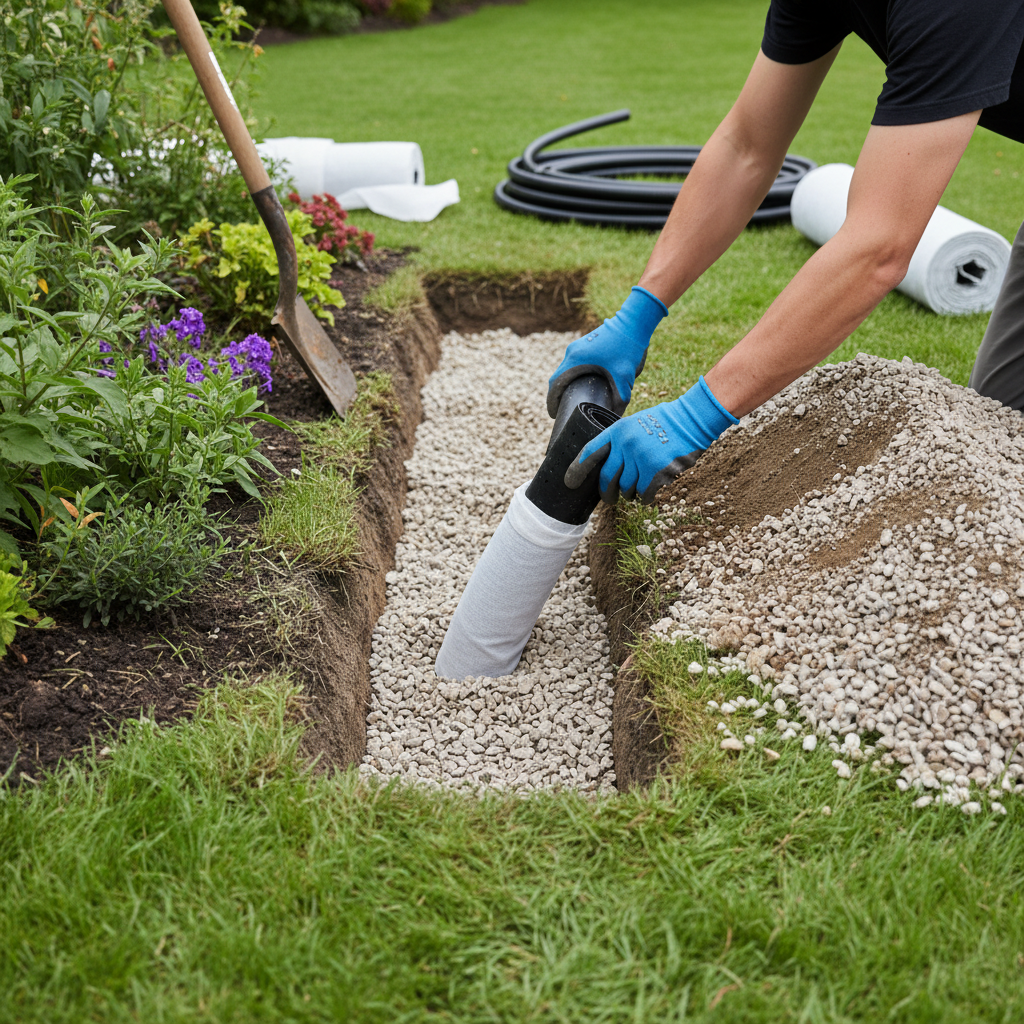
- French drains: Perforated pipe in gravel with fabric wrap to intercept subsurface water.
- Downspout routing: Solid pipe or pop-ups to daylight—don’t dump onto the lawn near foundations.
Hardscape helpers
- Permeable interlocking & pavers: Lets water pass through joints into a graded base instead of running across turf.
- Retaining walls and armour stone: Create level terraces on sloped lots and hold soil where it belongs.
- Edging and transitions: Set consistent heights so water doesn’t dam at patio–lawn interfaces.
Planting and turf
- Premium sod installation: Fresh, dense sod on evenly graded topsoil roots faster and resists puddling.
- Rain gardens: Deep-rooted natives in a slight basin soak and filter overflow from downspouts or swales.
- Mulch management: Proper edging and mulch depth reduce washouts and feeding of weeds.
Because we integrate earthwork, sod, and hardscapes under one plan, we can fix root causes and not just treat symptoms like muddy shoes or patchy grass.
Symptoms, Causes, and Proven Fixes (At a Glance)
Match each symptom to its likely grading cause and a durable remedy. Use this quick table to move from “what I see” to “what to do,” then confirm on site with measurements. Correcting base elevations before new sod or hardscapes prevents repeat failures after the next storm.
What you see Likely cause Best next step HR Greenroots service Puddles 24+ hours Low spot bowl; compacted subgrade Regrade and loosen topsoil; add swale Sod installation + regrading Water at foundation Back-pitch toward house Reset slope 2–3% away; route downspouts Landscape design & earthwork Mossy patches Poor drainage; low sun Micro-regrade; aerate; adjust species Lawn replacement planning Paver lips/heave Freeze–thaw + trapped water Rebuild base; add drainage layer Interlocking & pavers Mulch washouts Downhill bed edges Edging + swale redirect Mulching & garden beds Eroded slopes Insufficient retention Terrace with wall/stone Retaining walls & armour stoneBest Practices We Use on Every Grading Project
Great lawns start with base prep and edge control. We compact subgrades to spec, keep topsoil friable for roots, set consistent control heights, and blend transitions over long runs. We also integrate drains or permeable surfaces where flow concentrates so turf and hardscapes both last longer.
- Measure twice, build once: Establish benchmarks at doors, patios, and walkways before moving soil.
- Preserve infiltration: Avoid over-compaction of topsoil; roll sod once for contact, not concrete.
- Feather long: Blend 8–12 ft beyond any fill to eliminate micro-bowls.
- Edge discipline: Keep clean, level edges so water doesn’t dam or undercut borders.
- Drain where needed: Swales and French drains where water concentrates—don’t rely on lawn alone.
- Route roof water: Downspouts to daylight, not into turf basins.
- Design cohesion: Plan sod, beds, and hardscapes together to avoid conflicts and rework.
These practices reduce warranty issues and keep properties looking intentional from day one through each season.
Tools and Resources for Assessment
A string line, level, and tape measure reveal most grading errors. Add flags, a garden hose for flow tests, and soil probes to check compaction. For complex lots, laser levels and transit measurements confirm elevations before earthwork and help set long-term control points for future projects.
- String line + level: Quick slope checks across 10–20 ft runs.
- Tape measure: Calculate drops for 2–3% fall away from structures.
- Soil probe/screwdriver: Find compaction layers that block roots and water.
- Flags/marking paint: Stake highs, lows, and flow paths to guide cuts and fills.
- Laser level/transit: Set control elevations on complex, multi-plane yards.
- Garden hose: Simulate a downpour to validate swales and catch points.
We bring pro-grade leveling tools to every on-site consultation so decisions are based on measurements, not guesses.
Mini Case Studies: Real Ontario Yards, Real Fixes
Results are repeatable when you fix the base. In Mississauga and across the GTA, we correct back-pitched lawns, eliminate puddling, and rebuild hardscapes with drainage layers. Clients report firmer footing after storms, denser sod, and fewer frost-heave repairs through winter.
Mississauga back-pitch to foundation
- Problem: Water line on basement wall; soggy turf near downspouts.
- Diagnosis: 1% reverse slope on first 8 ft; compacted fill at builder grade.
- Fix: Reset subgrade to 2.5% away, route downspouts to a grassed swale, install premium sod.
- Outcome (60 days): No wall staining after storms; turf stayed firm after weekend foot traffic.
Settled utility trench creating a birdbath
- Problem: Standing water 24–48 hours after rain, thin grass ring.
- Diagnosis: Trench settlement 3 inches; layer of compacted subsoil under thin topsoil.
- Fix: Fill and feather 12 ft, loosen topsoil, micro-swale to side yard.
- Outcome (30 days): Even growth, no puddles; mower lines stay true.
Permeable interlocking at a low patio edge
- Problem: Runoff crossed patio onto lawn, eroding bed mulch.
- Diagnosis: Hard edge dammed water; no exit path.
- Fix: Rebuild edge with permeable pavers over graded open-graded base; add underdrain to daylight.
- Outcome (first storm): Water infiltrated; lawn and mulch held position.
Local considerations for Mississauga
- Schedule grading and re-sodding between late spring and early fall when soil is workable and turf establishes before freeze. Near Saigon Park, we often time earthwork after spring thaw.
- In clay-heavy pockets near Lambton College, we blend in topsoil and plan swales to manage slower infiltration without starving turf.
- Expect intense summer downpours; confirm downspout routing to daylight and consider permeable interlocking on small side yards to ease runoff.
How HR Greenroots Landscaping Delivers End-to-End Fixes
We diagnose grading issues, regrade to spec, integrate drains or swales, and finish with premium sod and clean edges. Because we also build retaining walls, stone features, and interlocking, we solve water movement across the whole yard—not just the grass—so results hold up year after year.
- On-site consultation: Measurements, flow mapping, and a prioritized plan.
- Regrading and base prep: Cut/fill, compaction, and topsoil blending for stable elevations.
- Drainage add-ons: French drains, swales, and downspout routing to daylight.
- Sod installation: Premium sod placed and rolled on a properly prepared base.
- Hardscape integration: Interlocking, walkways, and retaining walls set to correct grades.
- Maintenance planning: Seasonal checks so slopes and edges stay true.
When working with clients in Mississauga, we aim for durable performance over quick cosmetic wins. The right grade beats reseeding every spring.
DIY-Curious? A Safe, Service-Friendly Regrade Plan
If you want to understand the process before hiring help, follow a measured plan: stake elevations, regrade small bowls, and verify slopes with a string line. For anything near foundations or hardscapes, bring in a pro so drainage ties into the whole property without unintended side effects.
- Stake control heights at doors, patios, and walkways; protect thresholds.
- Cut fill bowls shallow and feather transitions at least 8–12 ft.
- Loosen topsoil with a rake—not a plate compactor—to preserve infiltration.
- Install drains/swales where flow concentrates; test with a hose.
- Lay premium sod with tight seams; roll once for contact.
- Water to root without flooding; adjust based on soil and weather.
We’re happy to pick up at any step—especially near structures—so the final result ties together across lawn, beds, and hardscapes.
Get a Grading and Drainage Assessment
Book a site assessment to map water flow, confirm slopes, and plan durable corrections. We integrate grading, drains, sod, and hardscapes so your lawn dries faster, looks cleaner, and stays that way through storms. Appointments available across Mississauga and the GTA.
Ready for a right-sized plan for your yard? Explore our core services and guides below.
• See our slope correction guide for common yard scenarios we fix locally.
• Learn the seasonal maintenance steps that keep grades and edges stable.
• Compare lawn replacement options before you re-sod.
Frequently Asked Questions
Homeowners often ask how to recognize grading problems, whether regrading ruins existing landscaping, and how sod behaves on wet sites. These quick answers cover the essentials and point you to next steps if your lawn keeps puddling after storms.
How do I know if my lawn needs regrading?
If water stands for more than a day, the soil squishes underfoot, or you see damp foundation lines after rain, regrading is likely required. Confirm with a string line: over 20 feet, aim for roughly 5–7 inches of drop away from the house to achieve a 2–3% slope.
Will regrading damage my existing patio or fence?
Done correctly, regrading protects hardscapes by setting proper transitions and drainage. We pin control heights at patios, walkways, and fence lines before moving soil, then add permeable edges or drains so surfaces meet cleanly without creating water dams or trip lips.
Can new sod fix drainage problems?
Sod improves surface cover but can’t fix low spots or back-pitched soil. Premium sod thrives when the base is graded right. If your site traps water, regrade and add targeted drainage first, then install sod so roots get oxygen and the lawn stays firm after storms.
Do French drains really work in clay-heavy yards?
Yes—when they’re placed where subsurface water concentrates and paired with fabric-wrapped gravel and a safe outlet. In clay pockets, we often combine a shallow swale with a French drain to move both surface and subsurface water without starving nearby turf.
What slope is ideal near the house?
A practical target is 2–3% fall for the first 6–10 feet away from the foundation. Over 10 feet, that equals about 2.4–3.6 inches of drop; over 20 feet, aim for roughly 5–7 inches. Always confirm with on-site measurements and adjust for doors and walkways.
Related Guides and Next Steps
If your yard shows repeat puddling or backflow, don’t re-seed and hope. Diagnose slope, plan a regrade, and integrate drains where flow concentrates. Use our connected guides to plan seasonal care, lawn replacement options, and design-build steps that lock in long-term drainage.
- Review landscaping services in Mississauga to see how we integrate grading with full projects.
- Explore our design-and-build approach for cohesive grading plus hardscapes.
- Time your project with the best re-sod window for local conditions.
- Skim our lawn grading basics primer.
Key Takeaways
Fix grading first, then everything else works better. Measure slopes, regrade low spots, route roof water, and add drains or permeable surfaces where flow concentrates. Finish with premium sod on a sound base and maintain edges seasonally to keep lawns firm, green, and storm-ready.
- Grading decides lawn health more than seed type or fertilizer.
- 2–3% fall away from the house is a practical target on most sites.
- Combine regrading with French drains or swales for durable results.
- Permeable interlocking reduces runoff pressure on adjacent turf.
- Seasonal checks keep small sags from becoming new birdbaths.
Conclusion: Solve the Grade, Save the Lawn
When lawns fail after every storm, grading is the usual culprit. Diagnose slope, regrade the base, and integrate drainage where flow concentrates. That sequence protects foundations, keeps sod firm, and stabilizes hardscapes—so you enjoy a cleaner, easier yard through every Ontario season.
- Map water flow, then measure slope in multiple directions.
- Reset elevations before you invest in new sod or pavers.
- Tie downspouts to daylight and relieve pressure with swales or drains.
- Ask us for an on-site assessment anywhere in Mississauga and the GTA.
For additional perspectives on lawn drainage and layout ideas, see this practical overview of backyard landscaping approaches, explore broader design considerations, and review a focused step-by-step design guide that complements the planning phase.


