

Deck services planning is the end-to-end process of scoping, designing, permitting, and scheduling a deck build so construction runs smoothly and passes inspection. In Mississauga and across the GTA, a clear plan reduces rework, weather delays, and callbacks. HR Greenroots Landscaping integrates planning with design-build to help you start right and finish strong.
By HR Greenroots Landscaping · Last updated: 2026-04-26
Overview
This complete guide explains how to plan a residential deck—from site assessment and code basics to permits, footings, framing, materials, timelines, and inspections. Use it to avoid common blockers, coordinate trades, and integrate your deck with interlocking, fencing, and planting for a cohesive outdoor space.
You want a great deck without headaches. This guide shows how deck services planning turns ideas into a build-ready scope that aligns budget, timeline, local code, and materials.
- What deck services planning is and why it matters
- How to move from concept to permits, then to construction
- Footings, framing, stairs, guards, and drainage essentials
- Material choices (wood, composite, PVC) and how they age
- How decks connect with interlocking, fencing, and planting
- Actionable checklists, a process table, and local tips for Mississauga
Table of contents
- What is deck services planning?
- Why careful planning matters
- How the planning process works
- Types, methods, and approaches
- Best practices checklist
- Tools and resources
- Case studies and examples
- Local planning notes
- Frequently asked questions
- Key takeaways
- Conclusion
What is deck services planning?
Deck services planning is the structured pre-construction process that defines scope, code requirements, drawings, permits, timeline, and materials before a single hole is dug. A tight plan aligns homeowners, designers, and builders, preventing change orders, rush fees, and schedule slips during construction.
In our experience serving Mississauga and the broader GTA, the best builds start on paper. A clear plan connects your wish list to the realities of soil, grade, access, municipal approvals, and winter weather. It also maps how the deck will meet your landscape—interlocking paths, garden beds, and fencing—so the space flows.
- Scope and goals: Entertain 6–8 guests? Grill station? Shade? Define uses up front.
- Site conditions: Note slopes, drainage, mature trees, utilities, and property lines.
- Codes and permits: Confirm what triggers permits and inspections for your municipality.
- Drawings: Produce scaled plans with framing, footings, stairs, and guards.
- Materials: Choose structure (PT lumber or steel) and surface (wood, composite, PVC).
- Schedule: Sequence digging, framing, inspections, and finishing around weather.
Good planning saves time. For many GTA homes, access, soil bearing, and snow load considerations shape footing sizes and framing spans. A plan makes those decisions visible—and verifiable—before crews mobilize.
Why careful planning matters
Planning matters because it reduces risk. Clear drawings and a permit-ready package prevent mid-build stops, material waste, and failed inspections. It also protects drainage, neighbors’ privacy, and your home’s envelope where the deck connects to the house.
Here’s the thing: most delays aren’t caused by saws and screws. They come from missing details—unclear setbacks, wrong ledger flashing, undersized footings, or material lead times. A planning-first approach prevents these issues.
- Compliance confidence: Permit-reviewed drawings align inspections with construction steps.
- Durability: Proper base prep, drainage, and flashing extend the life of framing and finishes.
- Safety: Correct guard details, stair geometry, and slip-resistant surfaces reduce incidents.
- Integration: Planning for interlocking, fencing, and planting avoids later tear-outs.
- Seasonality: Scheduling digs and pours during suitable weather minimizes rework.
Want to see how coordinated planning drives results across an entire yard? Our landscape design and build overview shows how circulation, grading, and materials come together in Mississauga backyards.
How the planning process works
A reliable deck plan follows five stages: discovery, site assessment, design and engineering, permit submission, and build scheduling. Each stage produces artifacts—measurements, drawings, and checklists—that guide crews and streamline inspections.
Stage 1: Discovery and goals
- List functional needs: dining, lounge, hot tub, shade, privacy.
- Define constraints: property line buffers, easements, utilities, tree roots.
- Set finish preferences: wood tone, board width, hidden fasteners, lighting.
Output: a simple program that aligns priorities and tradeoffs.
Stage 2: Site assessment and measurements
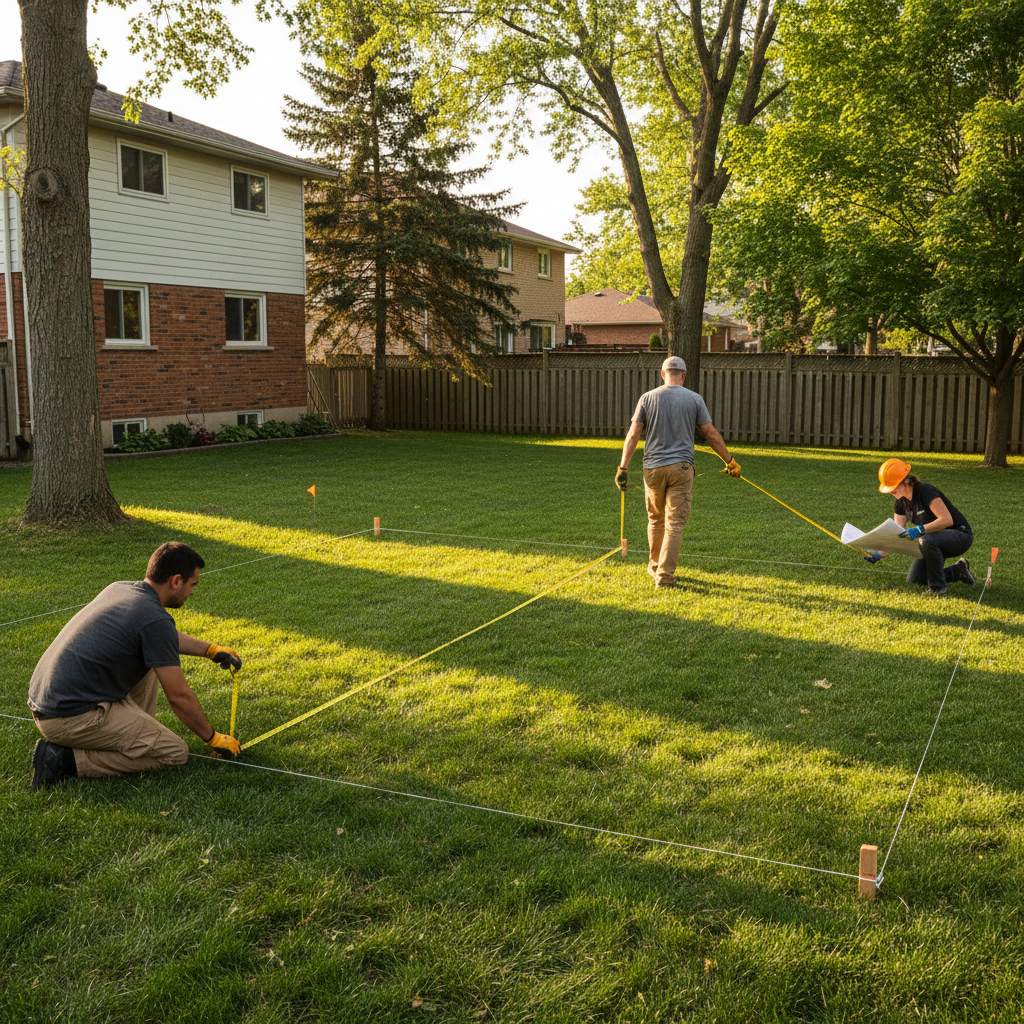
- Measure the house interface for ledger location and door thresholds.
- Check grade and drainage to route water away from structures.
- Probe soil to anticipate footing depth and bearing capacity.
- Assess access for equipment and material staging.
Output: a scaled base plan and notes for framing, stairs, and guards.
Stage 3: Design, engineering, and selections
- Draft plans with framing spans, joist spacing, beam sizing, and stair runs.
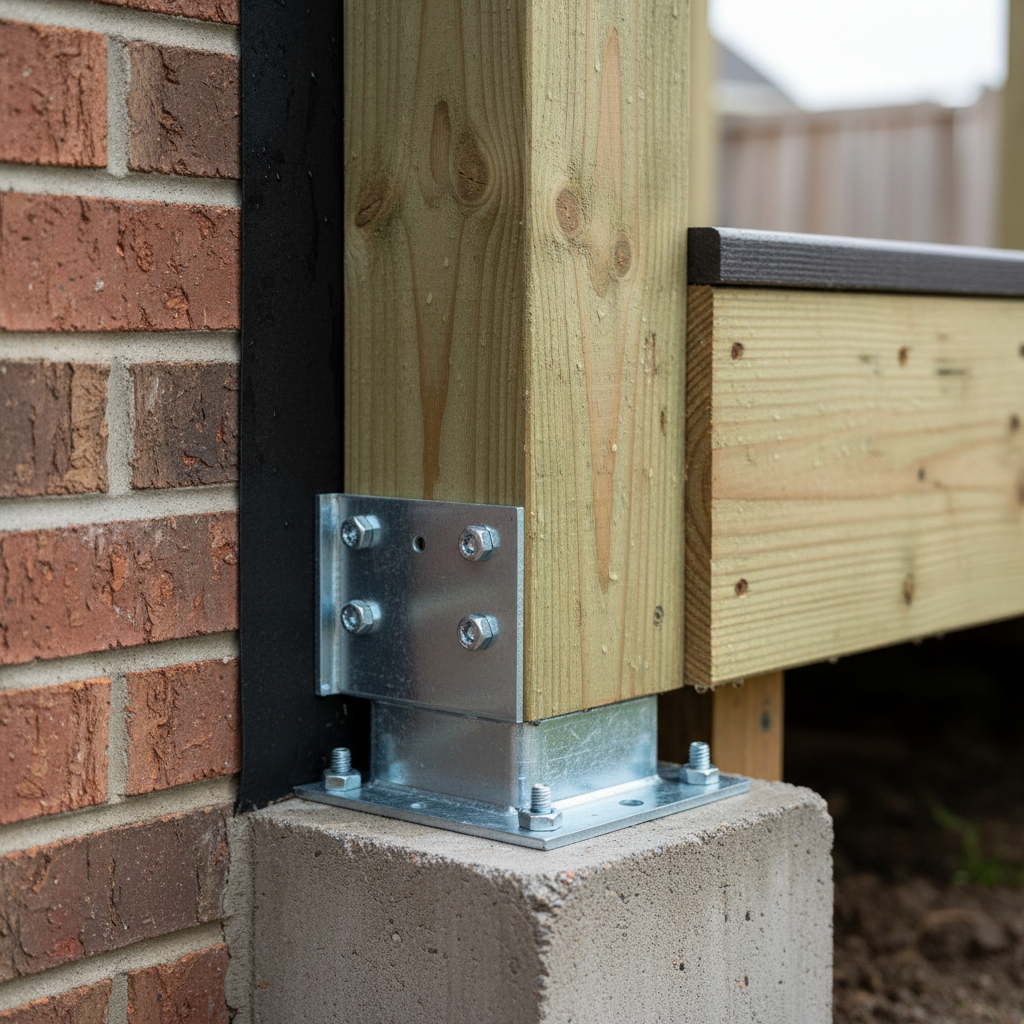
- Detail ledger flashing, post bases, and guard connections.
- Select surface material (cedar, composite, PVC) and railing style.
- Coordinate interfaces with interlocking, sod restoration, and garden beds.
Output: permit-ready drawings, a material schedule, and a sequencing plan.
Stage 4: Permits and inspections
- Submit drawings and forms; respond to review comments if needed.
- Plan for inspections at footings, framing, and final.
- Keep the jobsite safe and tidy for inspectors and neighbors.
Output: approvals in hand, inspection sequence on the schedule.
Stage 5: Build scheduling and logistics
- Sequence excavation, concrete, framing, decking, and railings.
- Reserve dumpsters, protect lawns, and stage materials to avoid damage.
- Buffer weather days; protect fresh concrete and wood in rain events.
Output: a realistic calendar that crews and clients can trust.
 Path
When to use
Typical timeline impact
Risk profile
Permit-ready standard deck
Simple rectangle, standard stairs/guards, typical soil
Faster reviews, predictable inspections
Low, if details match drawings
Engineered custom deck
Complex shapes, elevated spans, hot tubs, or slopes
Longer design and review time
Medium, mitigated by sealed drawings
Deferred permit (not advised)
Attempt to start before approvals
High chance of stop-work or rebuild
High, avoid this path
Path
When to use
Typical timeline impact
Risk profile
Permit-ready standard deck
Simple rectangle, standard stairs/guards, typical soil
Faster reviews, predictable inspections
Low, if details match drawings
Engineered custom deck
Complex shapes, elevated spans, hot tubs, or slopes
Longer design and review time
Medium, mitigated by sealed drawings
Deferred permit (not advised)
Attempt to start before approvals
High chance of stop-work or rebuild
High, avoid this path
Soft CTA: Planning a deck in Mississauga or the GTA? Book a design-and-planning consultation with HR Greenroots Landscaping so permits, drawings, and schedules are aligned before crews arrive.
Types, methods, and approaches
Choose a structural system (posts, beams, joists), a surface (wood, composite, or PVC), and a guard/stair strategy that suits your site and maintenance goals. The best approach balances durability, safety, and a clean interface with landscaping and drainage.
Surfaces: wood vs composite vs PVC
- Cedar or pressure-treated (PT) wood: Warm, repairable, needs periodic sealing; boards move with humidity and temperature.
- Composite: Consistent color, hidden fastener options, low maintenance; heavier, requires precise framing.
- PVC: Very low maintenance and lightweight; can heat up in full sun—plan for shade.
For help choosing boards that match your design goals, see our deck wood selection guide with notes on appearance, upkeep, and pairing with stone.
Footings and posts
- Concrete piers with galvanized post bases: Reliable and inspectable; protect post ends from moisture.
- Helical piles (engineered): Faster in tight sites; require torque verification and engineering.
- Drainage first: Keep soil pitched away; use gravel at posts to discourage rot and frost heave.
Framing, stairs, and guards
- Joist spans: Match board type and thickness; closer spacing often needed for composite.
- Stair geometry: Consistent rise/run reduces trips; solid landings improve safety.
- Guard details: Rigid posts, secure connections, and infill that meets openings guidance.
Integration with the rest of the yard
- Interlocking and pavers: Plan smooth transitions and heights; protect base prep during deck work.
- Privacy fencing: Coordinate posts and footing locations to avoid clashes.
- Planting and sod: Restore lawn with quality sod and edge control; choose plantings that won’t overgrow steps.
If your project touches more than the deck, our landscaping services in Mississauga article outlines how we manage interlocking, fencing, and planting in one coordinated build.
Best practices checklist
Win the build before it begins: document site conditions, select materials early, over-communicate details, and schedule inspections with buffers. Use checklists and drawings that leave nothing to chance.
- Document utilities: Identify gas, hydro, water, and telecom before digging.
- Protect the house: Flash the ledger correctly; keep thresholds above deck surface.
- Mind water: Pitch boards, add drip edges, and keep soil graded away.
- Fastener compatibility: Use hardware rated for PT lumber and chosen surface.
- Ventilation: Leave airflow under low decks to reduce moisture buildup.
- Material lead times: Order railings and specialty boards early to avoid pauses.
- Neighbor-friendly: Share the schedule and keep sites tidy to prevent complaints.
Tools and resources
Combine field tools (measuring tapes, levels, string lines) with planning tools (scaled drawings, checklists, and a realistic calendar). Align material orders with inspection milestones to keep momentum.
- Field kit: 100-foot tape, laser level, stakes, string lines, soil probe, and marking paint.
- Planning kit: Scaled base plan, framing schedule, footing details, and a weather-aware calendar.
- Integration kit: Notes for interlocking transitions, sod restoration, and fence alignment.
- Quality checks: Pre-pour, pre-sheath, and pre-final walkthroughs; photo logs after each step.
Want a broader look at how we coordinate whole-yard projects? Our Mississauga-focused design-build explainer breaks down how decks, stonework, and planting come together.
Case studies and examples
Real GTA projects show how planning choices affect results. These brief scenarios highlight footing strategy, drainage, and integration with interlocking and planting—so you can picture tradeoffs before you build.
Mississauga: Low deck + interlocking transition
- Goal: Create a lounge deck that steps to an interlocking patio without trip points.
- Plan: Low-profile framing with careful height control; slope boards for drainage.
- Result: Smooth movement from kitchen to lounge to patio; zero puddling at the threshold.
GTA infill lot: Privacy-first design
- Goal: Entertain without feeling exposed to nearby windows.
- Plan: Staggered privacy screens, strategic planting, and a pergola tied to beam layout.
- Result: Comfortable seating zones and neighbor-friendly sightlines.
Sloped yard: Footings and stairs that feel natural
- Goal: Tame a slope without a tall, imposing structure.
- Plan: Step the deck in two tiers; use retaining elements and planting to soften grade.
- Result: Short, comfortable stairs and a deck that belongs in the landscape.
Local planning notes
Successful GTA decks respect local weather, soil, and review timelines. Plan footing depth for freeze-thaw cycles, protect drainage against heavy spring melts, and give permit review windows room in the schedule.
Local considerations for Mississauga
- Plan around spring melt and fall rains. Keep excavation covered and protect fresh concrete from washouts.
- High-traffic summers mean material lead times. Order railings and specialty boards early to avoid schedule gaps.
- Coordinate with neighbors on access in tight lots. Clear communication reduces delays and keeps inspections smooth.
Frequently asked questions
These quick answers cover the most common planning questions we hear in Mississauga and across the GTA—permits, timelines, materials, and integration with the rest of the yard.
Do I need a permit for my deck?
Most municipalities require a permit when a deck is above a defined height, attached to a dwelling, or includes structural changes. The exact triggers vary. We prepare permit-ready drawings and coordinate submissions so inspections align with construction.
How long does deck planning take?
Discovery and measurements are quick. Design and selections usually take a short cycle if decisions are made promptly. Permit reviews add time depending on season. We build realistic calendars with buffers for weather and reviews so crews stay productive.
Which deck surface lasts the longest?
Composite and PVC boards minimize sealing and resist color fade. Wood feels warm and is easy to repair but needs periodic maintenance. We match materials to sun exposure, shade plans, and the look you want for the rest of your landscape.
Can you coordinate my deck with interlocking and fencing?
Yes. Our team integrates decks with interlocking, privacy fencing, planting, and sod restoration. Planning transitions and heights up front prevents trip points, protects drainage, and keeps the space cohesive.
Key takeaways
The fastest, cleanest deck builds start with a plan: measured drawings, material decisions, permit alignment, and a weather-aware schedule. Integrate with interlocking, fencing, and planting for a yard that flows and lasts.
- Deck services planning reduces rework and inspection delays.
- Footings, flashing, and drainage determine long-term durability.
- Material choices affect framing, ventilation, and maintenance.
- Integrate with interlocking, fencing, and planting for a cohesive yard.
- Schedule reviews and weather buffers to protect your timeline.
Conclusion
Plan first, then build. A clear, permit-ready deck package aligns code, materials, inspections, and schedule—preventing surprises and keeping your project moving.
Deck services planning turns ideas into a well-sequenced build that respects your home, neighbors, and the seasons. If you’re in Mississauga or anywhere in the GTA, we’d be glad to map your site, develop drawings, and coordinate interlocking, fencing, sod, and planting in one streamlined plan. Let’s get your outdoor living space working beautifully.


