
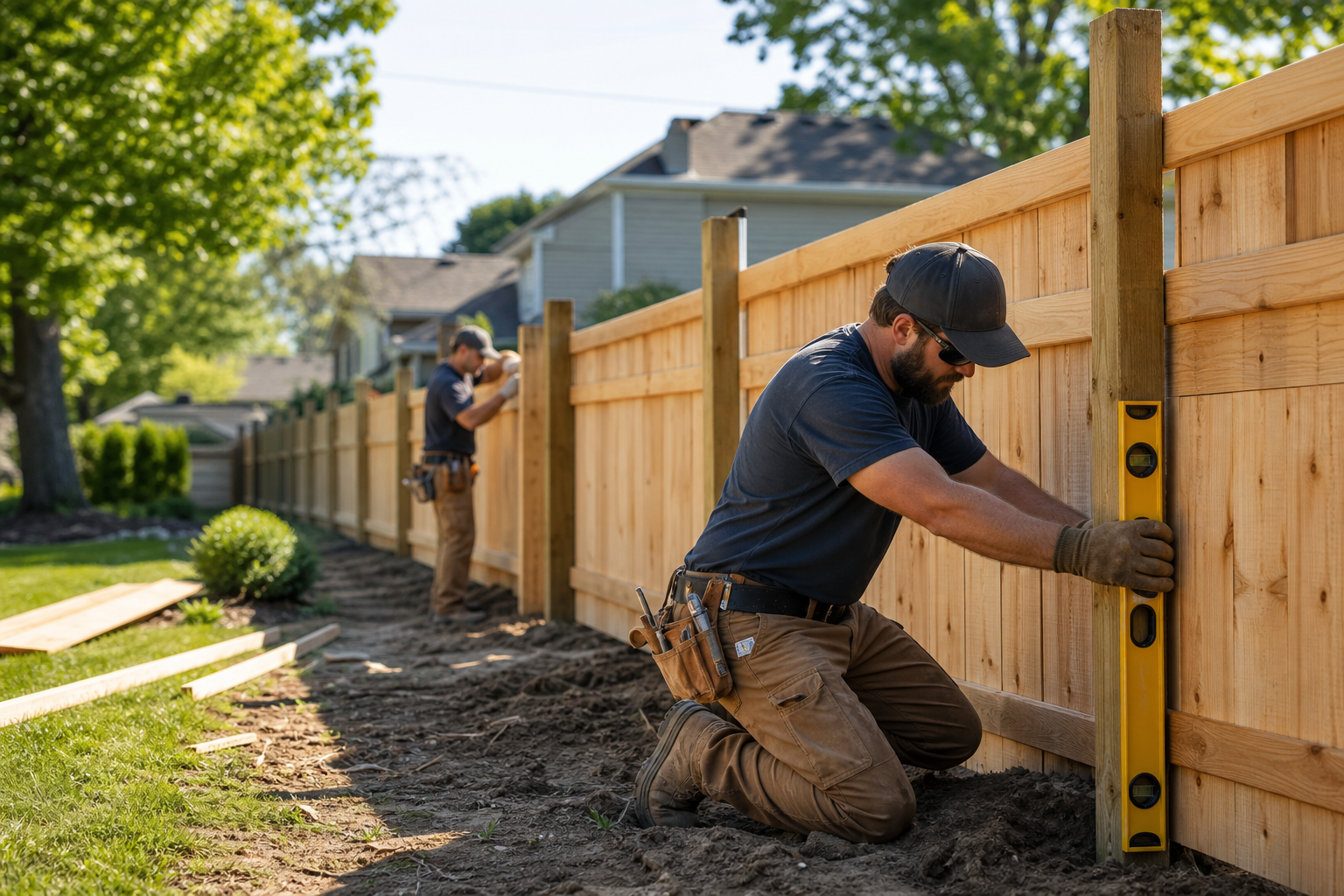
What to Expect During a Professional Fence Installation
A fence consultation is more useful when the homeowner knows what must be confirmed and what should not be assumed. This guide organizes the conversation around scope, site information, material choices, access, scheduling, responsibilities, and handoff. It does not claim that every installer follows one sequence, that a particular construction method fits every property, or that the same municipal requirements apply everywhere. Instead, it gives you a practical set of questions for turning a broad request into a written proposal you can review.
Treat each question as a request for project-specific information. An installer can explain what the company proposes for the property after reviewing the site and the requested fence. Where a question concerns a boundary, permit, utility, or other local requirement, ask which authority or document applies and verify the answer with that source. The supplied research for this article does not establish a local rule, a universal foundation method, or a guaranteed result.
Use this as a verification guide, not a universal installation script
Begin with the result you want from the consultation. Describe the area you are considering, the reason for adding or replacing a fence, and any practical concern you want the proposal to address. Avoid deciding in advance that a certain post, panel, fastener, footing, or gate detail is required. Ask the installer to explain the recommended option and what observed site information supports it.
A clear conversation separates homeowner inputs from installer decisions. Homeowner inputs can include the requested location, appearance preferences, access needs, and questions about future use. Installer decisions may depend on information that is not available in a general article. Ask what must be observed, measured, documented, or confirmed before a recommendation is final. If the answer depends on information from another professional or an authority, ask who is responsible for obtaining it and when it must be available.
Request written definitions for terms that could otherwise be misunderstood. “Preparation,” “installation,” “cleanup,” and “complete” may cover different tasks in different proposals. Ask the installer to list what is included, what is excluded, what the homeowner must arrange, and what would trigger a change. This approach makes the proposal reviewable without pretending that one generic checklist proves what will happen at a specific property.
What the supplied sources support about preparation and format
The two retained sources support only a narrow set of general observations. A This Old House picket-fence guide says that building a fence from scratch requires considerable time and woodworking skills, while prefabricated sections make the project more accessible. The same excerpt says its guide runs from preparing the ground to hanging the gate. That supports asking whether a proposal uses custom construction or preassembled sections and asking which preparation and gate work is included. It does not establish the exact method, duration, or suitability of either approach for your property.
A separate This Old House vinyl privacy-fence guide describes vinyl as durable and low-maintenance and presents a step-by-step installation example. That is useful background for asking how a proposed vinyl option is assembled, maintained, and supported. It is not evidence that vinyl is the right material for every site, that it will require no maintenance, or that the example sequence applies to another product. Ask the installer to identify the actual system being proposed and provide the information that applies to it.
These are the only external evidence claims retained in this remediation. No retailer, marketplace, competitor, or commercial fence-service article is used as evidence. The article therefore avoids giving a local permit answer, a property-line instruction, a legal cost-sharing statement, a prescribed post method, or a blanket DIY recommendation.
Questions to settle before the scope is final
Use the first conversation to identify missing information. The goal is not to solve each item yourself; it is to learn what the installer needs before the scope can be fixed. Ask:
- What information identifies the proposed fence location? Ask what drawing, measurement, marker, or other input the installer expects and who is responsible for confirming it.
- Which local requirements should be checked? Ask the installer to name the authority and the exact requirement it believes applies, then verify that information directly. Do not treat this article as a permit or boundary determination.
- What site observations could change the recommendation? Ask what the installer will inspect and how an observation could affect scope, material, access, or price.
- What access does the installer need? Confirm the areas, dates, hours, and homeowner actions included in the access plan.
- What existing items are included in the scope? Ask whether the proposal addresses removal, protection, relocation, storage, disposal, or restoration, and request an explicit answer for each relevant item.
- What is still an allowance or assumption? Ask the installer to label anything that is not yet confirmed and explain how it will be resolved before work proceeds.
When an answer is uncertain, record the open question instead of converting an estimate into a fact. A proposal can state that a choice remains pending, identify who will decide it, and set a point when confirmation is required. That is more useful than relying on a generic process description that may not match the property or the installer’s service.
Ask for a project-specific sequence and handoff

Rather than assuming a standard order of work, ask the installer to describe the proposed sequence for this job. Request plain-language answers to the following questions:
- What must be confirmed before the first site visit or work date?
- Which activities are included in site preparation, and which are excluded?
- When will the exact product or material specification be provided?
- How will the installer communicate a discovered condition or a requested change?
- Which decisions require homeowner approval before the next activity begins?
- What does the installer expect the homeowner to review at handoff?
Also ask how the written proposal connects to the final review. If a drawing, product sheet, colour selection, gate location, or another detail is important to you, ask where it will be recorded. Ask how a change is documented and whether it affects price or schedule before you authorize it. These are contract-clarity questions, not claims about how every fence company operates.
For handoff, ask what documents or information will be provided, what the installer wants you to inspect, how an incomplete item is recorded, and where future service questions should be directed. Do not assume that a walk-through, warranty, maintenance document, or follow-up visit is included; have the proposal state what the installer actually offers.
Compare material and delivery options without guessing
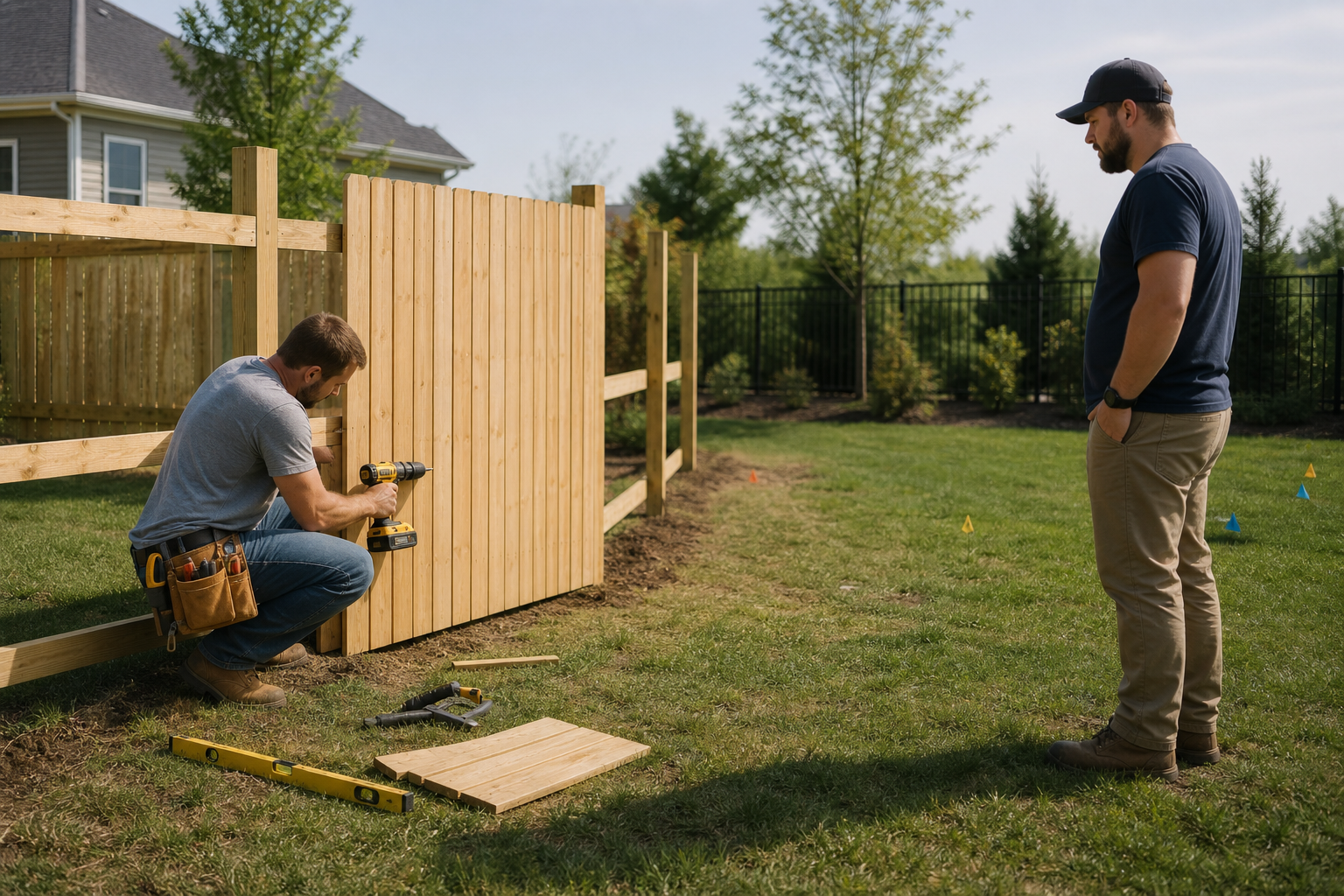
The retained sources show why it is useful to distinguish custom work from prefabricated sections and why a vinyl proposal should identify the actual system. They do not support a universal ranking of wood, vinyl, metal, or another material. Ask the installer to compare only the options it is prepared to propose for the property.
For each option, request the product or material name, the components included, the appearance choices available, the care information supplied by the installer or manufacturer, and any limitation the installer wants you to understand. Ask which part of the answer comes from a product document and which part is the installer’s project-specific recommendation. If a statement sounds like a performance promise, ask where it will appear in the written agreement.
Use the same discipline when deciding between homeowner work and professional service. The picket-fence excerpt says from-scratch construction requires substantial time and woodworking skill and that prefabricated sections make the project more accessible. It does not say that every prefabricated project is appropriate for DIY or that professional work produces a guaranteed outcome. Ask what the installer is quoting, what would remain the homeowner’s responsibility, and what information you would need before comparing those routes.
Frequently asked questions
Does this guide tell me whether I need a permit?
No. The accepted evidence used here does not establish a local permit rule. Ask which authority and requirement the installer believes apply, then confirm the current answer with that authority before relying on it.
Does this guide tell me where a fence must be placed?
No. It does not make a property-line or placement determination. Ask what information the installer requires to identify the proposed location and obtain any separate confirmation the project needs from the appropriate source.
Which material should I choose?
The supplied evidence does not establish one best material. Ask for the exact options proposed for the property, the documentation for each option, the included components, the care information, and the reasons behind the installer’s recommendation.
How do I compare two fence proposals?
Compare the written scope rather than the headline price alone. Check whether each proposal answers the same questions about included work, exclusions, materials, access, open assumptions, change approval, handoff, and future service. Ask each installer to clarify any difference before you decide.
Plan a fence installation consultation
Review the HR Greenroots Landscaping fence installation service and contact the business to discuss the property, requested scope, available options, and questions that should be confirmed before a proposal is finalized.


