
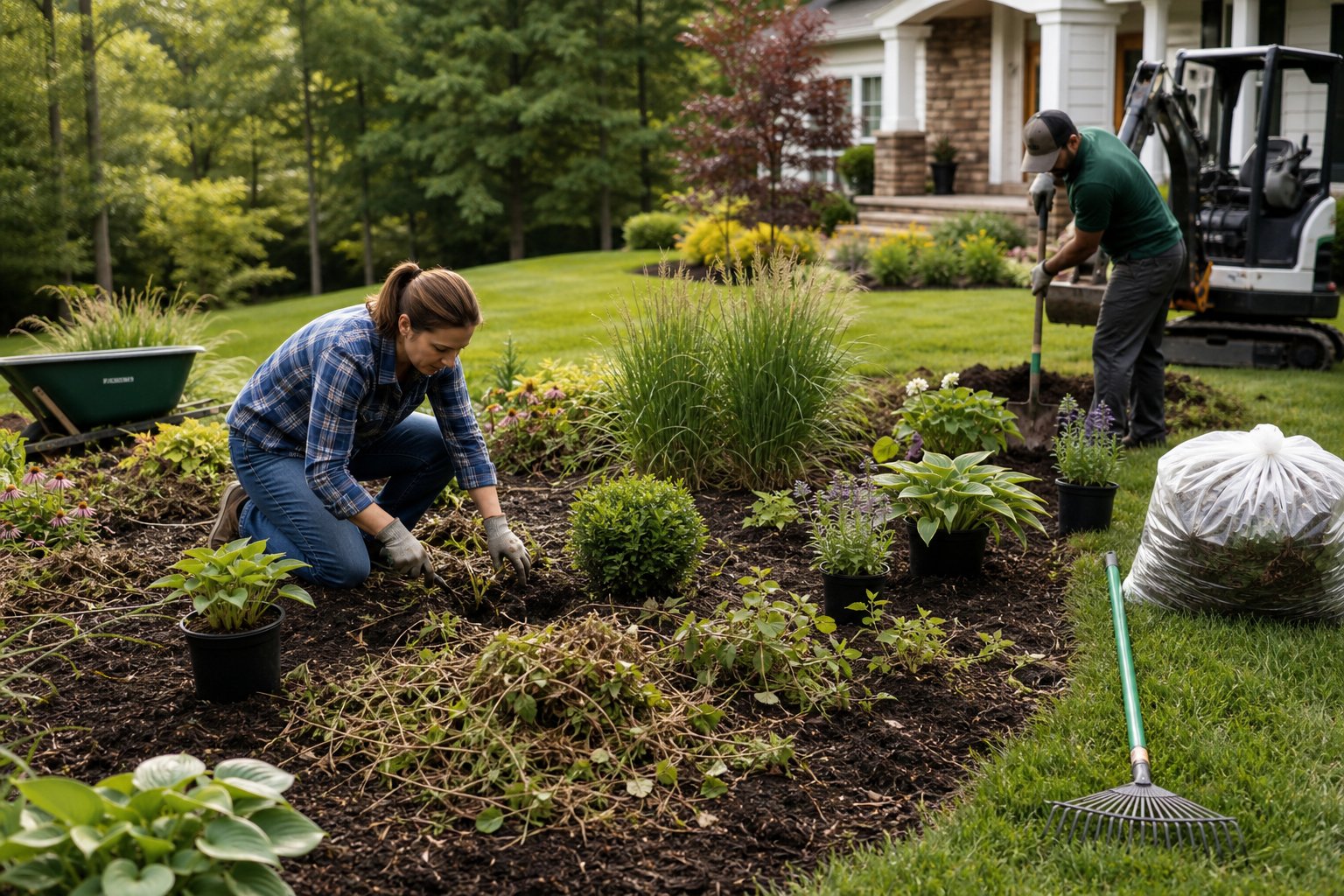
When to DIY Garden Bed Cleanup and Replanting and When to Call a Pro?
Preparing an existing bed for new plants can be quick or it can turn into a major fix. This article helps you use a focused inspection and decision checklist so you know when a weekend DIY will do, and when to call a landscape design-build crew. Follow the eight site checks, review deal-breakers, and use the contractor questions before you commit.
Quick decision summary, DIY or hire a pro
Fast outcome so you can decide in one read.
- DIY is realistic when the bed is small, soil is loose and weed-free, drainage is normal, and you need only new plants, light edging, and a mulch refresh.
- Hire a pro when beds contain heavy perennial root systems, the slope needs retaining or grading, drainage channels are required, or you want coordinated planting with irrigation and long-term maintenance planning.
- Consider a hybrid - get a pro for heavy prep and base work, then plant smaller perennials yourself to save cost while preserving workmanship quality.
When you prefer a local, full-service option that integrates design, base prep, and maintenance planning, HR Greenroots Landscaping explains its service model and on-site quoting approach on the company website.
Learn more about mulch and visible finishing steps in HR Greenroots Landscaping's local post about mulch and bed cleanup.
Run these site checks before you plan - the 8 inspection items
Spend ten minutes at the bed with a notepad and these checks. For each check you will find what to look for, a pass/fail rule, and the likely next step.
1. Outline and footprint
Mark the bed edge with a hose, rope, or spray paint, then step back to check composition and scale. Outlining first helps visualize expansion or simplification and matches standard prep guidance that recommends marking the shape before work begins.
Pass if the boundary is clear and stays within your property use. Fail if you need to expand or compress the bed substantially, which requires extra soil and edging work. For outlining techniques see Meadow Acres' how-to guide.
How to prepare a garden bed for planting
2. Light and microclimate
Observe the bed at mid-day to record hours of sun, morning versus afternoon sun, and shade from trees or structures. Match plants to actual light conditions. If recorded light does not match the plant tags, swap to shade-tolerant species. Read and match plant labels to site conditions.
Fail when a bed marked as sunny receives under three hours of direct sun daily. For plant-selection basics consult Cornell Cooperative Extension guidance on bed preparation and plant matching.
How to prepare a garden bed - Cornell
3. Soil texture and compaction
Dig a small test hole 10 to 15 centimetres deep. If soil crumbles lightly it is workable. If it is brick-hard or drains poorly, you have compaction or clay issues. Pass if it is friable. Fail if compaction prevents root penetration, because that usually needs mechanical decompaction or professional amendment.
4. Drainage and grade
After a rain, inspect for puddles that persist more than 24 hours. Persistent wet pockets are a fail. Grade or sub-surface drainage fixes are outside a basic DIY scope and call for contractor evaluation.
5. Perennial root load and weed history
Pull a sample area and look for long, thick roots from plants like dandelion, bindweed, or couch grass. Leftover perennial roots will re-sprout and compete aggressively with new plants, so removal of roots is critical during cleanup, as Meadow Acres emphasizes.
Fail if roots are dense or run deep, because professional removal or repeated excavation will be needed.
Perennial root removal guidance
6. Existing edging and hardscape
Note whether an intact physical edge exists. A stable edge keeps mulch in and lawn out. Pass if edge is sound. Fail if it is broken or missing and the bed is highly visible, because installing a new physical edge will affect cost and finish.
7. Remaining plant health and transplant suitability
Decide whether existing perennials can be lifted and reused. Healthy clumps often survive transplantation. Pass when crowns are vigorous and not woody. Fail when plants are woody, diseased, or invasive and require full removal.
8. Visibility and curb-appeal priority
For front-yard beds, choices about mulch colour and a crisp edge create immediate visual impact. If visibility is high, prefer professional finishing for clean edges and contrasting mulch, a tactic Meadow Acres highlights for front-yard impact.
Soil, grading, and root problems that are deal breakers for DIY
Certain issues are straightforward, others are not. Know these thresholds before you start.
- Deal-maker DIY tasks - manual removal of annual weeds, light digging, adding compost, planting, mulching, and installing simple plastic or metal edging.
- Deal-breakers for DIY - dense perennial root mats, major regrading, sub-surface drainage installs, and soil replacement. Perennial roots like bindweed will regrow unless fully removed, which can require repeated excavation and specialist tools.
- Soil testing - if the bed is old or plants have struggled, get a soil test and amend based on results. Fertilizer and amendment recommendations should follow a test.
Soil testing and amendment guidance
Plant selection for Mississauga and the GTA - practical rules
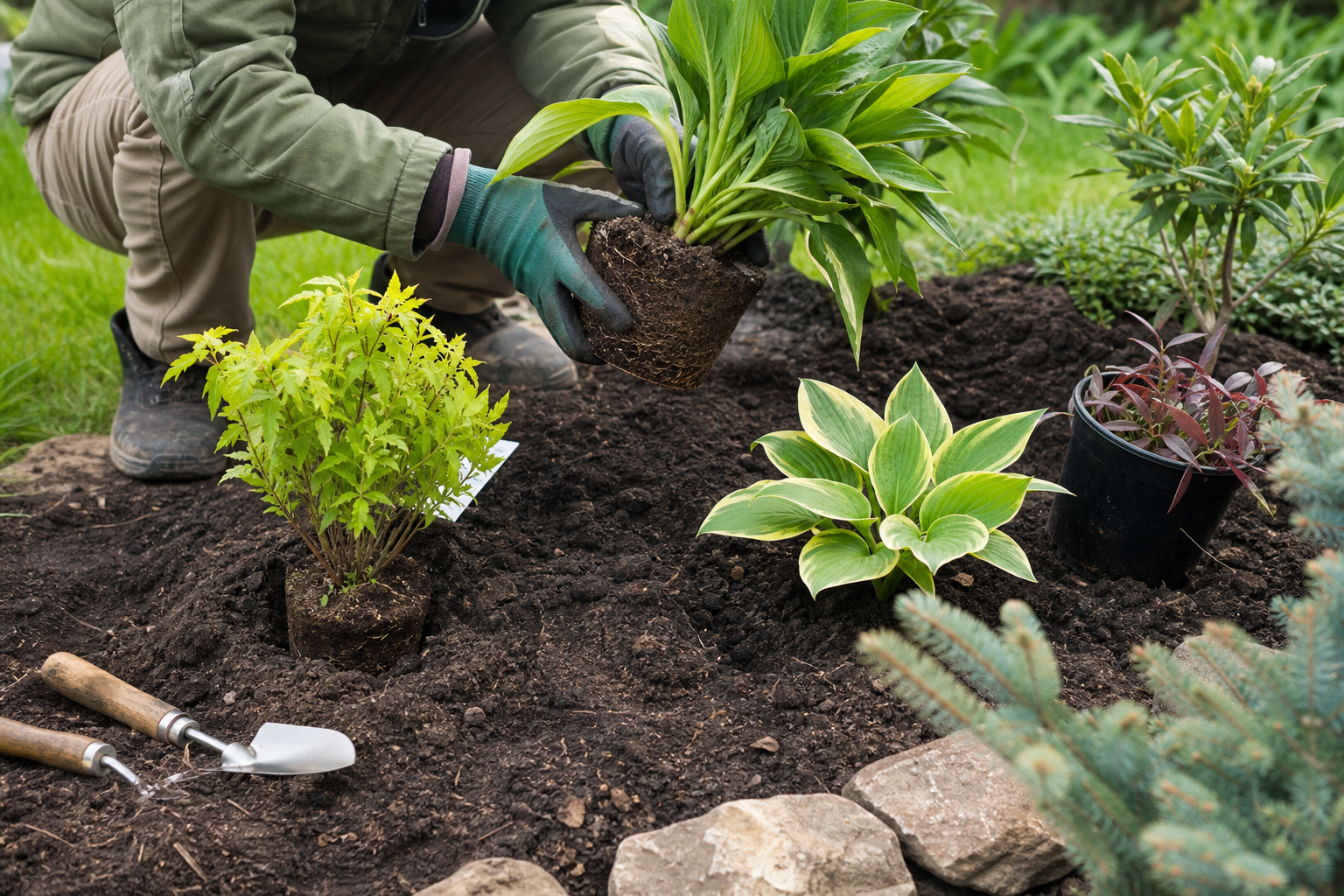
Follow three simple rules for durable, low-maintenance beds in Ontario.
- Match plants to the measured light and moisture on site, using plant labels and local nursery advice.
- Prefer hardy perennials and native or pollinator-friendly species for seasonal interest and ecological value.
- Plan layers for year-round structure: low evergreen or groundcover, mid-season perennials, and taller seasonal accents.
For timing and planting sequence details, CommunityTable.farm outlines bed cleanup and replanting steps that include removing old plants, preparing the soil, and planting at the correct depth.
Garden bed cleanup and replanting - CommunityTable.farm
Edging, mulch, and the finished look that keeps beds tidy
Edge control and mulch choices determine how long a bed stays tidy. For highly visible front-yard beds, a contrasting mulch colour and a clean physical edge create immediate curb appeal.
Recommendations
- Material - use treated timber, metal, or pavers for a durable edge where visibility matters.
- Mulch depth - apply 5 to 7 centimetres of shredded bark or double-shredded cedar for weed suppression and moisture retention.
- Colour - choose a dark brown or black mulch for front yards to make planting colours pop.
HR Greenroots Landscaping has a local article covering mulch choices and cleanup details for Mississauga beds if you want a local perspective.
Mississauga mulch and garden bed cleanup
What to expect from a professional cleanup and replanting service
A clear scope of work protects you when comparing bids. A professional quote should include the following items and sequence.
- Site outline and marking, photo documentation before work, and written scope.
- Removal of old plants and targeted excavation of perennial roots. Professionals document root removal and disposal.
- Soil testing on request, amendments based on results, and decompaction where needed.
- Grading and drainage corrections where necessary, installation of physical edging, planting to specified layout, and installation of mulch to agreed depth.
- Final cleanup and photo documentation with a maintenance plan or follow-up schedule.
HR Greenroots Landscaping describes an end-to-end, maintenance-minded approach and offers on-site consultations and custom quotes for Mississauga and the GTA.
HR Greenroots Landscaping services and on-site quoting
Questions to ask contractors, and red flags to watch for
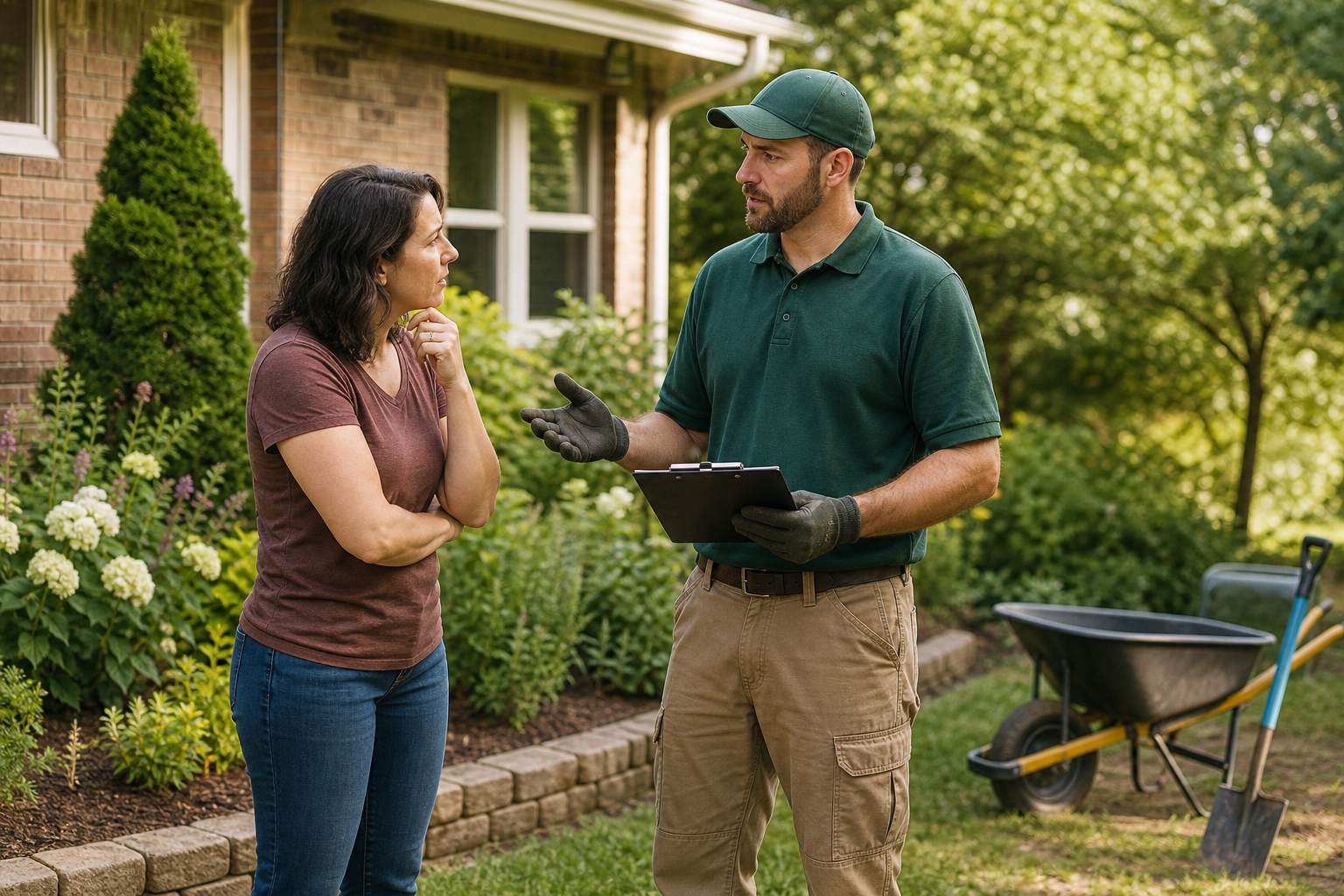
Bring this exact list to every on-site quote.
- Do you include root removal and photo documentation in the written quote?
- Will you perform a soil test, and are amendments included or optional?
- Who is responsible for edging materials and installation, and is edging shown in the proposal?
- What is the post-installation follow-up policy and response window for punch-list items?
- Can you provide references or before/after photos of similar Mississauga beds?
Red flags
- Vague scope or no mention of root removal when the bed contains perennial weeds.
- No photo documentation or unwillingness to commit to follow-up times.
- Quotes without a site visit or bids that cannot be itemized for edging, soil work, and planting.
DIY tools, timeline, and a quick stop-and-hire rule
Basic tools for a small-bed weekend refresh: spade, garden fork, hand trowel, wheelbarrow, pruning shears, heavy-duty gloves, edging tool or half-moon, and mulch. Add compost and a soil amendment if a test recommends it.
Realistic timeline for a small 2 to 4 square metre bed: one day to remove plants and weeds, one day to amend soil and edge, one day to plant and mulch. Stop and call a pro when you encounter dense perennial roots, hardpan compaction, or water pooling that lasts more than a day.
Final decision checklist and next steps
Printable quick checklist - mark pass or fail for each, then decide.
- Outlined boundary: pass / fail
- Measured sunlight: pass / fail
- Soil easy to dig: pass / fail
- No persistent puddles after rain: pass / fail
- Low perennial root load: pass / fail
- Existing edge intact or planned replacement: pass / fail
- Plants reusable: pass / fail
- High visibility and curb-appeal: pass / fail
If you have three or more fails, schedule an on-site consultation with a landscape design-build contractor. For homeowners in Mississauga and the GTA who want an integrated design-build-maintenance solution, HR Greenroots Landscaping provides on-site consultations and custom quotes.
Frequently asked questions
How can I tell if leftover perennial roots will regrow and ruin new plantings?
Pull a test patch and inspect roots. Long, stringy, or tuberous roots indicate plants that resprout. Meadow Acres explains why these roots must be removed or excavated repeatedly to prevent regrowth.
Perennial root removal reference
What is the best time to do bed cleanup and replanting in Ontario?
Early spring after frost or early fall before first hard freeze are both good. CommunityTable.farm outlines seasonal timing for bed cleanup and fall planting preparations.
How deep should I mulch and what colour works best for front-yard curb appeal?
Apply 5 to 7 centimetres of mulch. For front yards choose a contrasting dark brown or black mulch to make plants pop, a visual tactic recommended in bed-prep resources.
Mulch and visual finish guidance
What specific questions should I ask a landscape contractor during an on-site quote?
Ask if root removal, soil testing, edging, and photo documentation are included, and request a clear follow-up timeline for punch-list items. Insist on an itemized written scope covering base prep, planting layout, mulch depth, and maintenance planning.
When is grading or drainage repair necessary before replanting?
If water pools for more than 24 hours after rain, or if the bed sits lower than surrounding hardscape, a grading or drainage repair is required. These fixes typically need professional evaluation and equipment.
Ready to decide?
If your inspection shows multiple fail items or you want a coordinated design-build approach with maintenance planning, schedule an on-site consultation with HR Greenroots Landscaping for a custom quote and documented scope.
Also see our practical garden bed cleanup tips for stepwise visuals and a printable prep checklist.


