
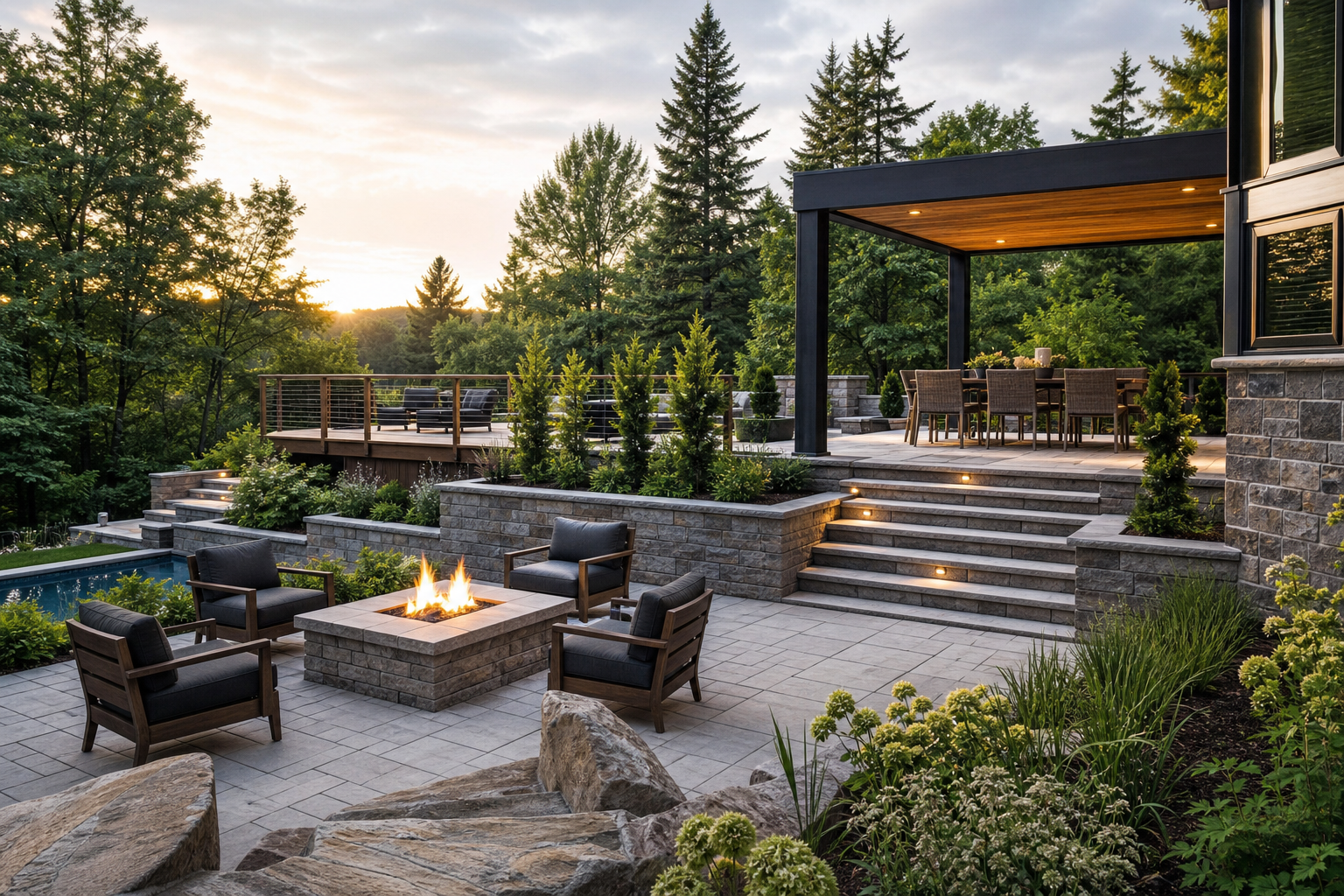
Best landscaping materials for Ontario compared: patios, decks, walls
Ontario homeowners and property managers face the same constraints: cold, wet winters, spring thaw and freeze-thaw cycles, road salt exposure, and hot summers. This comparison looks at the best landscaping materials for Ontario by use case, covering patios and walkways, driveways, decks and pool surrounds, retaining walls and armour stone, plus sod and mulch. For each material I list where to use it, Ontario-specific durability notes, installation items that determine lifespan, maintenance tradeoffs, and contractor evaluation points you can use when planning a project.
How we compared materials: selection criteria, scope, and disclosure
Materials in this article were compared using these selection criteria: resistance to Ontario freeze-thaw cycles, performance under salt and spring runoff, realistic maintenance burden for homeowners, proven local use by contractors and suppliers, and how installation practice affects longevity. Suppliers and installer guidance note that material choice and good installation together determine long-term performance, so the installation checklist is always essential, a point reinforced by hardscaping guidance for Ontario conditions. For supplier and installer sourcing and availability notes see the Dibbits guidance on landscape supplies and the Ultrascape hardscaping guide for Ontario conditions.
Disclosure: this is a comparison by common use, not a universal ranking. Local site conditions—slope, drainage, soil type, and exposure—change which material is right. If you need execution help, HR Greenroots Landscaping provides design-build services tailored to Mississauga and the GTA and emphasises strong base preparation and maintenance-minded planning for Ontario properties.
Patios and walkways: interlocking pavers, poured concrete, and natural stone compared
Best use: patios, courtyards, garden paths, pool surrounds.
Interlocking pavers
- Why choose: Excellent freeze-thaw resilience when installed correctly, options for permeable systems, strong visual variety.
- Ontario notes: Performance depends on base depth, edge restraint, and jointing. Proper base and drainage reduce frost heave risk; reliable Ontario guides stress base quality as the key to longevity. For specific installation guidance see the Ultrascape interlocking and hardscaping guide.
- Installation checklist: 100–150 mm compacted granular base for pedestrian patios, edge restraints, 1–2 mm joint sand or polymeric jointing, and a positive slope for drainage.
- Maintenance: Sweep joints annually, replace sand where washed out, re-level pavers that settle, and treat stains promptly.
- Pros: Repairable, visually versatile, can be permeable.
- Cons: Higher upfront labour cost for correct base; weed growth in washed joints if not sealed.
Poured concrete
- Why choose: Continuous surface, lower material cost for simple shapes, good for smooth patio slabs and ramps.
- Ontario notes: Concrete must be mixed, placed, and jointed for freeze-thaw. Control joints and adequate drainage are mandatory to avoid random cracking during winter cycles.
- Installation checklist: Reinforcement where loads or spans require it, control and expansion joints, slope for runoff, and air-entrained concrete mix in freeze-thaw climates.
- Maintenance: Occasional sealing, repair cracks quickly to prevent water ingress and freeze damage.
- Pros: Cost-effective for simple shapes, durable when detailed properly.
- Cons: Less visually flexible than pavers or natural stone; cracking risk if poorly detailed.
Natural stone (flagstone, granite, limestone)
- Why choose: High-end aesthetic, with granite performing well under freeze-thaw and salt exposure when properly bedded.
- Ontario notes: Some stones are more porous and less suited to salt exposure; suppliers recommend granite and other dense stones for high-exposure patios and walkways. See Dibbits for supplier guidance on stone choice in Ontario climates.
- Installation checklist: Bedding on a compacted granular base, proper jointing or mortar, edge restraints, and drainage to avoid trapped water under slabs.
- Maintenance: Reseal porous stone periodically, clean efflorescence, and monitor joints for settling.
- Pros: Long lasting, premium look, often lower long-term maintenance if non-porous stone is chosen.
- Cons: Higher material cost, availability can vary seasonally.
Driveways and high-traffic surfaces: interlocking pavers, reinforced concrete, and granite
Best use: driveways, parking pads, garage aprons.
- Interlocking pavers: Use thicker units and a stronger, deeper base (150–250 mm compacted) for vehicle loads. Proper compaction and edge restraints are critical to prevent shifting under repeated loads; base quality and compaction are decisive factors for interlock durability in Ontario.
- Reinforced concrete: Use for high loads; details must include reinforcement, thicker sections, and control joints. Concrete mixes with air entrainment resist freeze-thaw damage better in Ontario conditions.
- Granite and dense natural stone: Excellent for driveways where available; choose non-porous aggregates and confirm supplier recommendations for salt exposure and grading.
Contractor question: Ask for base depth, compaction method, and proof of edge restraint designed for vehicle load. Material availability and lead times can shift during the landscaping season, so confirm order windows early with suppliers. See Dibbits for notes on seasonal material availability.
Decks and pool surrounds: composite decking versus pressure-treated wood and cedar
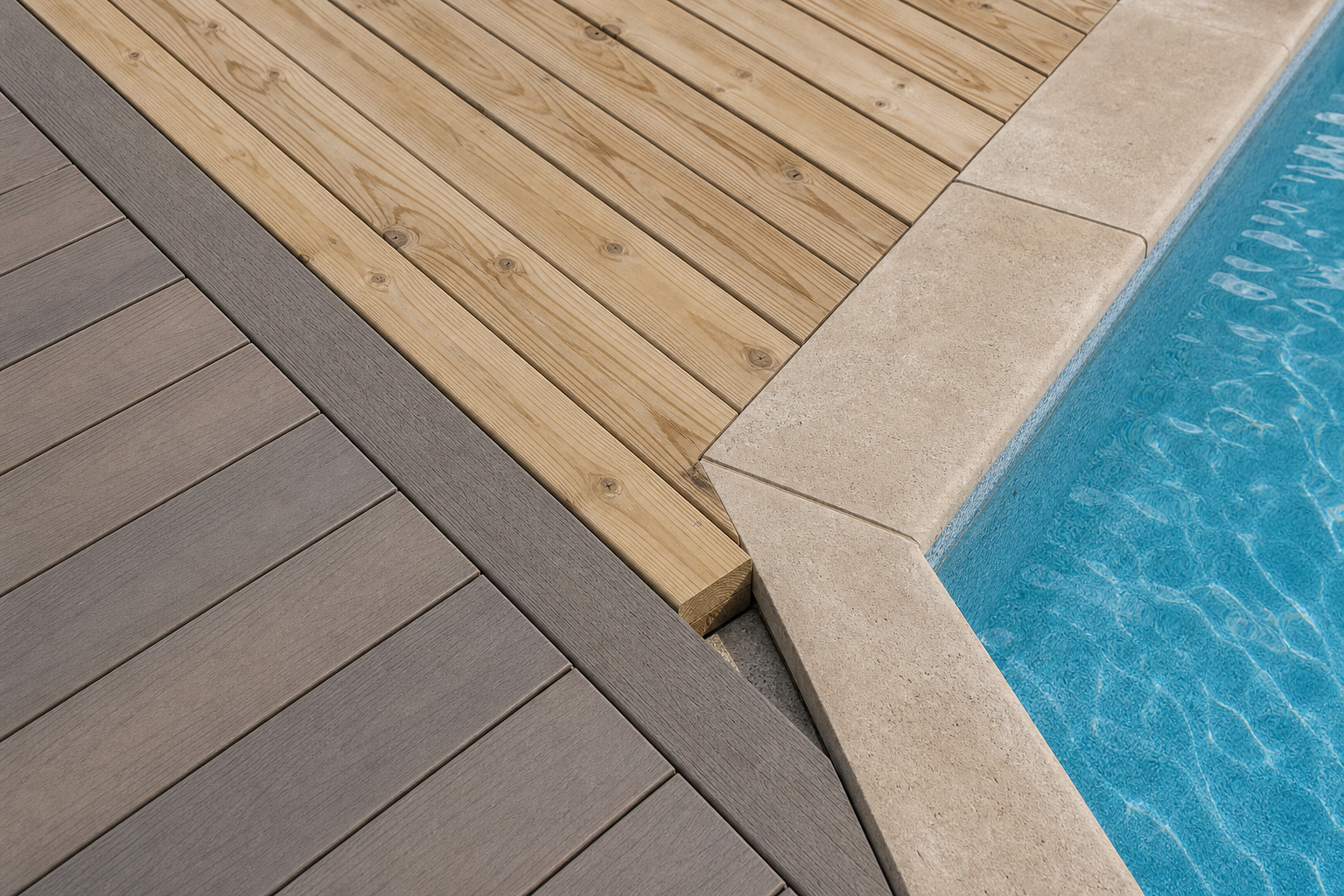
Best use: elevated decks, ground-level terraces, pool surrounds where moisture and freeze-thaw cycles are frequent.
- Composite decking: Low-maintenance option made from wood fibres and recycled plastic. It resists rot and insect damage and avoids the frequent sanding, staining, and sealing required by wood. Suppliers recommend composite for long-term durability in climates with seasonal moisture changes.
- Pressure-treated lumber: Lower upfront cost and widely available, but requires ongoing maintenance and inspection for fastener corrosion and checking due to moisture cycles.
- Cedar and exotic hardwoods: Naturally rot-resistant and attractive, but require periodic sealing and more maintenance than composite; wood movement during freeze-thaw cycles can create gaps.
Installation note: For pool surrounds use slip-resistant profiles and ensure deck framing is detailed to shed water and avoid trapped moisture in joist bays. Composite reduces long-term maintenance but verify manufacturer installation for ventilation and thermal expansion.
Retaining walls and armour stone: concrete block, armour stone, and timber compared
Best use: slope control, soil retention, terraces, and feature steps.
Concrete block (segmental retaining wall)
- Why choose: Predictable, engineered systems for taller walls and heavy loads when tied to proper drainage and geogrid reinforcement.
- Ontario notes: Frost-heave resistance depends on drainage behind the wall and a competent granular base. Always include a drainage layer and weepage to avoid hydrostatic pressure.
Armour stone
- Why choose: Massive, frost-stable pieces that perform well for steps, low walls, and focal features. Armour stone is excellent where a natural look and long-term frost resistance are priorities.
- Ontario notes: Use larger stones and a compacted sub-base; armour stone requires heavy equipment for placement and specialist installation for stable steps and features.
- Related reading: For a detailed discussion of wall materials and when to use them see the HR Greenroots post on best material retaining walls ontario.
Timber
- Why choose: Cost-effective and quick to install for low, short-term walls.
- Ontario notes: Timber is prone to decay over years in wet conditions and is not recommended for long-term, load-bearing applications without treatment and drainage details.
Softscape essentials: sod, mulch, and planting materials for Ontario
Sod and mulch must be chosen for winter survival, quick root establishment, and weed competition control.
- Sod options: Select provincially appropriate blends that tolerate Ontario cold and summer heat. Proper soil preparation, topsoil depth, grading, and timely installation in spring or early fall are essential for reliable establishment; HR Greenroots offers premium sod prep and installation services tailored to local conditions.
- Mulch choices: Bark mulch and shredded hardwood maintain winter insulation and suppress weeds. Avoid fine mulches in areas with heavy snowmelt where they can wash out; suppliers advise selecting mulch suited to your drainage and slope conditions, see Dibbits for supplier tips.
- Planting substrate: Use a planting mix with good organic content and drainage. For beds on slopes, combine mulch with structural measures like terracing or low retaining walls to prevent erosion.
Installation and base-prep rules that determine longevity across materials
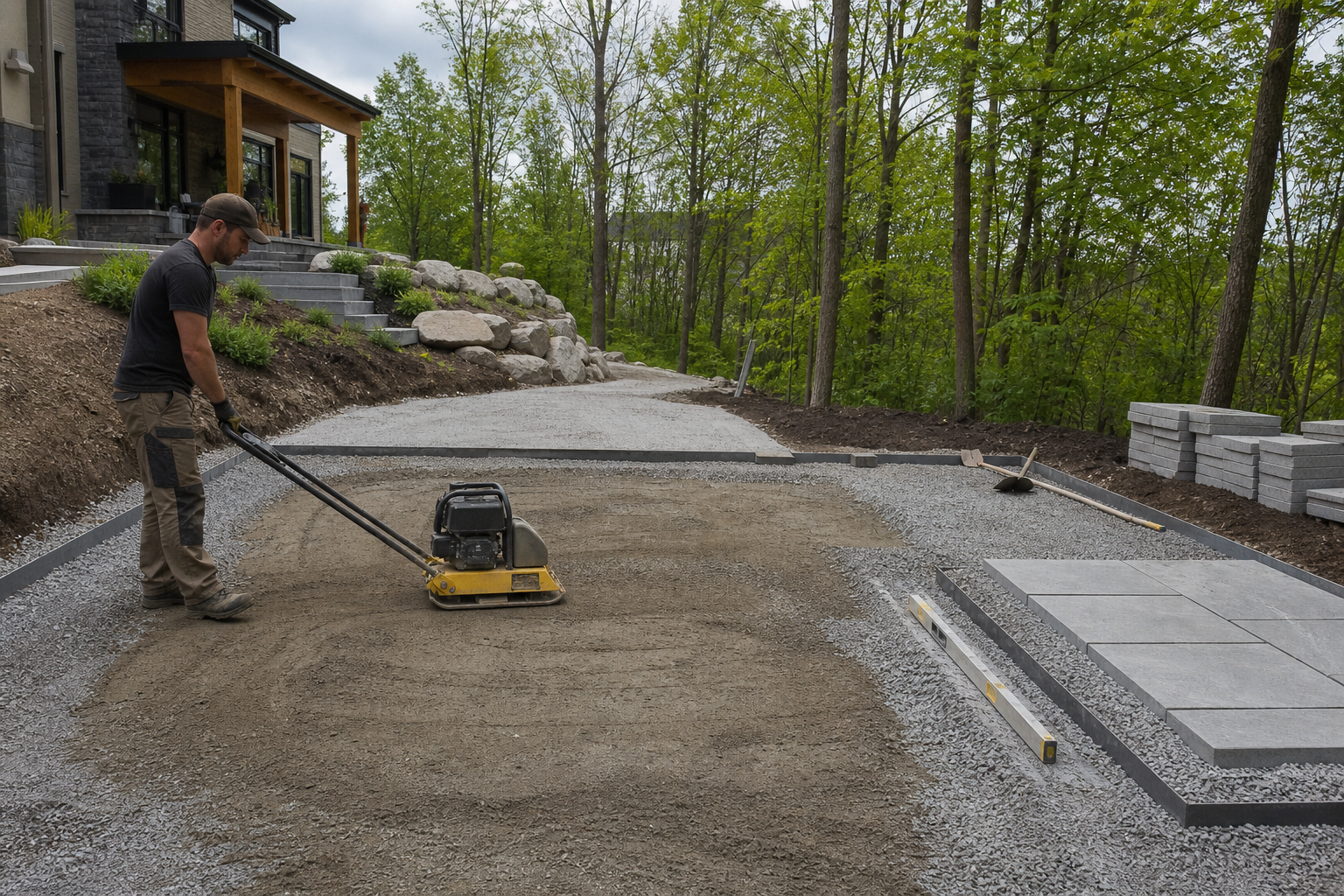
Across all material choices the following installation items most strongly influence how long a project lasts in Ontario:
- Correct base depth and compaction: A compacted granular base sized for the load is more important than the surface material itself; hardscaping guides for Ontario emphasise base preparation as decisive for frost-heave resistance.
- Edge restraint and clean edges: Prevent lateral movement for interlock and paving units.
- Drainage and slope: Always provide positive slope and sub-surface drainage behind retaining walls to avoid hydrostatic pressure and frost problems.
- Material-grade selection: Use air-entrained concrete mixes, salt-tolerant stone, and non-porous aggregates where exposure to meltwater and salt is expected.
- Seasonal supply planning: Material availability varies during the landscaping season; order critical items early to avoid delays.
How to choose a contractor in Mississauga and the GTA: decision criteria and questions to ask
Ask these specific questions when evaluating contractors and proposals:
- Can you provide on-site references for similar Ontario projects and photos with before/after documentation?
- What base depth, compaction method, and edge restraint will you specify for this material and load?
- Do you include drainage, weeping tile, or geogrid where applicable, and can you show the drainage plan?
- What manufacturer warranties and workmanship guarantees do you offer, and for how long?
- How do you manage supply lead times and seasonal availability to keep the project on schedule?
- What is the post-completion maintenance plan and response time for follow-up repairs?
HR Greenroots Landscaping provides end-to-end design-build services across Mississauga and the GTA and highlights strong base preparation, grading, and maintenance planning; use firm references and photo documentation to confirm workmanship before you commit.
Frequently asked questions
What is the best patio material for Ontario's freeze-thaw winters?
Interlocking pavers and dense natural stone, such as granite, are often the best choices for freeze-thaw climates when the base, edge restraint, and drainage are designed correctly. Poured concrete can also perform well if mix and control joints are specified for freeze-thaw conditions. See the Ultrascape and Dibbits resources for supplier and technique guidance.
Should I choose composite decking or pressure-treated wood for a Mississauga deck?
Composite decking requires less ongoing maintenance and resists rot and insect damage better in moist Ontario summers, while pressure-treated wood has a lower upfront cost but needs regular sealing and inspection. Match the choice to your budget and maintenance willingness.
How deep should the base be for interlocking pavers in Ontario to avoid frost heave?
Base depth depends on use: pedestrian patios commonly require about 100–150 mm of compacted granular base, while driveways need 150–250 mm or more plus plate compaction and strong edge restraints. Precise specs should come from the contractor based on site conditions and expected loads.
Which retaining wall materials resist frost heave and drainage issues best in Ontario?
Armour stone and engineered concrete block walls with proper drainage behind them are the best long-term options. The deciding factor is drainage design and a stable base rather than the facing material alone; HR Greenroots' retaining wall guidance covers local details and when each material is appropriate.
When is the best time to schedule sod installation in the GTA for reliable establishment?
Planting in spring after frost risk passes or in early fall gives sod a good window to establish roots before summer heat or winter freeze. Proper soil prep and timing with supplier availability are essential for success.
Final takeaway and next step
Pick materials based on use, exposure, and maintenance willingness, but prioritise correct base, drainage, and edge details, because these installation elements control long-term performance in Ontario more than the surface choice alone. If you want a site-specific recommendation, on-site consultation, or a custom quote, contact HR Greenroots Landscaping for design-build help in Mississauga and the GTA.


