
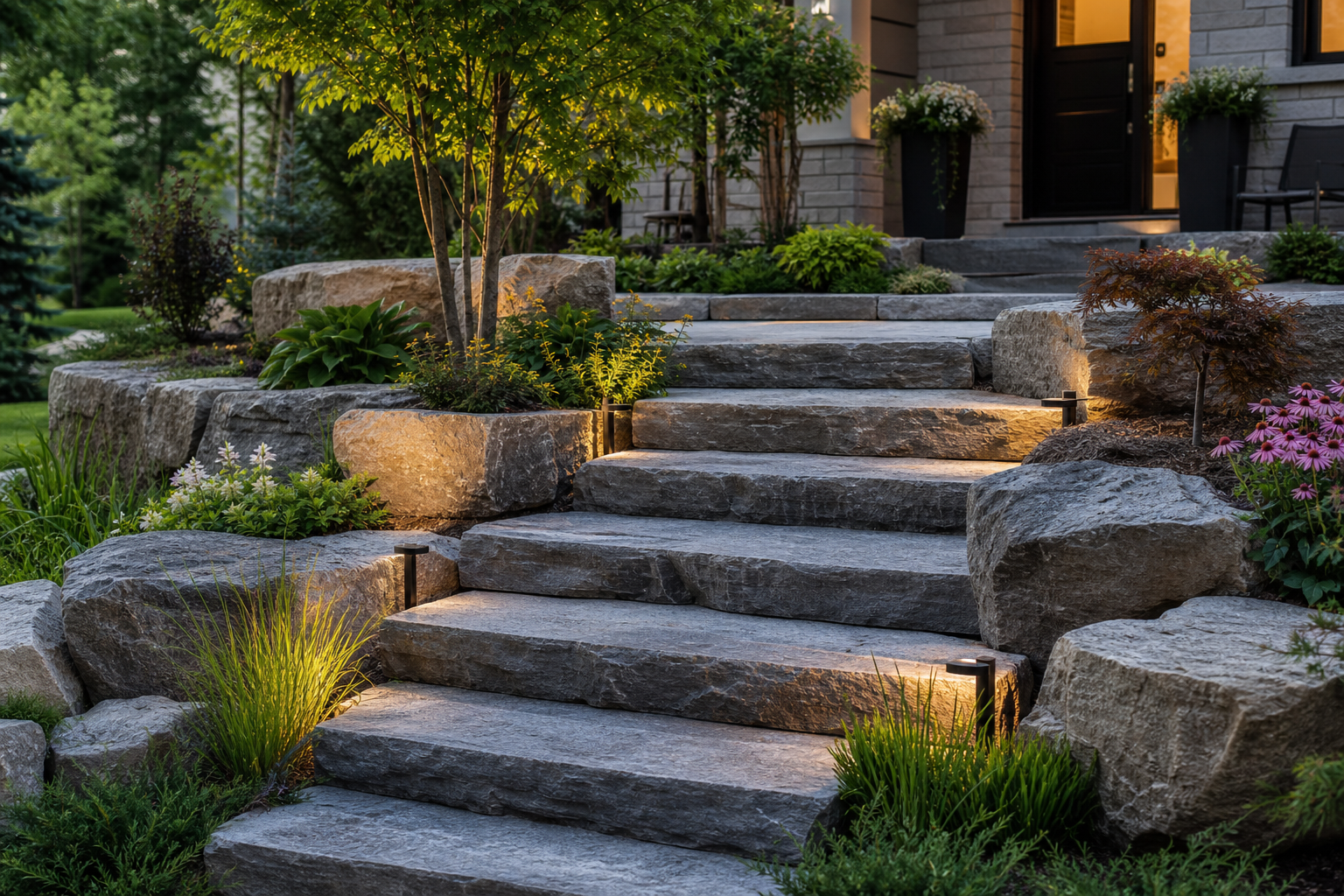
7 armour stone steps ideas for Mississauga yards
Armour stone offers scale, texture, and structural strength that suit many Mississauga and Greater Toronto Area yards. Below are seven distinct armour stone steps ideas, each written for Ontario climate realities and practical installation checks. Every numbered idea includes design intent, sizing guidance, winter and drainage advice, upkeep notes, and the contractor questions you should ask before you book.
1. Low stacked armour stone steps for gentle slopes
Best for informal transitions where the grade changes gently, low stacked steps use smaller armour blocks set close to the existing slope. The look is rustic and site responsive, ideal for naturalistic planting beds and cottage style front yards.
Key specs
Keep risers consistent and within common garden step ranges. Industry guidance recommends risers generally between about 150 mm and 180 mm and treads sized to match walking patterns. Use these figures when calculating total rise and tread count to reduce trip risk. Armstone's guide explains riser and tread expectations for garden steps. Armstone's guide.
Installation checks
Each step must sit on a compacted granular pad. In Southern Ontario freeze and thaw cycles can lift poorly prepared stones. As Grand River Natural Stone notes, proper base preparation and consistent riser heights are critical in Ontario conditions, so verify compaction in lifts and include a drainage allowance under the base. Ontario installation guidance.
Maintenance notes
Expect occasional settling in the first season; a contractor should provide a follow up check. Keep adjacent planting trimmed so root growth does not undermine pads. Contractor question to ask: how deep will you excavate and compact the base, and will you provide an edge restraint to limit lateral movement?
2. Wide armour stone entry steps with trimmed treads for front yards
Design intent: a formal, welcoming approach to a front door or porch. Wide trimmed armour treads create clean lines, allow groups to pass, and pair well with concrete or interlocking hardscapes for a cohesive facade.
Key specs and clearances
Proportion the step width to the house facade and walkway width. Use consistent risers in the 150 mm to 180 mm band and deeper treads for multiple people. Hamilton Builder's Supply highlights armour stone as a recommended material for Ontario front yard features because of its scale and finishing options. Local material guidance.
Durability and finish options
Choose a finish that resists wear and provides slip control. Cut or trimmed treads give a cleaner look but require edge restraint and stronger base work than loose stacked steps. For front yard examples and ideas that match house facades see HR Greenroots Landscaping's front yard armour stone features. armour stone features front yards.
When to pick natural versus cut stone
Natural rough blocks read more rustic and mask small irregularities. Trimmed treads read formal and align with modern facades. Contractor question to ask: can you show prior front entry installs and explain your edge restraint and frost protection method?
3. Armour stone steps as connecting links between retaining wall tiers
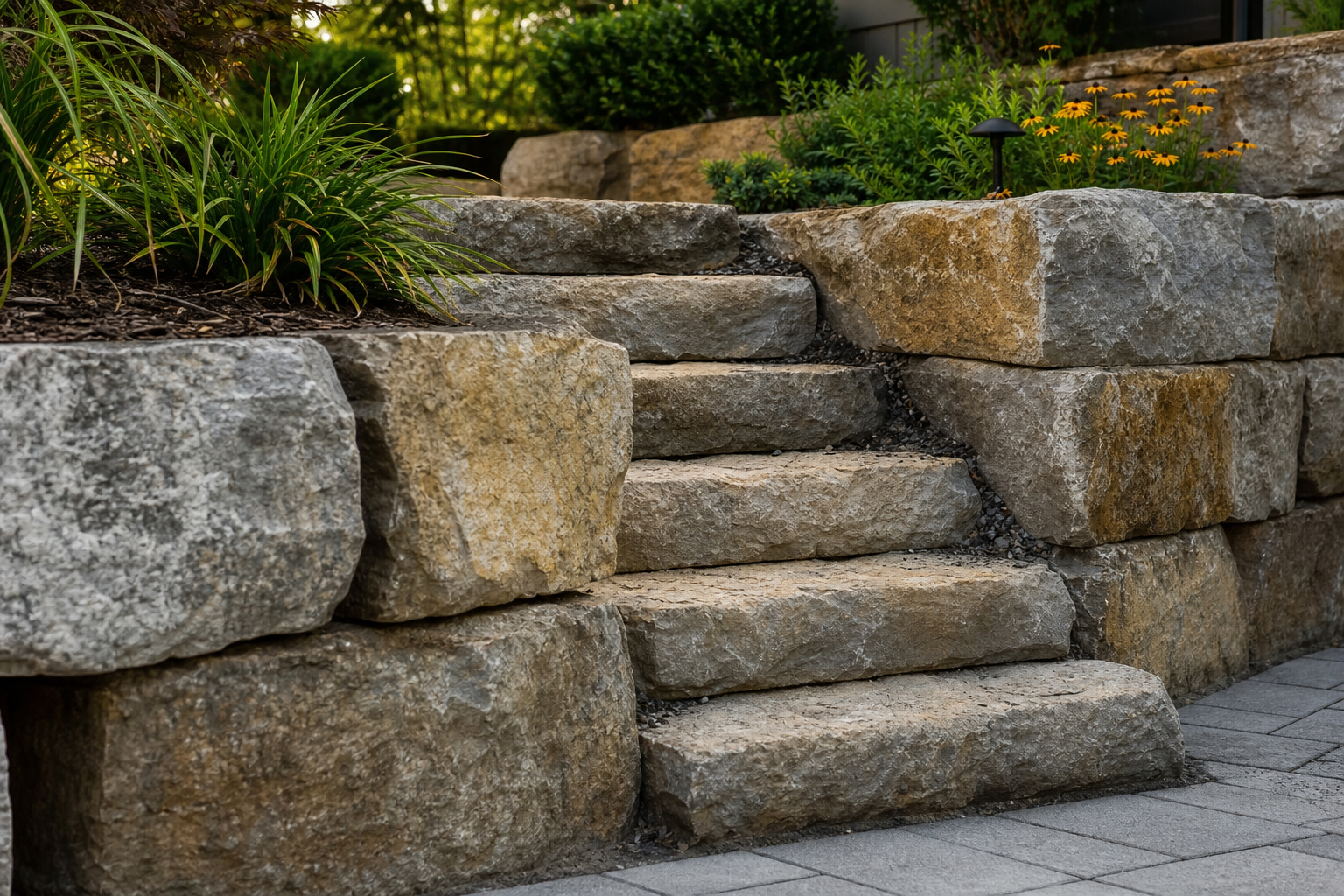
Best for sloped properties that use tiered retaining walls. Armour stone steps can be built into or between wall tiers to create robust circulation and a layered garden composition.
Structural checks
If your walls are structural, steps must be planned with wall sequencing and drainage in mind. Hamilton Builder's Supply recommends armour stone for structural wall features when installed with proper base and drainage. Cross section details show how steps tie into wall cores. Design trends for Ontario walls.
Drainage and weep management
Subdrainage behind walls and weep lines at step interfaces prevent trapped water and reduce frost heave. Grand River Natural Stone warns that spring runoff and variable soils make drainage and base prep as important as the stone selection in Ontario. Tie drains into the site drainage plan. Installation notes.
Safety and riser consistency
Use consistent risers and consider a visual cue at the first and last step. Contractor question to ask: will you tie the step block into the wall system and provide a cross section showing drainage, geotextile, and compaction layers?
4. Floating armour stone treads over planted or gravel risers
Design effect: large, widely spaced blocks appear to float above planted pockets or crushed gravel risers, creating a contemporary, lighter rhythm through a garden.
Materials and spacing
Choose wide, thick treads and set each on a separate compacted pad. Leave enough gap for planting or drainage; plan so footing pads do not sit on organic soils. Armstone shows examples of stepped courses shaped by hand where you must size treads to keep comfortable walking lines. Armstone ideas.
Lighting integration
Floating treads let you tuck low voltage lights beneath or behind each block for a dramatic effect. Terrascape Supply recommends integrating lighting to improve nighttime usability and safety. Plan conduits before placing stone. Lighting considerations.
Winter performance
Gaps can collect snow and ice. Specify slope and drainage channels to shed meltwater and reduce freeze thaw pooling. Contractor question to ask: how will each pad be prepared and will you install conduits for lighting during the build?
5. Step seating combos: armour stone steps that double as benches and planters
Multifunctional steps increase usable space by widening treads into low seats or by integrating planter pockets into wide landings. This idea suits patios, terraces, and entry courtyards where seating is desirable near circulation routes.
Sizing for seating comfort
Wider treads or landings should be at least 400 mm to 500 mm deep to allow sitting. Back support or a reduced riser height improves comfort when a step also functions as seating. Choose capstone sizes and finishes that are comfortable to the touch in both sun and cold.
Plant selection for Ontario seasons
Use hardy, shallow rooted perennials and grasses in planter pockets to reduce maintenance and protect stone edges. Hamilton Builder's Supply notes armour stone pairs well with layered planting palettes for seasonal interest. Planting pairings.
Upkeep expectations
Plan for periodic refresh of planter soil and inspect waterproofing or root barriers to avoid moisture driven movement. Contractor question to ask: will you supply planting soil volumes, waterproof liners, or an upkeep schedule for planted pockets?
6. Low profile armour stone steps for patios, pool surrounds, and drive edges
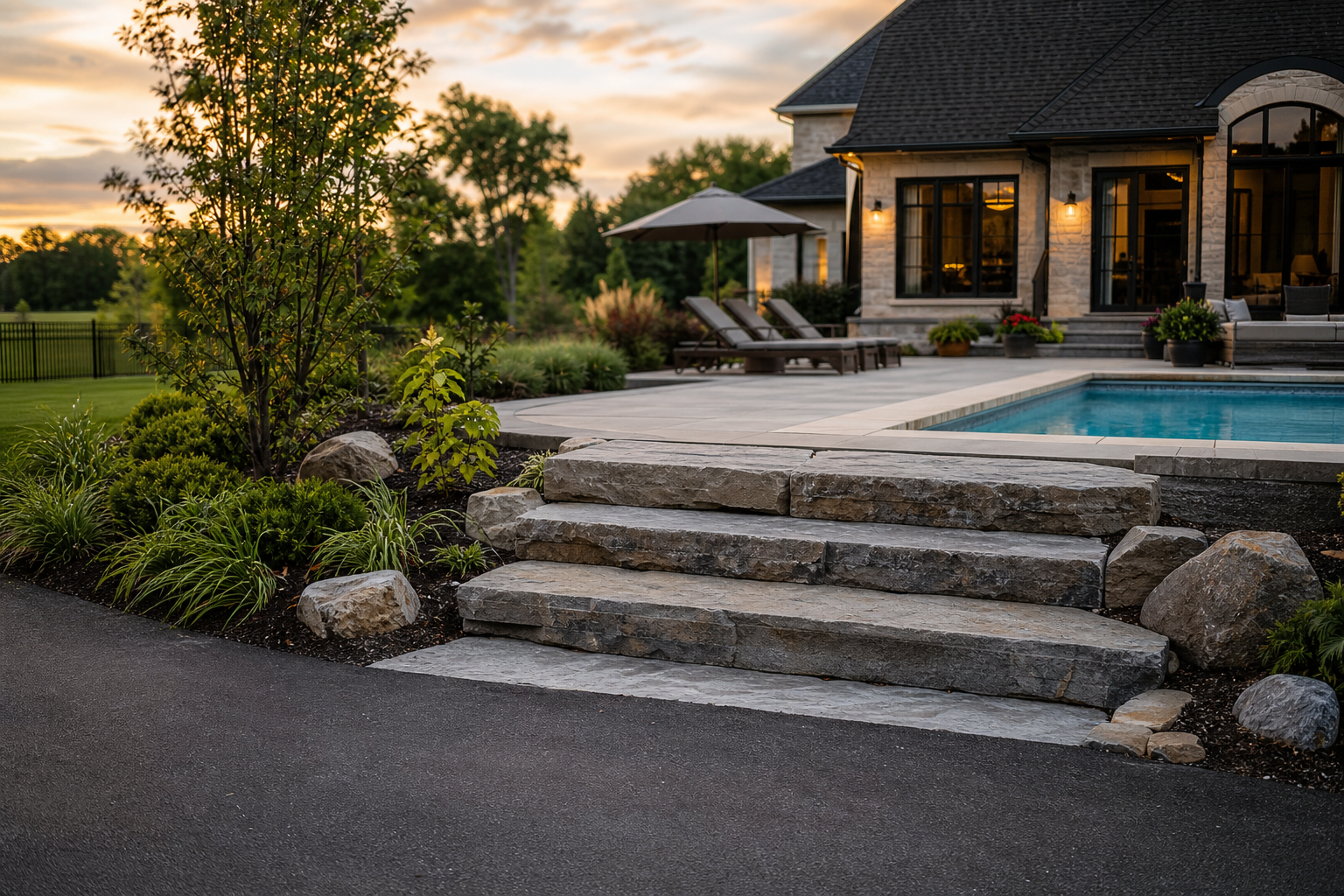
Use compact, low profile steps to bridge small height differences between lawn, patio, pool area, or a widened driveway edge. These steps are functional and should prioritise slip resistance and edge durability near water and vehicle areas.
Safety and slip resistance
Textured or split face finishes provide traction. Terrascape Supply highlights finish and lighting choices for safety around water. Surface recommendations.
Edge detailing
Near driveways, protect stone edges with proper base depth and buried edge restraints to resist vehicle loads. For pool surrounds, detail drainage to avoid water pooling on treads. Grand River Natural Stone notes that natural blocks often do not require polymeric sand where joints are minimal. Ontario installation notes.
Contractor question
Ask what finish they recommend for slip resistance and how they will protect edges where vehicles may come close to the stone.
7. Steps with integrated low voltage lighting and winter ready details
Safety first designs combine consistent risers with recessed or underside lighting so steps remain usable year round. Plan lighting location, conduit routing, and frost ready base details before stone placement.
Lighting options and placement
Use recessed riser lights, underside uplights, or small in line LEDs in the tread face. Terrascape Supply recommends planning low voltage lighting early so conduits are buried before stone setting. Lighting guidance.
Riser tolerance and frost protection
Consistent riser heights reduce trip risk. Armstone's riser guidance helps determine comfortable step geometry, while Grand River Natural Stone stresses base prep to manage freeze thaw in Ontario soils. Use both sources to inform contractor specifications. Riser recommendations and Ontario base advice.
De icing and winter maintenance
Design to avoid trapped meltwater. Use non corrosive de icing products and schedule light cleaning each spring to remove grit and salts. Contractor question to ask: will you provide conduit wiring diagrams, show where buried conduits will run, and include a winter maintenance plan for lighting and step surfaces?
What to ask your contractor before you hire
- Can you show photo examples of similar armour stone steps and references from Mississauga or the GTA?
- What is the excavation depth, base material, and compaction method you will use?
- How will you manage drainage and tie step drains into the site’s overall drainage?
- Will you document consistent riser heights and provide before and after photos for warranty records?
- Do you offer a maintenance plan or seasonal follow up to check for settlement and to service lighting?
Frequently asked questions
How high should each riser be for armour stone steps in Ontario yards
Risers between about 150 mm and 180 mm are commonly recommended for garden and entry steps. Use consistent riser heights across the whole run to reduce trip hazards. See Armstone’s riser guidance when you plan dimensions. Armstone's guidance.
Do armour stone steps need mortar or adhesives for outdoor installations
Many natural armour block step applications sit on compacted granular pads without adhesives. Grand River Natural Stone notes that solid natural step blocks often do not require polymeric sand or adhesives in many installations. Adhesives are used selectively for marrying stone to concrete or creating coping details. Ontario installation notes.
What base depth and drainage are required to prevent frost heave in Mississauga
Depth varies by soil conditions, but consistent compaction of a granular base and provision of subdrainage are essential to reduce frost heave. Grand River Natural Stone emphasizes base prep and drainage planning for Ontario yards. Ask contractors for specific compaction testing and cross section details. See local installation guidance.
How do I maintain armour stone steps through Ontario winters
Keep drains clear, remove accumulated snow promptly, avoid harsh de icers that can stain or damage stone, and schedule spring inspections for settlement and joint condition. Integrated low voltage lighting should be checked before winter for wiring and fixture seals. For lighting options and placement see Terrascape Supply's recommendations. Lighting and maintenance tips.
If you want help visualizing how armour stone steps can work with your front yard, terraces, or retaining walls, request an on site consultation with HR Greenroots Landscaping to review design options, base prep needs, and a maintenance plan.


